12.04.2026 22:50
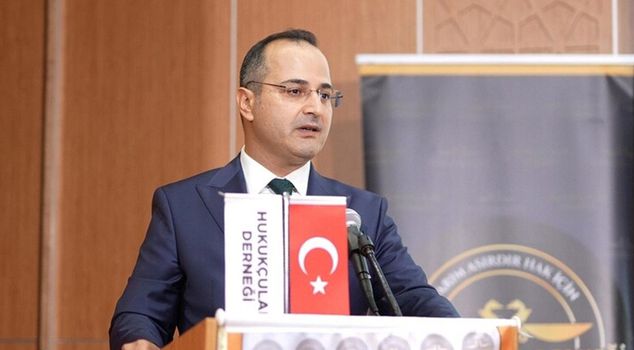
Mehmet Melih Gülseren, the President of the Lawyers' Association, stated that the death penalty regulation concerning Palestinian prisoners, accepted by the Israeli Parliament, poses serious legal issues. Gülseren expressed that the implementation targets only Palestinians in practice, creating a clear discrimination in this regard.
The President of the Lawyers Association, Mehmet Melih Gülseren, made striking evaluations regarding the death penalty law adopted by the Israeli Parliament, which encompasses Palestinian prisoners. Gülseren stated that the regulation in question effectively targets only Palestinians and is a clear violation of the principle of equality before the law.
LEGAL PROCESS AND ADOPTION
Gülseren noted that the bill proposing the death penalty for "terror crimes" in Israel came to the agenda at the end of 2025, and the process was accelerated at the beginning of 2026, being adopted by the Knesset on March 30, 2026, with 62 votes in favor and 48 against.
Emphasizing that the law has not yet come into effect, Gülseren stated that the regulation is subject to the oversight of the Israeli Supreme Court and therefore the implementation process has been halted. He also indicated that the regulation is not expected to be applied retroactively.
DIFFERENT JUDICIAL REGIME FOR THE SAME CRIME
According to Gülseren, one of the most striking aspects of the regulation is the application of different judicial procedures to different groups for the same acts. While judges in civilian courts within Israeli borders are granted discretion between the death penalty and life imprisonment, in military courts operating in the occupied West Bank, the death penalty is almost made mandatory.
Gülseren pointed out that this situation not only changes the type of punishment but also alters the functioning of the judicial system, stating that the death penalty has been transformed from an exception to a de facto rule in military courts.
“IT EFFECTIVELY TARGETS ONLY PALESTINIANS”
Gülseren noted that, as strongly expressed in the international public opinion, it is believed that this law will be applied only to Palestinians in practice. He emphasized that the conviction rates in military courts where Palestinians are tried are around 96%, while the majority of investigations opened into acts of violence against Palestinians remain unresolved.
FAIR TRIAL DISCUSSION
Gülseren drew attention to the serious risks the regulation poses in terms of the right to a fair trial, stating that leaving an irreversible sanction like the death penalty to these courts creates a significant problem.
Additionally, with the new law:
The requirement for unanimity has been removed
Simple majority has become sufficient
Appeal and oversight mechanisms have been limited
Judicial discretion has been narrowed
Secret executions have been facilitated
The execution period has been reduced to a short time of 90 days
the information was shared.
ALLEGATION OF VIOLATION OF INTERNATIONAL LAW
Gülseren stated that the regulation also contradicts international law, reminding that the criminal powers of occupying states are limited under the 4th Geneva Convention. He expressed that the expansion of the death penalty in this way is contrary to the law of occupation.
He also emphasized that United Nations human rights mechanisms characterize mandatory death penalties as "arbitrary" and that such practices are incompatible with international law.
LEGAL STRUGGLE INITIATED
The law in question has been brought before the Israeli Supreme Court, with requests for its annulment on the grounds that the right to life has been violated, the regulation is discriminatory, and it is contrary to fundamental laws.
Gülseren stated that the Lawyers Association is closely following the process and that the issue has been brought to international platforms, particularly the United Nations Human Rights Council.
“INTERNATIONAL PUBLIC OPINION MUST ACT”
Gülseren emphasized the great importance of creating not only legal but also social and international awareness against such regulations. He expressed that the active participation of civil society and the international public in the process will be decisive in combating such violations.