07.07.2026 09:30
While the world's eyes are turned to the NATO Leaders' Summit starting today in Ankara, missile attacks on commercial ships in the Strait of Hormuz have damaged hopes for peace in the Middle East. Meanwhile, oil prices have also risen. A mixed trend prevails in global markets, with the Fed's interest rate decisions and the NATO summit being closely watched.
Global markets are mixed amid concerns that the climate for consensus in the Middle East could deteriorate following the targeting of commercial ships in the Strait of Hormuz.
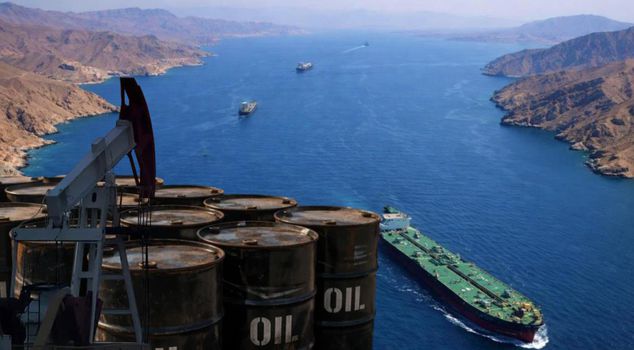
The rising tension in the Strait of Hormuz is influencing market direction. The memorandum of understanding signed between the US and Iran on June 18 had brought peace winds to the region, but these have reversed with the targeting of commercial ships passing through the Strait of Hormuz.
WILL THE US RETALIATE?
US-based Axios news site reported that Iran fired at least two missiles at commercial ships passing through the strait, suggesting that retaliation by the US is likely.
OIL PRICES ROSE
These developments highlighted the fragility of peace talks in the Middle East. Following the attack reports, an upward movement in oil prices was observed. Although Brent crude rose 0.7% to $72.6 per barrel, it remained at pre-war levels.
While the rise in oil prices triggered inflation risks, no significant change was observed in money market pricing regarding central banks' interest rate paths. The possibility that the Fed could raise interest rates once by the end of the year remains strong.
FED DECISION AWAITED
Analysts noted that in the US Federal Reserve's meeting minutes to be released tomorrow, investors could find more clues about the bank's future steps.
In addition to these developments, statements from Fed officials are being closely monitored. Fed Board Member Christopher Waller stated that inflation and employment risks have reversed compared to a year ago.
Waller said, 'The US labor market appears to be stabilizing. Inflation, on the other hand, has risen rapidly. This requires you to reconsider your policy approach.'
Non-farm payroll data, which fell short of expectations last week, had strengthened expectations that the Fed may not need to raise interest rates in the near future. Meanwhile, developments related to the technology and semiconductor sectors continue to remain in focus for investors.
Although concerns persist that rising chip costs could be reflected in product prices and reach end users, negatively affecting consumer demand, new agreements signed among leading companies in the sector continue to support growth expectations for the semiconductor industry.
Accordingly, shares of chip company Broadcom, which announced an agreement with Apple to extend its partnership for the development and supply of custom chips until 2031, gained nearly 4%.
On the macroeconomic data front, the US Institute for Supply Management (ISM) services sector Purchasing Managers' Index (PMI) fell to 54 in June, below expectations.
S&P Global's services sector PMI rose 0.5 points month-on-month to 51.2 in June. The composite PMI, covering manufacturing and services, also increased 0.4 points month-on-month to 51.9 in June.
GOLD RISE HALTED
With these developments, the US 10-year bond yield remained flat at 4.48%, while the dollar index stood at 100.8 with a limited decline.
Expectations that rising geopolitical risks in the Middle East could increase inflationary pressures through energy prices, pushing central banks toward tighter monetary policies, are putting pressure on the ounce price of gold. Gold fell 0.2% yesterday to $4,165 per ounce, ending its three-day rally. The ounce of gold is trading at $4,123 in the new trading day, down 1%.
With these developments, the S&P 500 index rose 0.72%, the Nasdaq index rose 1.12%, and the Dow Jones index rose 0.29%. The Dow Jones index set a new closing record. US index futures started the day negatively.
WHAT HAPPENED IN EUROPEAN STOCK MARKETS?
European stock markets showed mixed performance amid signals from macroeconomic data released in the region, and index futures maintained this trend in the derivatives market.
According to data released yesterday, investor confidence in the Eurozone rose in July. The Eurozone Producer Price Index (PPI) increased by 0.2% month-on-month and 5.9% year-on-year in May.
Analysts noted that the annual rise in producer prices exceeded expectations, highlighting the assessment that inflation risks in the region could persist for some time.
Retail sales in the Eurozone rose 0.2% month-on-month and 1.6% year-on-year in May.
RUSSIA-UKRAINE WAR IN FOCUS FOR INVESTORS
Meanwhile, developments related to the Russia-Ukraine War continue to remain in focus for investors. US President Donald Trump said they would hold talks to reach an agreement between Ukraine and Russia at the NATO Summit starting in Turkey today, stating, 'We will go to NATO, discuss the issue, and I think we will achieve it.'
UKRAINE ON THE AGENDA AT NATO SUMMIT
European Commission President Ursula von der Leyen also stated that they would address Ukraine's air defense needs at the NATO Ankara Summit.
With these developments, the FTSE 100 index in the UK fell 0.26%, and the CAC 40 index in France fell 0.33%, while the DAX 40 index in Germany rose 0.15% and the FTSE MIB 30 index in Italy rose 0.27%.
ASIAN STOCK MARKETS TRADED NEGATIVELY
Amid current developments, rising oil prices and valuation concerns related to the semiconductor sector are leading to a selling trend in Asian stock markets.
In the semiconductor sector, Samsung Electronics announced its second-quarter financial results. The company reported that its operating profit rose to 89.4 trillion won (approximately $58.5 billion).
However, concerns over whether the growth momentum, following the level reached by large-scale data center investments in AI infrastructure, can support current valuations have limited investor appetite. Under the influence of these concerns, Samsung Electronics shares experienced sharp declines.
According to data released in the region today, Japan's Household Spending (annual) decreased by 0.4% in May, below expectations.
While this indicates that spending in the country did not slow as much as estimated, it increased expectations that the Bank of Japan (BoJ) will maintain its tight stance.
With these developments, near closing, Japan's Nikkei 225 index fell 2.4%, South Korea's Kospi index fell 8%, China's Shanghai Composite index fell 1.6%, and Hong Kong's Hang Seng index fell 0.7%.
BIST 100 GAINED VALUE
Following a predominantly buying trend yesterday, the BIST 100 index at Borsa Istanbul ended the day with a 0.05% gain at 14.rose to 424.54 points.
In Borsa Istanbul Futures and Options Market (VIOP), the August futures contract based on the BIST 30 index rose by 0.1 percent compared to the normal session closing in the evening session yesterday.
THE WORLD'S EYES ON ANKARA
Meanwhile, NATO's 36th Leaders' Summit begins today at the Presidential Complex. The summit, hosted by President Recep Tayyip Erdogan, will last two days. In addition to US President Donald Trump, leaders from 31 allied countries and invited nations will attend the summit.
The Dollar/TL completed yesterday at 46.8220, while in the interbank market opening today, it is trading at 46.8370, just above the previous close.
Analysts stated that the news flow from the NATO Summit starting today could be decisive on the direction of markets.
Analysts, noting that domestic treasury cash balance, and abroad Germany's industrial production and the US foreign trade balance will be followed, stated that technically, 14,500 and 14,600 points are resistance, while 14,400 and 14,300 points are support levels in the BIST 100 index.
The data to be followed in markets today are as follows:
09:00 Germany, May Industrial Production
15:30 US, May Trade Balance
17:30 Turkey, June Cash Budget Balance