06.06.2026 07:50
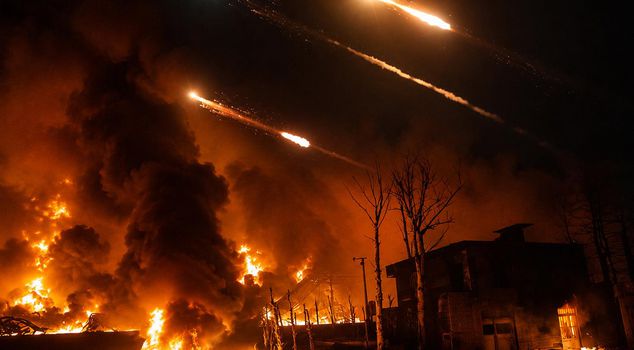
The US shot down 4 Iranian drones headed toward the Strait of Hormuz, raising tensions overnight. In response, the US struck Iranian coastal surveillance radar facilities on Goruk and Qeshm Island to defend against new attacks. Iran retaliated by striking US bases in Kuwait and Bahrain.
The tension reached its peak overnight after the US shot down 4 Iranian UAVs launched towards the Strait of Hormuz to prevent tanker passage.
TENSION ROSE OVERNIGHT
The escalation in the region was triggered according to a statement by the Islamic Revolutionary Guard Corps, when four oil tankers attempted to cross the Strait of Hormuz without permission at 01:30 local time, and one of these tankers was targeted. Following this activity, the US Central Command (CENTCOM) shot down four Iranian-made one-way attack unmanned aerial vehicles (UAVs) launched towards the Strait of Hormuz.
US STRUCK TWO ISLANDS
Shortly after the downing of the UAVs (around 02:00 local time), the US targeted Iranian coastal surveillance radar installations and communication towers located on Goruk (Sirik) and Qeshm Island to take precautions against possible new attacks. CENTCOM later shared footage of the strikes on these radar installations with the public.
IRAN RETALIATED
Following the strikes on coastal facilities, the Islamic Revolutionary Guard Corps launched a retaliatory attack with missiles from its Aerospace Force. The attack targeted the US presence in the region directly, striking Ali al-Salem Air Base in Kuwait and the Fifth Fleet Headquarters in Bahrain.
In a statement issued by the Revolutionary Guard Corps, strong language was used against the US military, emphasizing that the launched missiles were a direct response to the attacks on Sirik and Qeshm Island.
STATEMENT FROM THE US
Following the escalation of tension to its peak, a statement came from the US military regarding the latest attacks on Kuwait and Bahrain.
In a statement from the US Central Command (CENTCOM), it was confirmed that the attacks were carried out by Iran in retaliation, saying, "Iran launched 7 ballistic missiles toward Kuwait and Bahrain hours after CENTCOM shot down 4 Iranian-made one-way attack UAVs launched towards the Strait of Hormuz." It was stated that preliminary assessments indicate the Iranian attacks caused no damage, adding, "Initial assessments show that 6 of the missiles launched by Iran were intercepted and the 7th missile failed to reach its target. As of now, there is no information indicating any harm to US personnel, and Iran's claims of damaging the US 5th Fleet headquarters in Bahrain are not true." The statement emphasized that CENTCOM remains on alert, stating, "Our forces are prepared to continue responding in self-defense to Iran's unprovoked aggression."
CENTCOM also released footage of the US strikes on Goruk and Qeshm Island earlier in the day.
TRUMP: WE WILL LEAVE IRAN VERY SOON
Meanwhile, before these attacks, US President Trump assessed the issues on the agenda during a speech while visiting agricultural production areas in Wisconsin.
Trump argued that they set out to improve the economic situation in the country but initiated military action against Iran to prevent it from obtaining nuclear weapons, signaling that this situation would soon end.
The US President said, "We will leave Iran very soon, whether through a deal or a very tough method, it will happen anyway. Perhaps the toughest methods might be the easiest way, but we are getting out of there."
Arguing that they had to prevent Iran from gaining access to nuclear weapons and took action for this, Trump assessed, "(Iran) We had to eliminate a nuclear threat. We couldn't let that happen. Nobody wanted that to happen. We've largely handled it. You'll see, one way or another, this will be resolved somehow."
Trump also argued that after the process regarding Iran is concluded, energy prices in the US would drop quickly and asked Americans to be patient.