04.09.2026 14:30
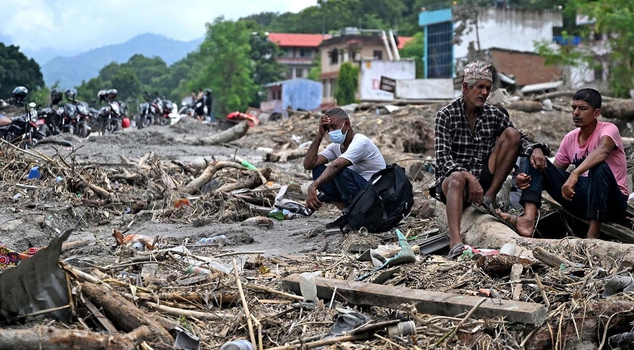
The death toll is rising in the flood disaster that struck Nepal's Rasuwa district near the Chinese border and its surroundings. While the number of fatalities has increased to 1,287, more than 21,000 security personnel are working to find the 5,083 people still missing. Rescue teams have so far saved 13,093 people. Experts point to an avalanche triggered by glacial fragments breaking off from the mountainous area as the cause behind the disaster.
It has been reported that the death toll from the floods in Nepal's Rasuwa district, near the Chinese border, and its surroundings has risen to 1287.
5 THOUSAND 83 PEOPLE ARE BEING SEARCHED FOR
Search and rescue efforts continue to find those missing in the flood disaster affecting regions of Nepal near the Chinese border. The latest situation regarding the flood was shared on the account of the Nepal National Disaster Risk Reduction and Management Authority on the social media platform of the US-based company X. In the statement, it was stated that the number of people who lost their lives in various regions affected by the flood has risen to 1287, and search and rescue efforts continue for 5 thousand 83 people reported missing. In the statement, where it was noted that more than 21 thousand security personnel have been assigned to search and rescue efforts, it was reported that 13 thousand 93 people have been rescued so far.
EXPERTS POINT TO GLACIAL COLLAPSE
A flood occurred on August 26 in Nepal's Rasuwa district; it was reported that dozens of bridges were destroyed, roads were damaged, and helicopters were dispatched for search and rescue efforts. The US Geological Survey, which had announced that an earthquake first occurred in the region before the flood, updated its data and stated that the source of the seismic movement with a magnitude of 5.2 was a glacial collapse. Experts at the International Centre for Integrated Mountain Development, based in Kathmandu, stated that the flood occurred due to an avalanche triggered by glacial fragments breaking off from the mountainous area in the region.