16.07.2026 23:20
The bill known as the "12th Judicial Package" in public opinion, which amends certain laws to ensure the effective and efficient functioning of the judiciary, has passed the Turkish Grand National Assembly General Assembly. The enacted bill includes numerous regulations concerning enforcement and bankruptcy proceedings, forensic medicine, digital evidence, and criminal prosecution. It also provides for a reduction in penalties for individuals known as "IBAN victims," who have limited involvement in fraud crimes by sharing their bank account information.
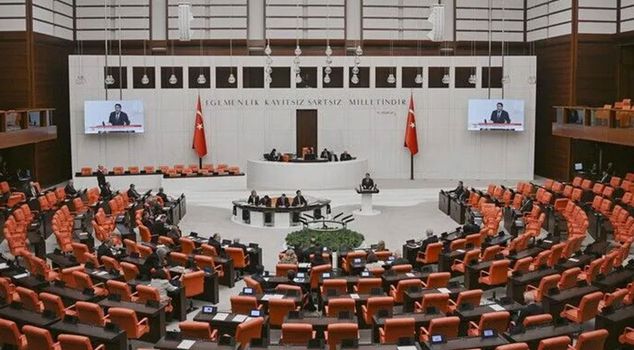
In the Turkish Grand National Assembly General Assembly, the Draft Law on Amendments to Certain Laws for the Effective and Efficient Functioning of the Judiciary, known as the "12th Judiciary Package" in the public, was accepted and enacted into law.
With the law, amendments are made to the Enforcement and Bankruptcy Law. Accordingly, in auctions to be held for the resolution of joint ownership through sale regarding immovables acquired by all owners through inheritance and where no third parties other than heirs have property rights, the first auction will be held only among the heirs who are owners. This auction procedure, held only among the heirs who are owners, will be applied once only.
Regulations will also be made in the announcement to be published on the electronic sales portal. According to this, in the announcement to be made on the electronic sales portal, it will be stated that the creditor requesting the sale and wishing to participate in the auction, if they apply to the enforcement office conducting the sale by the end of business hours on the business day before the end of the auction period, no guarantee will be required from them for the amount covered by the guarantee for the receivable, and that the Treasury is exempt from providing a guarantee in auctions.
Additionally, the said announcement will include that the bids submitted on the electronic sales portal must exceed 50% of the estimated value of the seized property; in cases where the first auction for the resolution of joint ownership through sale is held only among the heirs who are owners, 100% of the estimated value, and in the second auction, 50% of the estimated value, or the total of the receivables secured by that property and preferred over the creditor requesting the sale, whichever is higher, plus, in addition to this amount, the costs of conversion into cash and distribution.
The announcement will also include that if the highest bidder fails to pay the auction price within the specified period, the guarantee received will not be refunded but will first be deducted from the sale expenses, and the remaining amount will be paid to the rightful claimants in satisfaction of their receivables regarding the enforcement files; if the highest bidder who fails to pay the auction price within the period is the creditor requesting the sale, 10% of the estimated value will be deducted from their own receivable, and the expenses incurred for this sale will be borne by them and not charged to the debtor; in the resolution of joint ownership through sale, if the highest bidder fails to pay the auction price within the period, the guarantee taken from them will not be refunded but will be paid to the co-owners in proportion to their shares after deducting the sale expenses; if the person who fails to pay the auction price within the period is a co-owner, the entire guarantee will be paid to the other co-owners in proportion to their shares; furthermore, an administrative fine of 5% of the bid amount proposed will be imposed by the enforcement office or enforcement officer on the highest bidder who fails to pay the auction price within the period, and this fine will be reported to the collection office for collection in accordance with the provisions of the Law on the Collection Procedure of Public Receivables.
With the amendment in the Notary Law, notary documents and books may be examined by courts, criminal judges of peace, chief public prosecutor's offices, official offices, or persons authorized to conduct investigations at the notary, provided that the subject is specified.
If the original notary document is requested by a court, criminal judge of peace, or chief public prosecutor's office, the relevant notary will make a copy of the document and certify its conformity to the original. The notary will keep the certified copy on site and send the original document to the relevant authority.
In cases where the court, criminal judge of peace, chief public prosecutor's office, or authorized official office requests a certified copy of a notary document, the notary will scan the original document in electronic form and, by signing it with a secure electronic signature, transmit the certified copy to the relevant authority electronically. In cases where electronic transmission is not possible, they will certify the conformity to the original and send the certified copy to the relevant authority. No journal number will be assigned for these transactions, and no fees, taxes, stamp duties, or other charges, including postage and travel expenses determined by the tariff regulated in the law, will be collected.
With the amendment in the Law on the Council of State, the period set to end on July 23, 2026, regarding the reduction of the number of chambers in the Council of State to 10 within 10 years from 2016, will be extended by an additional 4 years. Furthermore, due to the fact that the number of Council of State chambers will not decrease, the practice of electing one member for every 2 vacant memberships will be waived until July 23, 2030.
CASES TO BE RESOLVED BY A SINGLE JUDGE IN ADMINISTRATIVE COURTS
With the law, amendments are made to the Law on the Establishment and Duties of Regional Administrative Courts, Administrative Courts, and Tax Courts. Accordingly, the scope of cases to be resolved by a single judge in administrative courts will be expanded.
Except for lawsuits filed against regulatory acts, cancellation actions and full remedy lawsuits filed against administrative acts not exceeding 486 thousand liras; lawsuits filed regarding disciplinary penalties, except those resulting in suspension or expulsion for primary, secondary, and higher education students, and regarding grade promotion, grade determination, dormitory, credit, and scholarship transactions; lawsuits filed against temporary assignments, travel allowances, housing, and leave transactions regarding public officials; lawsuits filed against warning penalties given to public officials; lawsuits filed against disciplinary penalties imposed by professional organizations of a public nature on their members, except those that temporarily or permanently prevent professional activity; and lawsuits arising from the implementation of the Law on Granting Monthly Allowances to Needy, Helpless, and Homeless Turkish Citizens Who Have Reached the Age of 65 will be resolved by one of the administrative court judges. Additionally, cases not exceeding 486 thousand liras will be decided by one of the tax court judges.
With the amendment in the Law on Administrative Procedure, if, at the end of the review of the first instance court's decision, the regional administrative court finds the decision to be in compliance with the law, but if it deems the reasoning provided incorrect or insufficient although the outcome of the decision is in compliance with the law, it will decide to reject the appeal by changing the reasoning of the decision and, if possible, correcting material errors in the decision.
The regional administrative court will definitively decide to accept the appeal and quash the first instance court's decision and send the file to the court that rendered the decision in cases where it finds the appeal justified against decisions given upon preliminary examination and other final procedural decisions; where the case was heard by a court lacking jurisdiction or authority, or by a judge who was recused or disqualified; where a decision was made on the case without issuing a decision for rejection of the petition although such a decision should have been made; where the file was completed with incomplete or incorrect parties and a decision was made; where no decision was made on the request or a decision was made with an incomplete judgment; where a decision was made without conducting an on-site inspection or expert examination when required; and where a decision was made without holding a hearing when required.
However, the regional administrative court may remedy the deficiency itself and render a decision in cases where an on-site inspection or expert examination should have been conducted, or where a hearing should have been held but a decision was made without one. Except for these regulations, the decision cannot be overturned and the case file cannot be sent back to the court that issued the decision.
With another regulation in the Administrative Procedure Law, decisions made by the regional administrative court upon overturning the first instance court's decision in appellate review, for cases other than those designated for appeal, may be appealed to the Council of State within 30 days of notification. However, appeals cannot be filed in cases heard by a single judge in administrative and tax courts, cases arising from the implementation of the Law on the Protection of Farmers' Property, cases arising from the implementation of the Law on the Prevention of Encroachments on Immovable Property Possession, cases arising from the implementation of the Law on Foreigners and International Protection, and decisions solely concerning attorney fees and litigation costs, even if a new decision has been made upon overturning.
The provision regarding the appeal of tax disputes, full remedy cases, and cases filed concerning administrative actions, where the subject matter exceeds 270 thousand lira but does not exceed 920 thousand lira, and where a new decision has been made upon overturning in appellate review, will be repealed.
With the motion adopted in the General Assembly, for decisions made by the regional administrative court upon overturning the first instance court's decision as a result of appellate review, in cases below the appeal threshold, if the monetary difference between the amount adjudicated in the first instance court decision and the regional administrative court decision does not exceed 55 thousand lira as of 2026, no appeal may be filed. On the other hand, in cases decided by a single judge as of 2026 because they do not exceed 486 thousand lira, even if the difference between the adjudicated amounts exceeds 55 thousand lira for this year when the regional administrative court overturns the first instance court decision and issues a new decision, such decisions cannot be appealed.
With the amendment to the Law on Certain Regulations Regarding the Forensic Medicine Institution, having at least a specialization certificate in medicine or dentistry, or a doctoral degree in the relevant field, will be required for appointment to the positions of chairperson and members of the forensic medicine specialized board. The term of office for the chairperson and members of the forensic medicine specialized board, as well as the heads of forensic medicine groups and the heads of the forensic medicine specialized department, will be 4 years. Those whose terms have expired will continue their duties until newly appointed or assigned individuals begin their roles.
TRAINING PROCESSES OF JUDGE AND PROSECUTOR ASSISTANTS
In line with the Constitutional Court's annulment decisions, with the regulation made in the Judges and Prosecutors Law, training will be provided to assistants of judges and prosecutors in the judiciary and assistants of judges in the administrative judiciary, as applicable, in the fields of constitutional and human rights law, criminal law, private law, administrative law, tax law, and procedural law, as well as on topics such as hearing management, writing decisions and reasoned decisions, management and supervision of judicial services, international organizations and agreements, frequently encountered cases, and personal development. Questions in written exams will be based on the subjects covered in training, and will be evaluated out of 100 full points. The results will be recorded in minutes by the written exam board and submitted to the Turkish Justice Academy.
In the oral exam, the assistant judge or prosecutor will be evaluated on their knowledge of legislation, case law, and practice related to the training subjects, professional competence, ability to comprehend, resolve, and express legal issues, self-confidence, representational skills, and the suitability of their behavior for the profession, proficiency in effectively using Turkish, as well as their general knowledge and ability level.
With another regulation in the Judges and Prosecutors Law, a warning penalty will be imposed if an expert is consulted on matters that can be resolved with the legal knowledge required by the profession of judgeship and prosecutorship.