08.08.2026 23:20
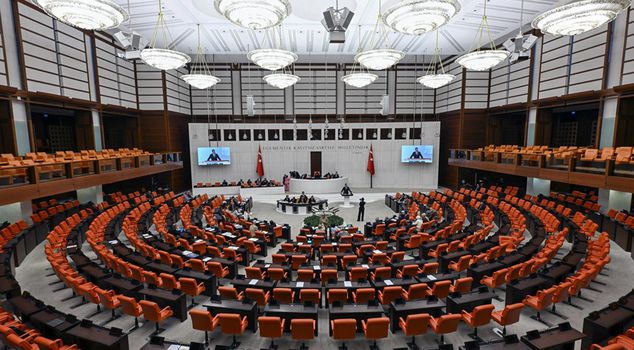
The Turkish Grand National Assembly General Assembly accepted the 'Law Proposal on Amendments to the Child Protection Law and Certain Laws'. With the regulation, the expression 'child pushed into crime' was removed and replaced with the expression 'child in the judicial process'. Additionally, the penalty limits applied for serious crimes committed in the 12-18 age group were increased.
The bill titled "Law Proposal on Amendments to the Child Protection Law and Certain Laws," which includes regulations on the juvenile justice system, execution processes, and the protection of children, was accepted in the Turkish Grand National Assembly (TBMM) General Assembly. With the regulation, those who negligently allow a firearm to reach a child will face up to 3 years in prison, while the penalty limits for serious crimes committed by the 12-18 age group have been raised. With the law, the practice of sentence reduction for children under 15 who commit serious crimes has been abolished, and a conceptual transformation has also been made in the legislation. Accordingly, the term "child pushed to crime" has been removed and replaced with "child in the judicial process."
The "Law Proposal on Amendments to the Child Protection Law and Certain Laws" was accepted in the TBMM General Assembly.
With the regulation, causing a firearm to be seized by a child by failing to store it in accordance with the duty of care and diligence has been established as a standalone crime. Provided that the act does not constitute a more severe crime, individuals who recklessly keep a firearm will be sentenced to 1 to 3 years in prison.
PENALTY LIMITS INCREASED FOR THE 15-18 AGE GROUP
With the amendment made to the Turkish Penal Code (TCK), the lower and upper limits of prison sentences for children in the 12-18 age group have been raised. For crimes such as intentional killing and aggravated assault requiring aggravated life imprisonment, the upper limit of the penalty has been increased to 19 to 27 years for the 15-18 age group, and to 15 to 18 years in cases requiring life imprisonment.
With the accepted motion, the authority to remove the age discount applied in injury crimes has been limited to the most severe cases. Accordingly, juvenile judges will not be able to apply the age discount in cases where, as a result of the injury, the victim enters a vegetative state, completely loses an organ or senses, loses the ability to speak or procreate, suffers permanent scars or disfigurement on the face, a pregnant woman miscarries, or the injury results in death. Less severe aggravated circumstances, such as weakening of organ function or bone fractures, have been excluded from the scope of removing the age discount.
ARTICLE REGULATING RECIDIVISM PROVISION REMOVED FROM THE TEXT
The article in the initial version of the proposal that reduced the age limit for recidivism in crimes by children from 18 to 15 was removed from the proposal text with a motion accepted during the General Assembly discussions.
INCREASED PENALTIES FOR FAMILY NEGLIGENCE
In the article reorganized and accepted in the General Assembly, the penalties given to parents or caregivers who violate the care, education, and supervision obligations arising from family law have been increased. If a child commits intentional killing or aggravated assault as a result of the negligence of a family member, the penalty to be given to the person who fails to fulfill their responsibility will be increased by half to two times, without requiring a complaint.
Indictments prepared without obtaining a Social Investigation Report (SIR) for children under the age of 15 will be returned by the courts pursuant to Article 174 of the CMK.
EXECUTION TO BEGIN IN CLOSED PRISON
The practice of directly starting the execution of sentences for juvenile convicts in child education houses has been abolished. The principle of starting execution in closed juvenile penal institutions and transferring those with good conduct to education houses has been introduced. It has been made mandatory for children in closed prisons to be accommodated in separate wards according to the type of crime.
BAR ASSOCIATION LAWYER INCLUDED IN THE EXECUTION ASSESSMENT BOARD
The formation and working principles of the administration and observation boards that will assess the transfer of juvenile convicts from closed penal institutions to child education houses have been redefined. While the qualifications of the expert staff and teachers who will conduct the assessments in the board have been clarified, the re-evaluation period for children whose assessment results negatively has been limited to a maximum of 6 months.
Additionally, with the motion accepted in the General Assembly, a lawyer to be appointed from the Turkish Bar Associations' Commission on Children's Rights was also included in the administration and observation board that evaluates the transfer of juvenile convicts from closed prisons to education houses.
Excluding terrorist and organization crimes, the sentences of children who receive a total of 3 years or less for intentional crimes and 5 years or less for negligent crimes will be executed directly in education houses. Those who escape or whose disciplinary punishment becomes final will be sent to closed prisons.
"1 DAY COUNTS AS 2 DAYS" SENTENCE REDUCTION ABOLISHED FOR SERIOUS CRIMES
The rule of "counting 1 day as 2 days" applied to children under 15 in calculating conditional release has been abolished for crimes of intentional killing, crimes against sexual integrity, drug manufacturing/trafficking, and establishing criminal organizations, and the calculation has been rearranged as 1 day for 1 day.
PROHIBITION ON SELLING KNIVES AND SHARP INSTRUMENTS ON THE STREET AND ON THE INTERNET
The sale of tools such as hunting knives, machetes, kebab knives, sharp-pointed screwdrivers, skewers, and iron rods in marketplaces, in the open, and at mobile stalls, selling them to those under 18, and their carrying by children have been prohibited. Those who do not comply with the regulation, which also covers internet and distance sales, will face an administrative fine of 5,000 lira, and 10,000 lira if the tools are of a serious nature, and the property of the goods will be transferred to the public. Protective measures may be requested from a juvenile judge for children under 15. Necessary situations for performing art or a profession are exempt from the prohibition.
GUIDANCE MEASURES FOR CHILDREN WITHOUT CRIMINAL RESPONSIBILITY
For children in the judicial process without criminal responsibility, social and community services (20-300 hours), protection from digital risks, namely monitoring access to devices and platforms for 3 months to 2 years under the supervision of the BTK and the Cybersecurity Presidency, books and library, environmental cleaning/afforestation, and addiction prevention programs have been defined as special security measures.
EMERGENCY PROTECTION MEASURE FOR CHILDREN AT RISK
For a child at risk who poses a danger due to substance addiction, mental illness, or contagious disease and comes to a health institution, a report will be issued by a specialist physician within 24 hours. In line with the health board report, the juvenile judge will issue an emergency protection decision within 48 hours. Necessary medical intervention will be carried out throughout the process, and assistance from law enforcement will be sought if needed.
If a public lawsuit is filed against the child, the situation will be reported to the relevant provincial or district directorates of the Ministry of Family and Social Services and the Ministry of National Education to take necessary administrative measures.
SOCIAL INVESTIGATION REPORT MANDATORY FOR UNDER 15
If a decision to postpone the announcement of the verdict is made regarding the child, guidance measures will be applied as probation. In property crimes, if the value is low, the condition of compensating the damage may not be sought, considering the child's economic circumstances.
Obtaining a Social Investigation Report (SIR) has become mandatory for children under the age of 15. For children older than 15, if a report is not obtained, the reason must be clearly stated in the indictment or the decision.
In the implementation of protective and supportive measures, assistance from law enforcement forces may be requested. The coordination of measures will be carried out by the Ministry of Family and Social Services at the center, by the governorship in provinces, and by the district governorship in districts. Parents, guardians, or care custodians who act contrary to the requirements of the decisions will be subject to coercive imprisonment of 3 to 10 days by the decision of the juvenile judge.
CONCEPTUAL TRANSFORMATION IN LEGISLATION: "CHILD IN THE JUDICIAL PROCESS"
With another significant regulation, the phrase "child pushed to crime" was removed from the legislation. The expressions in all relevant regulations, including the Social Services Law, the Criminal Procedure Code (CMK), and the Child Protection Law, were changed to "child in the judicial process" or "against whom a judicial process is being conducted".