05.06.2026 19:51
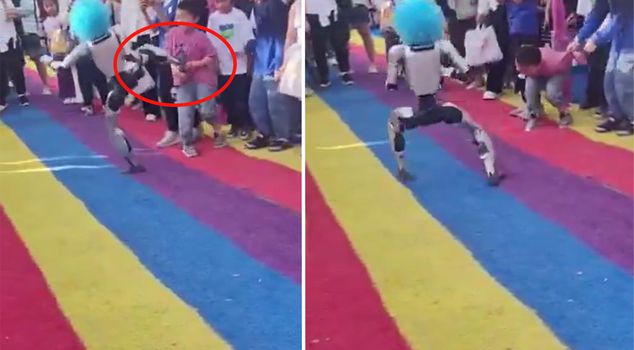
In a show held in Xinjiang, China, entertainment turned into a nightmare within seconds. A humanoid clown robot, dancing to popular music, aimed a hard kick at a small child watching it. As the child was thrown to the ground by the impact, the footage reignited the debate on "robot safety" in the technology world.
At a technology and entertainment show held in Xinjiang, China, an event reminiscent of sci-fi movies occurred. A humanoid clown robot, brought on stage to dance and appearing quite cute with its appearance, suddenly kicked a small child watching the show from the front row. The horrifying moments captured on camera sparked outrage on social media.
ENTERTAINMENT TURNED INTO A NIGHTMARE IN AN INSTANT
On a colorful stage platform set up in Xinjiang, a clown robot with a blue wig and a metallic body began performing dance moves to a popular song. Dozens of children and families nearby were intently watching the show from close range. As the robot walked backward and spun around in rhythm, amid the astonished gazes of the audience, it turned toward the small child behind it and delivered a harsh kick.
THE CHILD WAS KNOCKED TO THE GROUND BY THE IMPACT
As the robot swung its leg, the bewildered small child was thrown backward by the force of the blow, losing their balance. The moments when nearby adults intervened in panic and immediately lifted the child from the ground were recorded second by second. According to information reported by Shanghai Daily, one of China's leading newspapers, the unfortunate child was fortunately not seriously injured and was reported to be in good condition.
DEBATE ON ARTIFICIAL INTELLIGENCE ERUPTED ON SOCIAL MEDIA
With the footage of the incident surfacing on social media, a major global debate was ignited. While many users argued that the robot might have acted this way due to a software bug or because its environmental sensors were in a blind spot, some users reacted by stating that allowing such autonomous devices into crowded areas so uncontrolled creates a significant security vulnerability.