01.11.2026 23:53
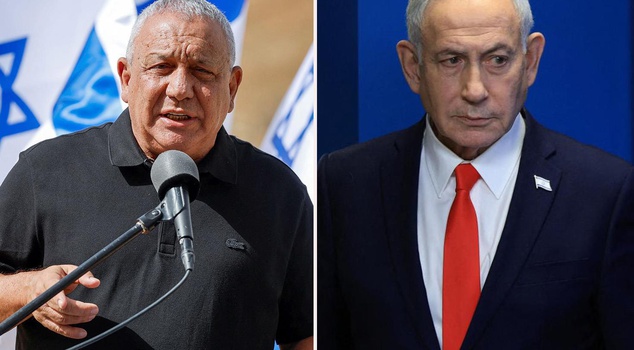
The political crisis that began after the general elections in Israel is deepening. Yashar Party leader Gadi Eisenkot accused Prime Minister Benjamin Netanyahu of not accepting the election results and undermining the will of the people. Reacting sharply to Netanyahu's claims that the elections were interfered with, Eisenkot said the attempt had failed.
Tension escalated between Prime Minister Benjamin Netanyahu and his rival Gadi Eisenkot after the election results in Israel. Eisenkot accused Netanyahu of trying to delegitimize the election results.
SERIOUS ACCUSATION AGAINST NETANYAHU: MALICIOUS ATTEMPT
In Israel's general elections, Yashar Party leader and former Chief of Staff Gadi Eisenkot, who competed against Prime Minister Benjamin Netanyahu, harshly attacked his rival over the election results. After Chairman of the Israeli Central Elections Committee Noam Sohlberg announced that the elections were conducted in accordance with procedure, Eisenkot rejected claims of external interference in the elections. Accusing Netanyahu and his allies of trying to invalidate the election results, Eisenkot said: "The vile and malicious attempt to reject the election results, undermine the will of the people, smear an entire community and drag Israel into a new round of elections has failed."
ONLY SOMEONE WHO REALIZES HE LOST...
Eisenkot argued that Netanyahu's statements regarding the election process damaged trust in state institutions. Accusing Netanyahu of running a "delegitimization campaign" against the election results, Eisenkot sharpened his criticism further. "Only someone who realizes he lost would launch such an audacious delegitimization campaign at the cost of further damaging public trust in state institutions." Arguing that the election results were clear and valid, Eisenkot called on Israelis "to ignore the background noise and the rhetoric that changes every hour." Eisenkot also stressed that the current government bloc led by Netanyahu could not secure a majority in parliament.
NETANYAHU'S BLOC FAILED TO REACH 61 SEATS
The parliamentary picture that emerged after the general elections held in Israel on Tuesday made the government formation process difficult. According to the election results given, the bloc led by Netanyahu won 53 seats in the 120-seat Knesset. However, since the majority required to form a government is 61 seats, Netanyahu's bloc alone could not reach the sufficient number. Parties aligned with Eisenkot, on the other hand, won a total of 48 seats. Thus, neither side was able to secure the majority needed to form a government with its current bloc.
ARAB PARTIES BECAME KEY PLAYERS WITH 19 SEATS
One of the most striking details of the election results was the number of seats won by parties representing Arabs in Israel. Arab parties nearly doubled their representation in parliament, reaching 19 seats. With this result, these parties positioned themselves as an important factor in government formation calculations. However, both Netanyahu and Eisenkot had announced before the elections that they would not cooperate with Arab parties. Therefore, the seat distribution in parliament increased the uncertainty over how the new government would be formed.
EYES ON PRESIDENT HERZOG ON NOVEMBER 4
After the elections in Israel, it is wondered which political leader will be tasked with forming the government. According to Israeli sources, consultations at President Isaac Herzog's residence are planned to begin on November 4. In these talks, the parties' positions on the government formation process will be discussed.