11.03.2026 08:32
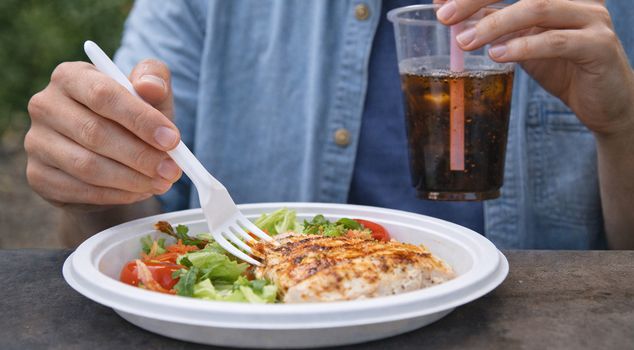
The Ministry of Environment, Urbanization and Climate Change is preparing to ban the supply of single-use plastic products in order to reduce plastic pollution. The regulation, which covers products such as plastic forks, knives, plates, straws, and cotton swabs, is aimed to come into effect by the end of the year. The new regulation is expected to save approximately 1.5 billion Turkish lira in annual waste management costs.
The Ministry of Environment, Urbanization and Climate Change aims to implement a regulation to ban the market release of single-use products such as plastic forks, knives, plates, straws, and cotton swabs by the end of this year to reduce plastic pollution. As part of the Zero Waste Movement, the Ministry is taking another significant step for the environment by promoting the recycling of beverage packaging through a deposit management system.
PREPARATIONS IN THE FINAL STAGES
Last year, the Ministry published the 2025-2028 National Circular Economy Strategy and Action Plan along with the Roadmap for Single-Use Plastics, Marine Litter, and Microplastics. In this context, the preparations for the regulation aimed at reducing the negative impacts of single-use plastics, marine litter, and microplastics on the environment and ensuring compliance with the "EU Single-Use Plastics Directive" have reached the final stage.
PLASTIC PRODUCTS ARE DISAPPEARING
In this regard, the draft regulation prepared to end the use of single-use plastic products that harm the environment and cause plastic pollution, such as plastic forks, knives, spoons, chopsticks, plates, food containers made of expanded polystyrene (EPS-foam), beverage containers, and plastic-stemmed cotton swabs and straws, is planned to be opened for consultation with institutions in the coming days.
It is anticipated that the regulation, which will be finalized after the evaluations of civil society organizations and industry representatives, will come into effect by the end of the year.
SAVINGS OF 1.5 BILLION IN WASTE MANAGEMENT COSTS
By ending the market release of these single-use plastic products, an annual carbon emission equivalent to 1.5 million tons of carbon dioxide will be prevented, and approximately 1.5 billion lira in waste management costs will be saved.
GLASS, PORCELAIN, WOOD INSTEAD OF PLASTIC...
Environmentally friendly alternatives such as glass, porcelain, wood, and cardboard will be offered instead of single-use plastic products. In the ongoing process, measures such as restrictions and labeling are also aimed to be implemented to reduce the consumption of partially plastic-made beverage cups, partially plastic-made food containers, cargo bags regardless of size and weight, wet wipes, and wet surface cleaning towels.
710 THOUSAND TONS OF SINGLE-USE PLASTICS CONSUMED IN 2022
The Ministry conducted a survey with the Turkish Statistical Institute (TÜİK) to examine citizens' attitudes towards single-use plastic products for the new regulation. According to the survey, 77.65% of individuals support using single-use plastics less in their daily lives, while 9.99% do not support it. 72.52% of individuals support buying fewer single-use plastic products, while 11.68% do not agree with this view.
76.40% of the participants found it beneficial to restrict the use of certain single-use plastic products such as plastic straws, plates, forks, knives, spoons, and cups, while 60.02% supported banning these products.
78.71% of the participants stated that they support the use of alternative products such as paper, cardboard, and wood if some single-use plastic products are restricted or banned, while 80.12% supported the shift towards reusable products such as metal, porcelain, and ceramics.
In Turkey, in 2022, 709,348 tons of single-use plastic products were consumed, consisting of 2,858 tons of cotton swab sticks, 32,406 tons of forks and spoons, 25,584 tons of plates, 10,234 tons of straws, 5,117 tons of plastic stirrers, 63,000 tons of food containers, 120,000 tons of plastic cups, and 155,935 tons of plastic beverage bottles. The consumption of single-use plastics has further increased in the following years.
MANY COUNTRIES IN EUROPE HAVE BANNED THEM
Under the "Single-Use Plastics Directive" adopted by the European Union (EU) in 2019, France has successfully implemented comprehensive bans and high recycling targets that go beyond the EU directive by banning many single-use plastic products nationwide.
Germany has implemented practices that almost directly transcribe the directive provisions into national law, requiring reporting from producers and supporting environmental projects with financial mechanisms such as the "Single-Use Plastics Fund."
Spain has also enacted provisions banning the sale of single-use plastics while promoting the transition to sustainable materials through incentives/fees such as taxes on plastic packaging per kilogram.
The Netherlands began charging for certain single-use products starting in 2023 and phased out the sale of some products starting in 2024.
Ireland plans to go beyond the directive by banning wet wipes and single-use service products and implementing consumption-reducing taxes such as additional fees for cups ("latte levy").
While Italy implements basic bans under the EU directive, it is trying to produce alternative solutions, especially in food packaging, with regulations that exempt compostable plastics (EN 13432). Greece has banned single-use products in public.
Estonia, Latvia, Poland, Slovenia, and Finland are working to complete processes to fully transpose the directive into national laws or to implement missing provisions.