10.03.2026 21:11
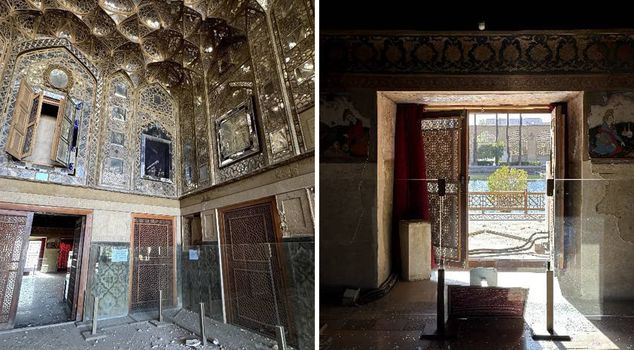
In the airstrikes carried out by the USA and Israel against Iran, the Chehel Sotoun Palace, which is listed as a UNESCO World Heritage site, also suffered significant damage. Iranian officials and authorities reacted strongly to the damage inflicted on this historic palace, one of the most exquisite architectural examples of the Safavid era, built in 1372. The Iranian side emphasized that attacks on historical and cultural sites are contrary to international law and pose a threat to the shared heritage of all humanity.
In the airstrikes carried out by the USA and Israel against Iran, not only military sites but also historical structures that are part of humanity's common heritage were hit. Following the Golestan Palace in Tehran, it has been revealed that the Chehel Sotoun (Forty Columns) Palace, considered the heart of Isfahan and listed as a UNESCO World Heritage Site, also suffered significant damage in the attacks.
"HUMANITY'S COMMON HERITAGE TARGETED"
In statements made by Iranian officials and authorities, a strong reaction was expressed to the damage inflicted on the historical palace, one of the most exquisite architectural examples of the Safavid period, built in 1372. The statement indicated that the historical center of Isfahan was directly targeted, putting invaluable cultural assets at risk of destruction.
CALL TO THE INTERNATIONAL COMMUNITY
The Iranian side emphasized that attacks on historical and cultural sites are contrary to international law and pose a threat to the common history of all humanity. The statement included the following remarks:
"In the attacks by the USA and Israel on Iran, the Chehel Sotoun Palace, located in Isfahan and defying centuries, has also suffered significant damage. This attack is not only against one country but against the cultural history of the world."
NAKSH-I JAHAN SQUARE UNDER THREAT
Located right next to one of the largest squares in the world, Naksh-i Jahan Square, the Chehel Sotoun Palace is known for its elegant columns and historical frescoes. Claims from the region indicate that the architectural integrity of the structure has been seriously compromised due to the tremors and direct hits caused by the attacks.
At the end of a large pool, the palace, located in the middle of a park, was commissioned by Safavid Shah I. Abbas for the Shah's entertainment and reception ceremonies.
The word "chehel" in the palace's name means "forty" in Persian, and the palace gets its name ("Forty Columns") from the twenty slender wooden columns that support the entrance; the reflection of the wooden columns in the water of the pool in front of the entrance causes the number of columns to appear as 40, which is why the palace has this name.
DETAIL ABOUT YAVUZ SULTAN SELIM
The palace, which has stood for centuries, is adorned with invaluable frescoes depicting historical events. Frescoes depicting the Battle of Chaldiran fought in 1514 with Ottoman Sultan Selim I are considered one of the most exquisite parts of the palace.