15.06.2026 18:01
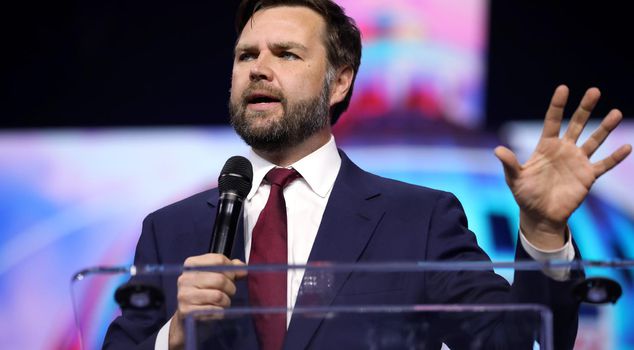
The US confirmed the claim that a $300 billion reconstruction fund for Iran is included in the 14-article draft agreement of the peace deal between the US and Iran. In a television program, US Vice President JD Vance said, 'That could be one of the things they have access to as long as they fulfill their obligations.'
Washington gave the green light to the claim that a $300 billion fund will be allocated for the reconstruction of Iran in the peace negotiations between the US and Iran.
"IT CAN HAPPEN IF IRAN FULFILLS ITS OBLIGATIONS"
US Vice President JD Vance confirmed the claims in a television program he attended, stating that Iran could access this fund if it fulfills its obligations under the agreement. Vance said, "This could be one of the things they can access as long as they fulfill their obligations."
$24 BILLION IN ASSETS EXPECTED TO BE UNFROZEN
Meanwhile, according to the draft published by Mehr News Agency, it is planned to release $24 billion of Iran's frozen assets during the 60-day negotiation process between the US and Iran.
According to the information in the draft, half of the said resource is expected to be made available to Iran before the negotiations begin.
PERMANENT END TO MILITARY OPERATIONS IS TARGETED
The first articles of the draft include an immediate and permanent cessation of military operations on all fronts. It is stated that this includes activities in Lebanon.
It is also stated that the US will commit to non-interference in Iran's internal affairs and respect for the sovereignty of the Islamic Republic of Iran.
STRAIT OF HORMUZ TO REOPEN WITHIN 30 DAYS
One of the most striking articles in the draft was the reopening of the Strait of Hormuz. Accordingly, the Washington administration will agree to lift the naval blockade within 30 days, withdraw its military elements around Iran, and reopen the Strait of Hormuz to international maritime traffic within the same period, within the framework of regulations to be determined by Iran.
TRUMP CALLED IT A "GREAT DEAL"
The publication of the draft text came after US President Donald Trump described the agreement as a "great deal." Trump argued that the agreement would bring peace and security to the region and announced that the Strait of Hormuz would be reopened and oil shipments would return to normal.
The Qatari Prime Minister, British Prime Minister Keir Starmer, and many international leaders also made statements supporting the framework of the agreement.
MISSILE PROGRAM AND REGIONAL MILITIA FORCES WILL NOT BE ON THE TABLE
One of the most critical headings of the draft was the scope of future negotiations. According to Mehr's report, talks between the parties will be limited only to issues of enriched uranium stockpile, uranium enrichment activities, lifting of sanctions, and economic reconstruction.
Iran's ballistic missile program and the regional armed groups supported by Tehran will be kept off the negotiation agenda. It is stated that this article is considered an important diplomatic gain, especially for Iran.
OIL AND PETROCHEMICAL SANCTIONS TO BE SUSPENDED
According to the draft, it is planned to suspend sanctions on Iranian oil, petrochemical products, and related export items. This aims to remove restrictions on revenues Iran will obtain from energy exports and provide Tehran with full access to its revenues.
$300 BILLION RECONSTRUCTION PLAN FROM THE US AND ALLIES
One of the most economically striking articles in the draft was the giant investment package envisaged for the reconstruction of Iran. Accordingly, the US and its allies will be asked to prepare a reconstruction and economic development plan for Iran worth at least $300 billion. This amount is considered to be one of the largest economic support packages ever proposed in the Middle East in recent years.
60-DAY NEGOTIATION PROCESS TO BEGIN
Under the draft, the parties will then enter a 60-day formal negotiation process to reach a comprehensive final agreement covering Iran's nuclear program and the lifting of sanctions. The talks will also address US primary and secondary sanctions as well as restrictions originating from the United Nations Security Council and the International Atomic Energy Agency.
IRAN'S COMMITMENT ON NUCLEAR WEAPONS
Under the draft, Iran will reaffirm its obligations under the Treaty on the Non-Proliferation of Nuclear Weapons and declare that it will not develop nuclear weapons. The draft also includes provisions that the US will not deploy new military forces to the region and will not impose new sanctions on Iran while negotiations continue.
DRAFT NOT YET OFFICIALLY CONFIRMED
The 14-article draft published by Mehr News Agency has not yet been confirmed by independent sources. Iranian and American officials have also not made official statements regarding the content of the text. Therefore, it is stated that the articles in the draft may change as negotiations progress and that different provisions may be included in the final agreement.