06.06.2026 15:31
The Borg Cipher, unsolved for over 400 years in the Vatican Library, has been uncovered thanks to AI-assisted research. Researchers determined that the mysterious manuscript contains thousands of unusual treatment methods related to the medical practices of the period.
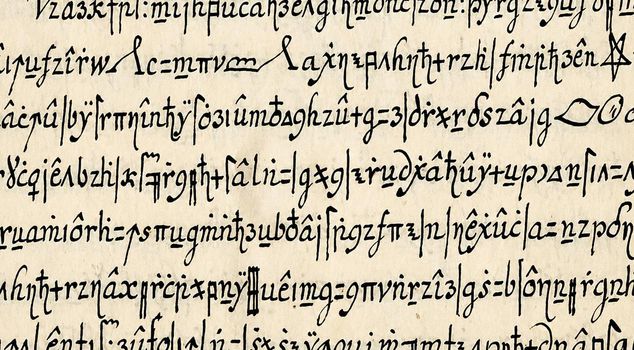
In the deep archives of the Vatican Library, a mysterious manuscript scrawled with strange symbols remained unread for over 400 years.
The 408-page Borg Cipher was created using 34 different mysterious symbols, some Roman letters, and a front page written in Arabic. Notes engraved on the book's cover stated that it contained secret remedies for ailments of the human body.
It is believed that the information was encrypted and hidden because some healing methods at the time could be associated with witchcraft or forbidden practices.
ARTIFICIAL INTELLIGENCE SUCCEEDED IN DECIPHERING THE CODE
A team including Beáta Megyesi, a professor of computational linguistics at Stockholm University in Sweden, managed to decipher the code using machine learning techniques.
Megyesi described the process as "a detective work where each symbol and each pattern brings us a little closer to the secrets of a lost world."
Researchers emphasized that, despite the support of artificial intelligence, uncovering the cipher key was a very laborious process.
UNUSUAL TREATMENTS FOUND INSIDE
With the decryption of the code, a great deal of interesting information about the medical understanding of the period emerged in the text.
These included unusual methods such as drinking several glasses of quality red wine to treat dysentery or fermenting coconut in dough.
Researchers state that the text contains thousands of different treatment suggestions.
A NEW ERA IN THE PURSUIT OF HISTORICAL CIPHERS
According to experts, approximately 1 percent of materials found in archives and libraries worldwide are fully or partially encrypted.
These documents include diplomatic correspondence, medical information, records of secret societies, love letters, and political secrets of the era.
The recent decryption of encrypted letters belonging to Mary, Queen of Scots, also led to a re-evaluation of history.
ARTIFICIAL INTELLIGENCE UNLOCKS HISTORY'S LOST PAGES
Today, researchers have begun examining not only the Borg Cipher but also many previously unsolvable historical documents with the help of artificial intelligence.
International teams including scientists from Norway, France, and Sweden are digitizing and analyzing old letters, encrypted documents, and secret archives.
Newly developed systems not only digitize the text but can also decipher codes and reveal their contents.
GOAL: TO REVEAL UNSOLVED HISTORICAL CIPHERS
Megyesi and her team believe that in the future, artificial intelligence will be able to perform transcription and decryption in a single step by only examining document photographs.
Researchers state that this technology could contribute to deciphering not only historical ciphers but also ancient writing systems that are still unreadable today.
According to experts, artificial intelligence is opening the door to a new era in uncovering information that has remained hidden throughout history.