19.08.2026 18:11
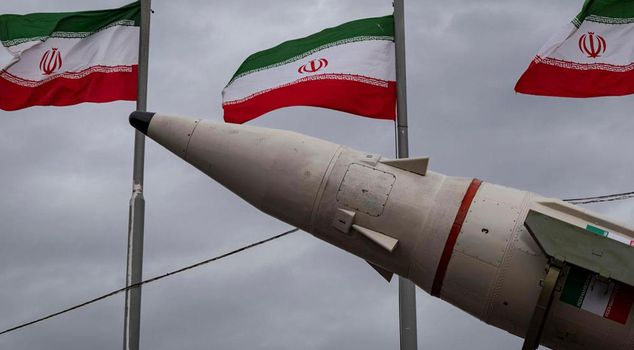
It has been claimed that Tehran's administration is considering expanding its retaliation scope to attack US military targets in Southeastern Europe if US President Donald Trump escalates the war. According to the claims, Iran has included points such as Bulgaria and Southern Cyprus, which have opened their bases to US aircraft, among potential targets.
According to a report by the Financial Times, Iran is considering attacking US military targets in Southeastern Europe if US President Donald Trump escalates the war.
PLAN TO STRIKE THE US IN EUROPE
The Financial Times, citing an official, reported that Iran is considering attacking US military assets in Southeastern Europe if Donald Trump escalates the war. According to two sources close to the Iranian government, Iranian forces have evaluated options to attack US military targets in Southeastern European countries, including Bulgaria, which last month approved the use of the Bezmer Air Base by US refueling aircraft. According to one of the sources, Southern Cyprus, where a British air base was struck by a drone in March, has also been identified as a "potential target" for retaliation against a renewed US attack.
"TEHRAN IS PREPARING TO EXPAND THE WAR IF ATTACKED"
One source said Tehran is preparing to expand the war if Trump follows through on his threats to attack Iranian infrastructure. Another source stated that Iran would "not set limits" in its response to US military action. The sources described last month's attack on a US base in Jordan, which killed three US soldiers, as Tehran's "most accurate long-range strike to date and proof of its ability to hit more distant targets." One source said, "This was also a message to Europe: It can be subject to missile attacks, so it should know where it needs to stand in this war. A huge mistake like striking our infrastructure could cause the war to go beyond the region and reach Europe."
Military analysts, however, said Iran could target US assets in Southern and Southeastern Europe with medium-range ballistic missiles, but they questioned the accuracy rate of these missiles and Tehran's stockpile of longer-range weapons.
EXPECTATION OF RENEWED CONFLICT IN IRAN
According to the report, Iran's recent appointment of radical figures to top security and military positions has also deepened expectations of renewed conflict in Tehran. A second source, pointing to Iran's chief negotiator Mohammad Bagher Ghalibaf and Secretary of the Supreme National Security Council of Iran Mohsen Rezaei, said Iran has sent a clear message that "if you cannot reach a deal with Ghalibaf, you will have to negotiate with Rezaei."