16.03.2026 05:20
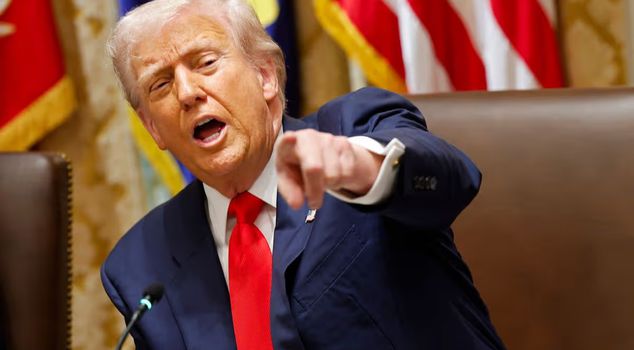
U.S. President Donald Trump, making assessments regarding the war that has entered its 17th day, openly threatened NATO allies. Trump stated that if the desired assistance does not come, "NATO is facing a very bad future." Germany reiterated that it would not participate in an international military operation in the context of tensions in the Strait of Hormuz and attacks on Iran.
US President Donald Trump made striking statements in an interview with the British Financial Times regarding the ongoing war with Iran and the crisis in the Strait of Hormuz. Trump expressed that he expects support from NATO allies to keep the Strait of Hormuz, one of the world's most critical energy transit points, open.
Trump argued that European countries are more dependent on Gulf oil than the US, and therefore, allies should take responsibility for keeping the strait open. He stated that it would be "appropriate" for NATO countries to assist in ensuring the security of the Strait of Hormuz.
"THEY ARE NOT WITH US"
In response to a question about the possibility of not receiving the expected support, Trump gave a harsh reply. Emphasizing that the US has always supported its allies, Trump said, "I have said it before, we have always been by our allies' side, but they are not with us, and I am not sure they will be now. If Europe and our other allies do not support us in keeping the Strait of Hormuz open, NATO has a very bleak future ahead." Trump also mentioned that he might cancel his planned visit to China.
"EUROPE HAS MORE MINE CLEARING SHIPS"
In response to a question from the Financial Times about what kind of support is expected from allies, Trump stated that Europe has more mine clearing ships than the US and said these ships need to be sent to the region. Trump also expressed that he expects military support from European countries.
The US President reiterated the claim that Iran is seeking a ceasefire in a post on his social media account. In his post, Trump stated, "We are targeting Iran's missile infrastructure. Iran wants to negotiate very seriously. But I don't think they are ready."
OVER 600 TANKERS TRAPPED IN HORMUZ
Trump had previously raised the option of escorting oil tankers with warships. However, it is reported that the evacuation of over 600 oil tankers trapped since the outbreak of war in the region could take months. For the tankers to pass through the strait, both ship owners and insurance companies need to be convinced about security. Experts indicate that it is difficult for tanker traffic to return to normal without completely eliminating the Iranian threat. The Strait of Hormuz, through which about one-fifth of the world's oil shipments pass, has been effectively closed since February 28.
IRAN'S ATTACK RISK CAUSES CONCERN
According to American military officials, Iran could make the region extremely dangerous with drones and anti-ship missiles. Experts state that multiple warships need to accompany tanker convoys for their safety. It is suggested that in a possible operation, two warships per tanker or about 12 warships for a fleet of 5 to 10 tankers may be required. However, it is considered difficult to prevent drone and missile attacks at such close range, and Iran's "hit-and-run" attacks could cause serious damage to ships. Trump stated that he hopes countries like China, France, and the UK will participate in the operation.
DIFFERENT REACTIONS FROM COUNTRIES
While some countries approached Trump's call cautiously, others announced that they would not participate in the operation. According to Yonhap, an unnamed spokesperson from the South Korean Presidential Office stated that the security of international sea routes is in the interest of all countries. The spokesperson expressed that Trump's call would be "carefully evaluated."
Kobayaşi Takayuki, the policy chief of Japan's ruling Liberal Democratic Party, stated that sending ships to the Strait of Hormuz is "an extremely difficult threshold to overcome."
GERMANY: WE WILL NOT PARTICIPATE IN MILITARY OPERATION
German Foreign Minister Johann Wadephul announced that his country would not participate in an international military operation in the context of tensions in the Strait of Hormuz. Wadephul emphasized that Germany would not be an active part of the conflict, saying, "Will we soon be an active part of this conflict? No." He noted that the German government's stance on this issue has also been clearly expressed by Chancellor Friedrich Merz and Defense Minister Boris Pistorius. The German Minister also stated that ensuring security in the Strait of Hormuz permanently can only be achieved through diplomatic solutions and negotiations with Iran.