04.09.2026 12:01
Due to geopolitical crises, the US, which has been using its strategic reserves, saw its oil stocks fall to 286.6 million barrels, the lowest level since 1982. Experts note that short-term price stability is putting long-term energy security at risk.
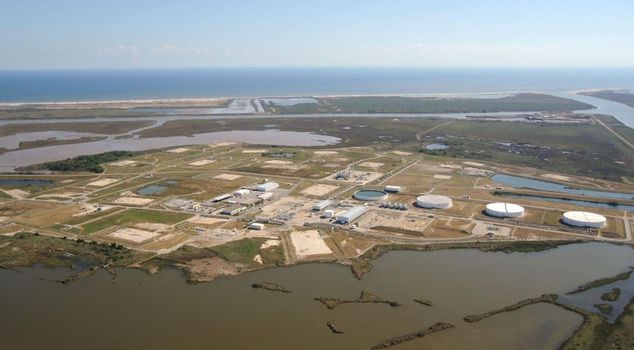
In the US, which has tapped its strategic reserves to limit the impact of geopolitical crises on oil prices, stocks have fallen to a critical level. The amount of crude oil in the Strategic Petroleum Reserve (SPR) fell to 286.6 million barrels, its lowest level since 1982, while experts note that the depletion of reserves narrows Washington's room for maneuver in new crises.
The US continues to use its Strategic Petroleum Reserve to reduce the impact of disruptions in global oil supply on fuel prices. However, this policy, which aims to curb price increases in the short term, brings a new debate regarding the country's energy security.
MELTED BY 30 PERCENT IN 6 MONTHS
According to data from the US Energy Information Administration (EIA), strategic reserves, which stood at 415.2 million barrels at the beginning of the year, fell to 286.6 million barrels as of August 28.
Thus, the US strategic petroleum reserve shrank by about 30 percent in approximately 6 months compared to its level during the period when the war with Iran began. Stocks also fell to their lowest level since 1982.
THE FIRST MAJOR DECLINE OCCURRED DURING THE RUSSIA-UKRAINE WAR
The major decline in US strategic reserves began after the Russia-Ukraine War. Reserves, which were approximately 580 million barrels in February 2022, fell to 372 million barrels by the end of the same year.
Stocks, which fell to 354.7 million barrels at the end of 2023, rose to 393.6 million barrels at the end of 2024 and 413.5 million barrels at the end of 2025 thanks to refilling efforts.
However, new conflicts in the Middle East reversed this recovery.
APPROVAL FOR RELEASE OF 172 MILLION BARRELS
Following the war that began on February 28 between the US and Israel and Iran, which disrupted oil flows in the Strait of Hormuz, International Energy Agency member countries activated their reserves.
Under the plan, which envisages offering 400 million barrels of oil to the global market, the US approved the release of 172 million barrels from the SPR.
Reserves fell to 304.8 million barrels at the end of July and to 286.6 million barrels on August 28.
FROM A 1-MONTH BUFFER TO 2 WEEKS
EIA data also reveals the extent of the decline in reserves from another perspective. Compared to the US's total petroleum product consumption, strategic stocks, which corresponded to about 1 month of consumption at the beginning of 2022, now correspond to about 2 weeks of consumption.
TRUMP'S EYE ON VENEZUELAN OIL
Following the historic decline in reserves, US President Donald Trump's Venezuela move drew attention.
On August 30, Trump announced that following the oil agreement reached with Venezuela, he would use the country's oil to refill the SPR.
It was stated that under the agreement, Washington obtained 100-year concessions in 17 oil fields in Venezuela with over 65 billion barrels of proven reserves and gained the right to purchase 20 percent of production at cost.
"PAYING THE PRICE FOR TODAY'S STABILITY IN THE FUTURE"
Julien Mathonniere, Oil Markets Economist at Energy Intelligence Group, noted that strategic reserves are created for emergencies and said the SPR has fulfilled its function in mitigating the impact of supply shocks in recent years.
Mathonniere said, "The SPR has functioned as intended, limiting the impact of these shocks by preventing sharper price increases. However, it only buys time, and there is a limit to that."
The expert assessed the risk posed by the gradual depletion of reserves with the words: "The US is paying the price for today's stability by narrowing its future room for maneuver."
VENEZUELA MAY NOT BE A SOLUTION IN THE SHORT TERM
According to Mathonniere, Venezuela's possession of giant oil reserves does not mean that oil can be transferred to US strategic reserves in a short time.
Venezuela, which produces approximately 1.2 million barrels per day, needs billions of dollars in investment and comprehensive infrastructure work to significantly increase its capacity.