01.02.2026 15:54
The one-month transition period during which both the euro and the lev were used in Bulgaria ended at midnight on Saturday, January 31, 2026. As of February 1, 2026, the euro became the sole legal currency in the country. The lev will no longer be accepted for the payment of goods, services, or obligations.
In a press release from the Bulgarian Ministry of Finance, it was announced that citizens are required to make all payments in euros, that merchants are no longer obliged to accept leva, and that change in all transactions must be given only in euros.
To ensure transparency and prevent speculative practices, it was stated that under the Law on the Implementation of the Euro in the Republic of Bulgaria, prices will continue to be displayed in both leva and euros until August 8, 2026.
LEVAS NEED TO BE CONVERTED TO EUROS
Citizens holding leva can convert their leva to euros for free at commercial banks and at Bulgarian Post Office branches in areas without bank branches until June 30, 2026. After this date, the Bulgarian National Bank (BNB) will continue the conversion process indefinitely and free of charge.
SHOPPING HABITS IN EDIRNE ARE CHANGING
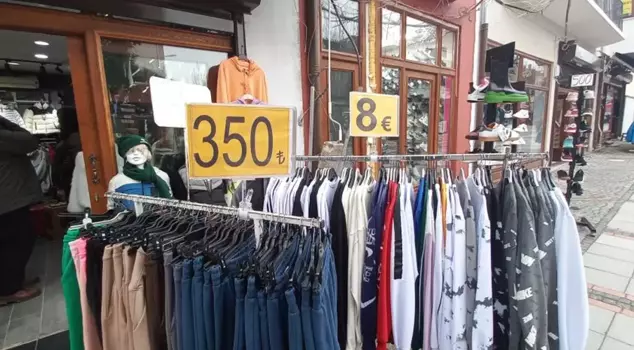
The decision to switch to the euro is being closely monitored in Edirne and its surroundings, where trade is intense at the Turkey-Bulgaria border. While the use of leva in shopping by Bulgarian citizens in Edirne has been common for many years, it is expected that shopping will now be conducted entirely in euros.
"CALCULATIONS ARE NOW CLEARER"
Metin Barmanbay, a tradesman from Saraclar Street, stated that the exchange rate difference caused confusion in the past, saying, "During the leva period, constant calculations of the exchange rate were made. Was it 1.95 or 1.98? Both the tradesman and the customer were struggling. Now the standard is euro, and the calculations are clearer. A product that was previously labeled as 100 leva is now tagged as 50 euros."
"EVERYTHING WILL BE IN EUROS"
Gorian Mrijeviç, who came to Edirne for shopping from Sofia, emphasized that the transition to the euro process has now been completely completed, stating, "As of the night of January 31, shopping with leva has ended everywhere. Now euro banknotes are being given in all shopping and banks. Everything will be in euros."
A NEW ERA IN BORDER TRADE
Experts state that Bulgaria's transition to the euro will initially lead to an adjustment period in border trade, but in the medium and long term, it will create a more stable and predictable trading environment with the elimination of exchange rate uncertainty.
It is noted that continuing to display prices in dual currencies will play a protective role for both consumers and tradesmen. Bulgaria officially adopted the euro on January 1, 2026, becoming the 21st member of the eurozone, 19 years after its accession to the European Union.