29.01.2026 16:26
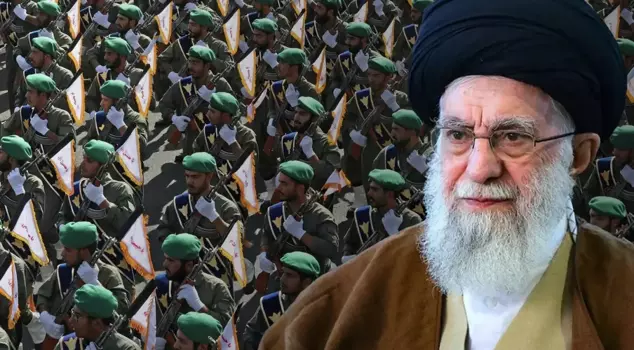
U.S. President Donald Trump's statement that "a massive fleet is coming" towards Iran has escalated tensions in the Middle East, while the Tehran administration announced that it would respond harshly to any potential attack. Along with the tension, Iran's military power has come back into focus; with an army consisting of hundreds of thousands of soldiers, long-range ballistic missiles, drones, and naval capabilities that could block the Strait of Hormuz, there are assessments that a regional war could turn into a global crisis.
US President Donald Trump's statements regarding Iran have once again escalated tensions in the Middle East. Trump stated, "A massive fleet is heading towards Iran. The next attack will be much worse," while the Tehran administration announced that they are open to negotiations but will respond to any attack "like never before."
"WE ARE ON HIGH ALERT" THREAT
US Secretary of State Marco Rubio's announcement that approximately 40,000 American soldiers are within Iran's missile range further heightened tensions. Iran responded sharply to Rubio. The Tehran administration declared that they are ready for a possible attack with the message, "We are on high alert." The renewed possibility of war in the region has also opened discussions about Iran's military capacity and how much it can endure in a potential conflict.
WHAT IS THE STATUS OF IRAN'S MILITARY POWER?
Despite sanctions and years of pressure, Iran stands out particularly with its personnel strength and missile capacity.
PERSONNEL STRENGTH
- Active military personnel: 610,000 – 650,000
- Reserve personnel: Approximately 350,000
With these numbers, Iran ranks among the top 15 largest armies in the world.
AIR POWER: OLD AIRCRAFT, NEW TECHNOLOGIES
The Iranian Air Force largely consists of US-made F-14s from before the 1979 revolution, as well as Soviet and Chinese-origin aircraft. However, Iran is trying to compensate for the gap in air power with drones and missile technology.
- Total aircraft: 550 – 640
- Fighter/interceptor aircraft: 150 – 180
- Attack aircraft: 160+
- Transport aircraft: 100+
- Helicopters: 400+
Especially the "Shahed" series drones have emerged as one of the most notable defense elements of Iran in recent years.
GROUND FORCE: NUMBERS ARE HIGH, TECHNOLOGY IS LIMITED
- Tanks: Approximately 2,000 (T-72S, Zulfiqar, and Karrar)
- Armored vehicles: 4,300+
- Multiple rocket launchers: 1,900+
- Artillery systems: 2,700+
Although Iran's ground forces are strong in numbers, they lag behind Western armies in terms of modern technology and air support.
MISSILE AND AIR DEFENSE SYSTEMS
One of the areas where Iran is strongest is its missile program.
- Ballistic missiles: Shahab, Fateh, Zulfiqar, Khaibar Shekan
- Range: 2,000 – 2,500 km (covers Israel and Eastern Europe)
- Air defense: Russian S-300 and domestic Bavar-373 (claimed to be equivalent to S-400)
WHAT HAPPENS IF THE US ATTACKS? 7 POSSIBLE SCENARIOS
According to BBC's analysis, a possible US military intervention in Iran could bring the following scenarios to the forefront:
- Limited and precise operations: Nuclear facilities and missile bases could be targeted.
- "Venezuela model": The government is not overthrown but is forced to step back.
- Possibility of military rule: The Revolutionary Guards could take control.
- Retaliation against US bases: American facilities in the region could be targeted.
- Closure of the Strait of Hormuz: Oil and gas prices soar globally.
- Attack on a US warship: A major military and political crisis arises.
- Chaos and civil war: A significant humanitarian crisis risk emerges in a country with a population of 93 million.
GENERAL ASSESSMENT
Trump's tough messages and Iran's unyielding stance have brought the Middle East back to the brink of war. While Iran is strong in numbers militarily, it lags behind the US technologically. However, its missile capacity, drones, and strategic position over the Strait of Hormuz have the potential to turn a possible conflict into a global crisis, not just a bilateral one.