27.01.2026 07:30
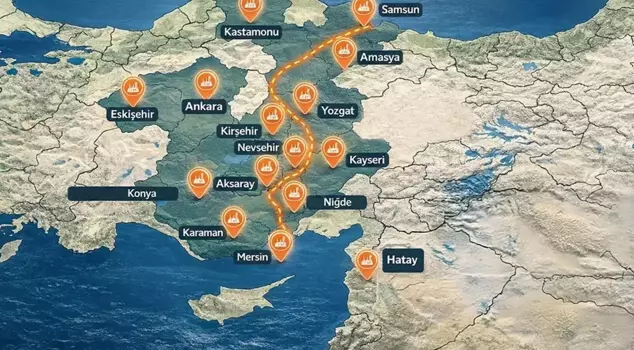
Studies have gained momentum to redirect industrial investments to areas with a lower earthquake risk in order to prevent a potential earthquake in the Marmara Region from disrupting the production and logistics chain. As part of the study, different industrial basins will be established, primarily in Central Anatolia and the Eastern Mediterranean, and a guide will be prepared for the planning of new industrial areas.
The Ministry of Industry and Technology is working on a plan to distribute industrial facilities, which are concentrated in areas with high earthquake risk, more evenly and safely across Anatolia, especially in the Marmara Region. With this strategy, the Ministry aims to prevent damage to production and logistics capacity after a potential major earthquake, support regional development, and increase local employment.
INDUSTRIAL ZONES WILL BE ESTABLISHED
As part of the study, different industrial zones will be created, primarily in Central Anatolia and the Eastern Mediterranean. With the National Industrial Areas Master Plan, security analyses of Organized Industrial Zones (OIZs) concentrated in metropolitan areas and high earthquake risk regions will be conducted to determine suitable locations.
EARTHQUAKE RISK ANALYSES HAVE BEEN INITIATED
Ministry officials announced that earthquake risk analyses have been initiated for OIZs and large facilities located in provinces such as Istanbul, Tekirdağ, Bursa, Balıkesir, Çanakkale, Yalova, Kocaeli, and Sakarya. Based on the data that will emerge, a guide for planning new industrial areas will be prepared.
JOINT WORKS WILL BE CARRIED OUT WITH KANDILLI
Joint works will be carried out with the Kandilli Observatory and Earthquake Research Institute of Boğaziçi University in the implementation of the plan. Additionally, projects aimed at increasing the production capacity of provinces such as Kayseri, Sivas, and Yozgat will also be supported by the Central Anatolia Development Agency (ORAN).
THE COUNTRY'S INDUSTRY IS AT RISK
According to MTA data, 45 provinces and more than 110 districts in Turkey are located on active fault lines. Major fault systems like the North Anatolian Fault Line pose a continuous risk to the country's industry. Therefore, it is stated that the distribution of industry to safe areas needs to be reorganized. Experts indicate that this strategy will both reduce the economic impacts of potential disasters and contribute to the sustainable growth of the industry.