04.06.2026 06:40
In the temporary membership elections of the United Nations Security Council, Germany lost the membership race for the first time in its history. In the secret ballot, Portugal received 134 votes, Austria received 131 votes, and were elected, while Germany remained at 104 votes. Germany, which had won all previous elections it participated in, is believed to have failed due to its stance on Israel's operations in Gaza and the discomfort caused by its recent foreign policy among UN members.
Germany failed for the first time in its history in the elections for non-permanent membership of the United Nations Security Council. Falling behind Portugal and Austria, the Berlin administration could not reach the required number of votes.
SHOCK RESULT FOR GERMANY AT THE UN
In the elections for non-permanent membership of the Security Council held at the United Nations (UN) General Assembly, Germany encountered an unexpected result. In the secret ballot conducted at the 193-member UN, Germany competed with Portugal and Austria in the "Western Europe and Others" group but could not secure the necessary support.
As a result of the vote, Portugal received 134 votes and Austria 131 votes, winning the non-permanent seats. Germany remained at 104 votes and lost the election. Germany's candidacy for the 2027-2028 term thus ended without success.
FIRST DEFEAT IN ITS HISTORY
Germany, which had won all previous elections for non-permanent membership of the UN Security Council, failed in the membership race for the first time in its history. Since reunification in 1990, Germany had run for non-permanent membership approximately every eight years and succeeded in being elected in all its applications. Having served six times as a non-permanent member of the Security Council, Germany last held a seat on the council during the 2019-2020 term.
FOREIGN POLICY UNDER DEBATE
Germany's recent foreign policy has been subject to criticism on international platforms. It is assessed that many countries have kept the Berlin administration at a distance, particularly due to its stance on Israel's operations in Gaza. Additionally, it is noted that criticisms regarding Germany's silence on the US and Israel's moves against Iran and the Washington administration's policies in Venezuela may have influenced the election result.
FIVE PERMANENT MEMBERS IN THE SECURITY COUNCIL
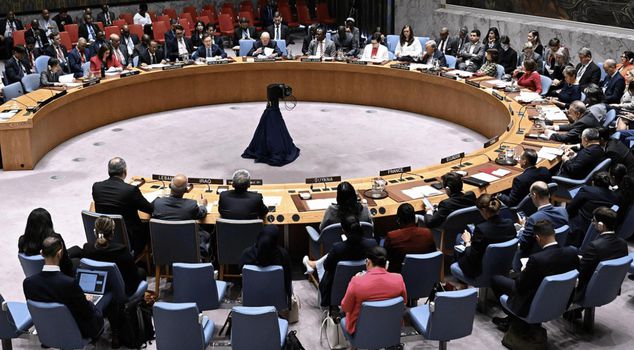
The United Nations Security Council consists of 5 permanent members with veto power and 10 non-permanent members. The permanent members are the US, China, Russia, the United Kingdom, and France. Non-permanent members are elected by the UN General Assembly for two-year terms.