10.11.2025 20:08
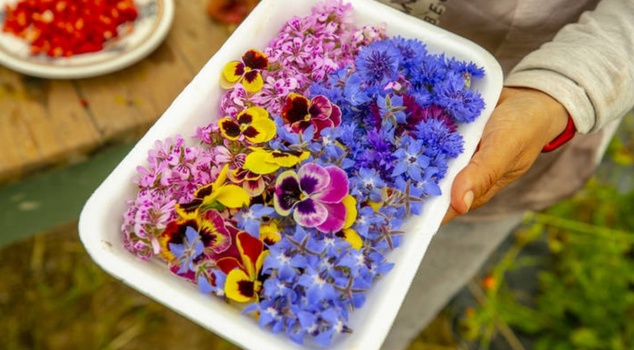
The use of edible flowers in the food and beverage industry is rapidly increasing. Experts from Muğla University are drawing attention to the discovery of edible flowers and their various applications. In this period, where flowers are transitioning from health and beauty to gastronomy, innovative recipes such as 'Lavender Cheesecake' and 'Violet Avocado Salad' are adorning tables. However, it is emphasized that caution should be exercised regarding flower species that contain high levels of toxins, such as Azalea and Oleander.
One of the riches that nature offers to humanity is flowers, which have been used for centuries in the fields of health and beauty. The academic study titled "Edible Flowers in Food and Beverage Management," prepared by Muğla University faculty members Özer Şahin and Asst. Prof. Dr. Burhan Kılıç, reveals that the role of these plants in the kitchen is being redefined.
According to the research, the discoveries and different uses of edible flowers are on the agenda in the field of gastronomy, and their mass production is increasing day by day. Although the use of flowers in the kitchen dates back centuries in many cultures such as Ancient Rome, China, the Middle East, and India, it has been determined that their use in the modern food and beverage industry is "quite limited."
Research conducted in Turkey has identified "five types" of flowers sold fresh in the market: Zucchini flower, Onion flower, Latin flower, Purple Violet, and Carnation.
This rising trend is being led by innovative chefs. The article provides examples of "just a few of the trending flavors," including:
• Lavender cheesecake
• Violet avocado salad
• Lilac butter
• Zucchini flowers stuffed with lobster
• Linden flower pancakes
"Not every flower is edible"
The article also highlights the potential dangers of this trend. It is noted that it is quite difficult to determine whether all flowers in nature are edible. Caution is emphasized regarding flowers that contain high levels of toxins, such as Azalea, Belladonna, Laurel flower, Foxglove flower, and Oleander.
It is stated that flowers that are not certain to be edible should not even be used for decorative purposes.
Clear usage rules
There are also basic rules to be followed when using edible flowers. According to the study, many flowers have only their petals eaten, and the green parts and male/female organs should be removed. Additionally, it is expressed that flowers from forests, nurseries, fields, or roadside should not be consumed due to the risk of pesticides.