27.02.2026 21:13
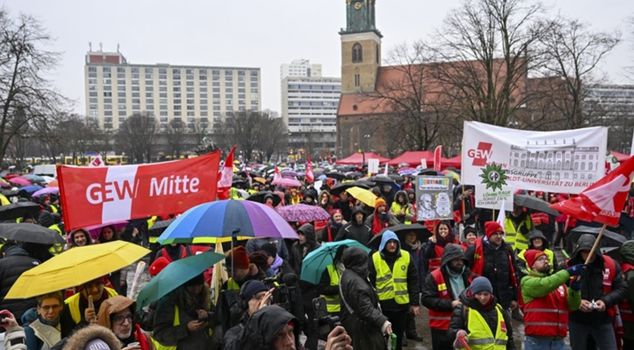
The 48-hour warning strike initiated by employees of public transport companies in Germany, demanding "improvements in wages and conditions," has brought transportation across the country to a standstill.
At the call of one of Germany's largest unions, the United Services Union (Ver.di), around 100,000 workers employed by approximately 150 municipal transport companies across Germany went on strike as of 03:00, demanding improvements in working conditions.
TRANSPORTATION PARALYZED
Due to the strike action by union members, bus, metro, and tram services were largely canceled across the country, affecting millions of passengers who will be impacted by the strike lasting until tomorrow morning.
As passengers were forced to seek alternative transportation options, the union management signaled that if their demands are not met, the intensity of the strikes will be increased.
"IF THEY DO NOT BACK DOWN, WE WILL CONTINUE TO TAKE TO THE STREETS"
In a statement regarding the strike, Ver.di Union Secretary General Frank-Michael Munkler noted that the strikes had started successfully, stating, "Buses and trains are currently waiting in the depots. Employers must come to the table with a negotiable concrete offer in the second round of talks scheduled for Monday. If they do not back down, we will continue to take to the streets."
Meanwhile, during the first major 24-hour warning strike held on February 2, transportation had almost completely halted, and traffic congestion reached record levels.
WHAT ARE THE UNION'S DEMANDS?
Ver.di, which is negotiating on behalf of approximately 100,000 personnel working in municipal public transport companies, is demanding a reduction in the working week to ease the burden on employees, changes in shift arrangements, and higher bonuses for night and weekend shifts.
In Bavaria, Brandenburg, Saarland, and Thuringia, in addition to these demands, a direct salary increase is being requested.
On the other hand, while chaos was experienced in urban transportation, an agreement was reached in the long-standing crisis between Deutsche Bahn and the German Locomotive Drivers Union (GDL).
Deutsche Bahn Human Resources Director Martin Seiler announced in Berlin that there would be no strikes on the railways for the next two years.
According to the agreement, railway workers' salaries will be increased by a total of 5% in two phases, and a one-time payment of 700 euros will be made in April 2026. The contract will be valid until the end of 2027.