17.02.2026 14:20
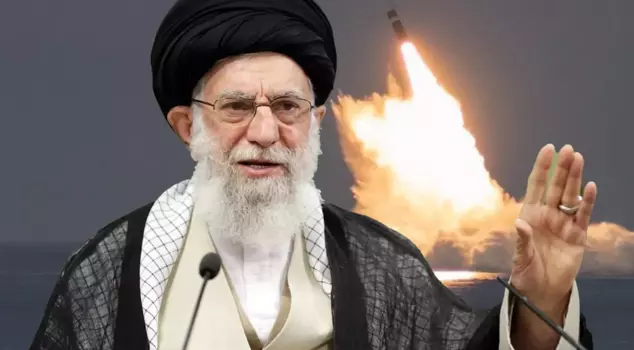
As the second round of negotiations between the US and Iran begins in Geneva, a threat has emerged from Tehran that could overshadow the meeting. Iran's religious leader Khamenei stated that the Trump administration's attempts to overthrow the Iranian state would fail, adding that they could sink a US warship in the Strait of Hormuz.
Indirect talks between Iran and the US, facilitated by Oman, began at Oman's Embassy in Geneva. In the Geneva talks, the Iranian delegation is led by Foreign Minister Abbas Araghchi, while the US side is represented by Steve Witkoff, the Special Representative for the Middle East of US President Donald Trump. The US delegation also includes Trump's advisor Jared Kushner. The talks are being conducted under the coordination of Oman's Foreign Minister Bedr bin Hamed al-Busaidi.
The Iranian Foreign Ministry reported that at this stage of the negotiations, the Iranian negotiating team includes technical, legal, and economic experts, focusing on the lifting of economic sanctions. It was noted that the views and thoughts of Iran regarding nuclear issues and the lifting of sanctions were discussed in the Araghchi-Busaidi meeting. The Iranian Minister conveyed to his Omani counterpart that he is determined to use result-oriented diplomacy to secure his country's legitimate interests and rights and to maintain peace and stability in the region. Oman's Foreign Minister Busaidi expressed appreciation for Iran's determination in diplomatic efforts and hoped that this round of talks would be successful.
OPEN THREAT FROM HAMENEY
The religious leader of Iran, Khamenei, claimed that the US is trying to overthrow the Iranian state and stated that the Trump administration would fail. Khamenei emphasized that a US warship stationed in the Strait of Hormuz could be sunk. In response to President Donald Trump's statements about eliminating the Iranian government, Khamenei said, "In one of his recent speeches, the US President stated that the US has not been able to destroy the Islamic Republic for 47 years. I tell you: You will not succeed either."
FIRST STATEMENT FROM IRAN
Iranian Foreign Ministry Spokesman Ismail Baghaei stated that the main focus of the talks is nuclear warheads. Baghaei expressed that contacts took place yesterday between Iran and the International Atomic Energy Agency (IAEA), and it was reported that similar discussions were held today between the US delegation and IAEA Director General Rafael Grossi.
TRUMP HAD CALLED FOR 'REASONABLENESS'
US President Trump evaluated the agenda for reporters on the plane while returning to Washington from Florida, where he spent his vacation. Referring to the negotiations with Iran to be held in Geneva, Trump stated that he is closely monitoring the process and will participate indirectly in the talks. Commenting on the negotiations, "These talks will be very important. We will see what happens. Iran is generally a very tough negotiator," Trump said, adding, "I hope they will be more reasonable. I think they do not want to see the consequences of not making a deal; I believe they want to make a deal." The US President noted that Iran had the opportunity to make a deal before but did not, and as a result, they had to send B-2 bombers, stating that they would not allow Iran to have nuclear weapon potential.
FIRST ROUND WAS HELD ON FEBRUARY 6
The nuclear talks between Iran and the US, which were interrupted after the attacks by Israel and the US on Iran in June 2025, were resumed in Oman on February 6. Iranian Foreign Ministry Spokesman Ismail Baghaei stated, "The negotiations between Iran and the US in Muscat ended with the parties reaching an agreement to continue the talks." The negotiations took place during a period when tensions between Tehran and Washington had risen again, with Washington increasing its military buildup against Tehran in the region.