11.01.2026 23:41
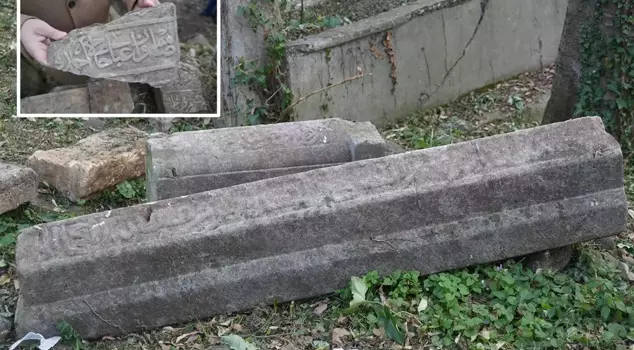
In the rescue excavation initiated at the Seyyid Kutbiddin Cemetery in Samsun, a gravestone inscription with the name Samsun and historical tombstones were found. The excavations are uncovering the graves of important figures from the Seljuk and Ottoman periods.
Under the leadership of Samsun Metropolitan Municipality, in collaboration with the Samsun Museum Directorate, rescue excavations and landscaping works have been initiated in the old cemetery area where the Sheikh Seyyid Kutbiddin Mosque and Tomb are located in the İlkadım district, with the aim of preserving cultural heritage and passing it on to future generations.
HISTORY BURST FORTH FROM THE CEMETERY
So far, within the scope of the works, a gravestone inscribed with "Samsun," a new historical grave, and the gravestones of Gebilizade Mustafa Necip Efendi and the wife of Anatolian Inspector Rıza Efendi, Fehime Hanım, have been unearthed.
"WE FOUND A GRAVESTONE INSCRIBED WITH 'SAMSUN'"
Eyüp Çakır, the Head of the Health and Social Services Department of Samsun Metropolitan Municipality, emphasized the importance of the excavation works, stating, "Important figures from the late Seljuk period and the early Ottoman period are buried here. Sheikh Seyyid Kutbiddin Hazretleri and many valuable personalities are hosted by this cemetery. We want to contribute to the history of our city by preserving our past. So far, we have found a gravestone inscribed with 'Samsun.' This gravestone is very precious to us. We thank the Ministry of Culture and Tourism and the Museums Directorate for their support," he said.
HE DEFENDED SAMSUN DURING THE SINOPE RAID
The Sheikh Kutbiddin Mosque and Tomb is located within the cemetery area in the Kökçüoğlu neighborhood. It is said that Seyyid Kutbiddin, who is rumored to be the grandson of Abdulkadir Geylani Hazretleri, was one of the spiritual figures defending Samsun during the Russian navy's raid on Sinop in 1853. The mosque, built as a single-story structure with brick masonry, is notable for its hipped roof and Marseille tile roofing. There is an 'L'-shaped wooden arched entrance in the north and east facade. In the tomb located to the south of the mosque, there is an Arabic inscription dating back to 1404 AD. The ceiling and floor coverings of the structure are wooden, and there is a sunken ceiling center.
CARRYING THE HISTORICAL TEXTURE TO THE PRESENT DAY
In the recent repairs, the tomb and mosque's brick walls have been covered with travertine, the entrance area has been enclosed with glass, and the wooden ceiling has been renewed. This area, which is one of the oldest cemeteries in Samsun, carries the historical texture to the present day with its gravestones and structures from the Seljuk and Ottoman periods.