31.03.2026 09:23
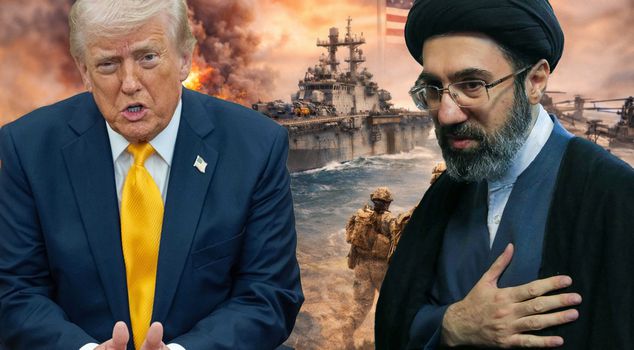
As the war lags behind by a month, it has been claimed that President Trump is on the verge of a historic step back regarding the Strait of Hormuz, where he has frequently threatened Iran. According to the U.S. press, Trump has told his advisors that he is ready to end military operations against Iran, even if the strategically critical Strait of Hormuz remains largely closed.
U.S. President Donald Trump has conveyed to his close circle that he is ready to end the war with Iran even if the Strait of Hormuz remains largely closed. The Wall Street Journal reported, citing U.S. administration officials, that this step would likely strengthen Tehran's tight control over the strait.
In recent days, Trump and his team assessed that an operation to forcibly open the Strait of Hormuz would extend the conflict beyond the four to six-week timeline he has set. Therefore, Trump wants the U.S. to achieve its main goals of weakening Iran's navy and missile stockpiles and to end the current conflicts; then, diplomatic pressure should be applied for Tehran to resume trade flow. According to officials, if these efforts fail, Washington will ask its allies in Europe and the Gulf to lead the reopening of the strait. Trump also has military options available, but officials state that these are not a priority at the moment.
CLOSURE OF THE STRAIT OF HORMUZ THREATENS GLOBAL TRADE
Throughout the past month, Trump has made various public statements about how to handle the Strait of Hormuz, leading to sometimes contradictory messages regarding the overall goals of the war. At times, he threatened to bomb civilian energy infrastructure if Hormuz was not opened by a certain date; at other times, he downplayed the strait's importance to the U.S., stating that it was an issue for other countries to resolve.
As the closure of the strait extends, the shock to the global economy grows, and energy prices rise. Many countries, including U.S. allies, are experiencing serious difficulties due to the decline in energy supplies that used to flow freely through this narrow passage.
Analysts believe that if safe passages are not quickly restored, the U.S. and its partners will continue to allow Tehran to threaten global trade until they reach an agreement or forcibly end the crisis.
Suzanne Maloney, vice president and Iran expert at the Brookings Institution in Washington, described the cessation of military operations before the strait is opened as "incredibly irresponsible."
TRUMP'S WORDS AND ACTIONS ARE CONTRADICTORY
Trump's desire to end the war quickly contradicts some military steps on the ground. This weekend, the USS Tripoli and the 31st Marine Expeditionary Unit entered the region. According to the Wall Street Journal, Trump also deployed elements of the 82nd Airborne Division and is considering sending an additional 10,000 ground troops to the Middle East. However, it is also reported that he is weighing a risky operation to seize the regime's uranium.
White House spokesperson Karoline Leavitt stated yesterday that the U.S. is "working to return to normal operations in the strait"; however, she did not include this among the primary military objectives targeting Iran's navy, missiles, defense industry, and nuclear capacity.
THE STRAIT WILL BE UNDER IRANIAN CONTROL
According to officials, Trump's approach could reinforce Iran's dominance in the Strait of Hormuz. It was stated that a complex operation would be required to reopen the strait at a later date. As the U.S. administration takes steps to end the war, uncertainties regarding the future of the energy transit routes in the region persist.
RUBIO: CURRENT OPERATIONS WILL BE COMPLETED IN A FEW WEEKS
U.S. Secretary of State Marco Rubio stated in an interview with Al Jazeera that operations targeting current military objectives will be completed within a few weeks.
Rubio said, "After that, we will face the issue of the Strait of Hormuz, and at that point, the decision will belong to Iran," adding that "or a coalition of countries from the region and the world, including the U.S., will somehow ensure that the strait remains open."
The Trump administration had considered the possibility of Iran closing the strait since the beginning of the war. However, after Iran threatened to mine the area and target tankers, crossings nearly came to a halt.
Trump and his team argue that despite the threats, the strait is critical for Europe, the Middle East, and Asian countries rather than the U.S.; they claim it is not vital for U.S. energy needs. Senior officials in Washington have been asking allies for weeks to make plans to keep this route, through which one-fifth of the world's oil and gas passes, open.
WHAT HAPPENED?
The U.S. and Israel launched a military attack on Iran on February 28, and Iran retaliated against U.S. bases in Israel, Qatar, the United Arab Emirates, and Bahrain. With the onset of hostilities, ship traffic in the Strait of Hormuz came to a standstill, and Iran closed the strait to U.S. and Israel-linked vessels. The Iranian Parliament approved a bill to charge fees for ships passing through the strait.
Trump had previously announced that he had given Iran a deadline until April 6, and White House spokesperson Karoline Leavitt claimed that Iran was becoming "increasingly willing" to reach an agreement.