04.11.2026 01:00
At the fifth hearing of the Ravive Kozmetik fire case, in which 7 workers, 3 of them children, lost their lives in Dilovası, Kocaeli, on November 8, 2025, the court decided to release businessman Ali Osman Akat, the uncle of the Oransal brothers and a company official, and Abdurrahman Bayat. The detention of the other detained defendants will continue. Families and lawyers making a statement in front of the prison reacted to the decision.
The fifth hearing in the case concerning the fire that broke out on November 8, 2025, at a manufacturing workshop belonging to Ravive Kozmetik in the Dilovası district of Kocaeli and killed 7 workers, 3 of them children, was held today in the hall at Kandıra Prison before the Gebze 7th High Criminal Court.
In the fifth hearing of the case—in which company officials İsmail Oransal, Altay Ali Oransal and Gökberk Güngör; businessman Ali Osman Akat, who is the maternal uncle of İsmail and Altay Ali Oransal brothers and is alleged to have abducted the brothers after the incident; and Abdurrahman Bayat; as well as former Dilovası Municipality Deputy Mayor Necati Temiz, former municipal police chief Cengiz Taşdemir and acting municipal police chief Nizamettin Balcı, whose trial began after the case concerning public officials linked to the incident was merged, are detained, while Aleyna Oransal is under house arrest—the trial prosecutor announced his interim opinion. The prosecutor requested that the defendants’ current detention continue.
DECISION TO RELEASE TWO DEFENDANTS
The court decided to release Ali Osman Akat and Abdurrahman Bayat, while deciding that the other detained defendants remain in detention.
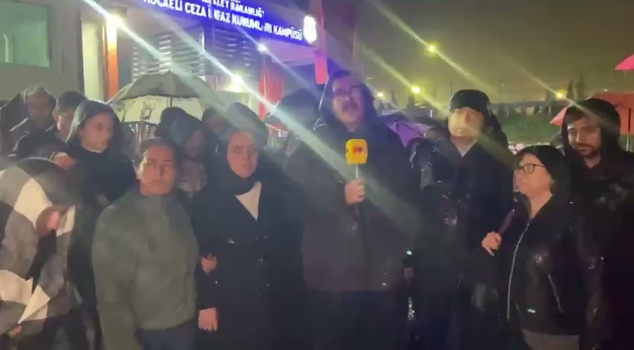
After the hearing, the families of those who lost their lives in the fire and their lawyers reacted to Ali Osman Akat’s release in a statement they made in front of the prison campus. The slogan “It is not an accident, it is a massacre; the account will be settled” was chanted.
Onur Fırat Kaynun, one of the case lawyers, recalled: “The Gebze Chief Public Prosecutor’s Office took our complaint into consideration and referred this person—his name is Ali Osman Akat—for detention, but the criminal judgeship of peace said, ‘Because he is detained in the high criminal court case here, I cannot detain this person.’” Kaynun reacted to the release decision by the Gebze 7th High Criminal Court, saying: “The court today released the person who describes himself as a whale and who is very clearly the real boss... One court says, ‘We are not detaining him because he is already detained,’ while the other court releases this person within a month, saying, ‘Detention does not prevent another detention.’ What is this judiciary aiming at? What is its purpose?”
THE PERSON WHO IS CLEARLY THE REAL BOSS WAS RELEASED
Kaynun spoke as follows:
“We have come out of the hearing of the Dilovası massacre. We have been at this prison campus for hours. For days, for hearings, we have been going back and forth here. Today we understood once again that in this country there is no such thing as people’s right to life. In this country, let alone justice, there is no law left. The court today released the person who describes himself as a whale and who is very clearly the real boss. Why? Because he had been detained for a year and the detention period had expired.”
“The Gebze Chief Public Prosecutor’s Office took our complaint into consideration and referred this person—his name is Ali Osman Akat—for detention, but the criminal judgeship of peace said, ‘Because he is detained in the high criminal court case here, I cannot detain this person.’ We ask from here: While elected representatives, journalists, members of the press, students, political prisoners can be detained 15-20 times in succession, why are capitalists not detained? There is only one answer to this. In this country, what falls to the worker and laborer is only blood, sweat, tears and a coffin. We have seen this again.”
WHAT WILL WE TELL THE CLIENTS?
What will we tell the clients? Let them come and tell us. What will we tell the clients? They say to us, ‘Why are we still coming? What are we waiting for? What are we trying to do?’ We cannot answer this. As my detained colleague Selçuk Kozağaçlı said, what is sacred to us is no longer living or anything like that; if there is something sacred, it is a life—a safe life, a just life. This does not exist in this country. In this country we live only not to die. There is no such thing as justice for the dead. There is only the justice of capital, the justice of power. We have seen this again today.
But let them not worry; this has increased our resistance and our enthusiasm for struggle. In every area we can—in the street, in the courthouse, in the union, in the bar association, wherever it may be—we will hold this massacre to account. We will not let it go. Those who think we will let it go will be mistaken. Even if it does not come out of these courtrooms, these families will reach justice. We will struggle to the end. We are following this case. That whale—we are a school of small fish too. We can eat it too. If the judiciary here is afraid of the whale and makes such decisions, let it know that behind us there are thousands of workers, laborers, and people who have lost their loved ones.
How many times has this happened now? Gayrettepe, Kartalkaya, Soma, Zonguldak... What does this state want? What does this system want? What does this judiciary want? What more needs to happen? We are talking about human deaths. What more needs to be experienced? One court says, ‘We are not detaining him because he is detained’; the other court releases this person within a month, saying, ‘We have never seen such a decision. Detention is not an obstacle to another detention.’ What will they do? It imposed a ban on leaving the country on the person and said, ‘We want him not to attend the hearings either.’ What is this judiciary aiming at? What is its purpose? We are seeking answers to these questions. We will not abandon this struggle for justice.”
After Kaynun, Şengül Yılmaz’s sister Emine Bulut, DGD-SEN General President Neslihan Acar and Esma Gikan’s relative Engin Aras spoke.