04.11.2026 10:03
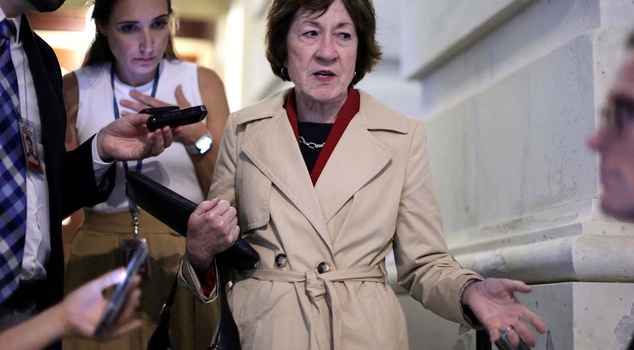
Republicans suffered another blow in the midterm elections in the US. Republican Susan Collins, who has represented the state of Maine in the Senate for about 30 years, conceded defeat to her Democratic rival Troy Jackson. With Collins's loss, Republicans also lost their last seat in Congress in the New England region, which consists of 6 states in the northeastern US. Thus, no Republican senator or member of the House of Representatives remained in the region.
In the midterm elections held in the US on November 3, an important Senate seat that the Republican Party had held for many years changed hands. Susan Collins, who had represented the state of Maine in the Senate since 1997, conceded defeat against her Democratic rival Troy Jackson. The loss of 73-year-old Collins, who was seeking election for the sixth time, changed the balance of political representation not only in Maine but also in the New England region in the northeastern US.
30-YEAR SENATE CAREER ENDS
Susan Collins, first elected in 1996 and taking office in 1997, was known as one of Maine's longest-serving senators. The Republican politician had won successive election victories in a state where her party's presidential candidates had long been unable to win.
This time, however, she did not get the result she wanted against Democrat Troy Jackson. As vote counting continued, Collins accepted her rival's lead and ended the campaign she had run for a sixth term.
According to the Associated Press, Collins accepted the election result before the agency's official projection. Maine Public, meanwhile, reported that Jackson was ahead by more than five points when results had come in from about two-thirds of polling stations.
NO REPUBLICAN CONGRESS MEMBER REMAINS IN NEW ENGLAND
Collins's defeat also led to a noteworthy development for the New England region. In the region consisting of Maine, New Hampshire, Vermont, Massachusetts, Rhode Island and Connecticut, Collins was the last Republican member serving in Congress.
With Democrat Troy Jackson's victory, the region's representation in the US Senate and House of Representatives will consist entirely of Democrats and independent politicians. Thus, Republicans have also lost their last federal legislative seat in New England.
This development stood out as one of the important gains Democrats made in the power struggle in Congress.
IRAN WAR AND RISING COSTS WERE INFLUENTIAL IN THE ELECTION
According to Reuters's analysis, the difficulties Collins faced included rising fuel and heating expenses due to the Iran war. In Maine, known for harsh winter conditions, energy costs became an important issue for voters, while the Trump administration's trade tension with Canada also affected the state's economy.
Economic pressures in sectors such as tourism, lobster fishing and forestry were among the important topics of the election campaign. Jackson, meanwhile, focused his campaign on the cost of living, access to healthcare and workers' rights.
HER RIVAL REACHED VICTORY IN ONLY 100 DAYS
The candidacy process of 58-year-old Troy Jackson, who defeated Collins, also saw unusual developments. Jackson, who had previously served as President of the Maine State Senate, initially ran for governor but finished third in the Democratic Party primary.
After Graham Platner, who won the Democratic Senate nomination, withdrew from the race following a sexual assault allegation against him, Jackson was designated as the party's new candidate in July. Platner denied the accusation against him.
Running his election campaign over a period of about 100 days, Jackson highlighted his working-class background. The politician, a fifth-generation forestry worker, appealed to voters with promises to expand healthcare and fight economic inequalities.
Vermont Senator Bernie Sanders also supported Jackson's campaign. With the result he achieved against Collins, who had been in office for many years, the Democratic politician brought an approximately 30-year era in Maine to a close.