04.11.2026 13:32
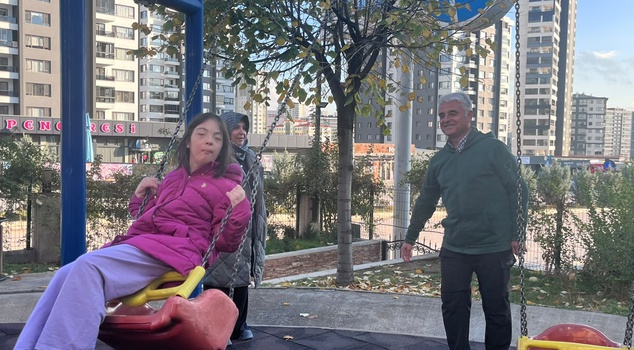
The family of 11-year-old Melek Baltacı, who was not admitted to a playground in a shopping mall in Ankara on the grounds that she has Down syndrome, won their legal battle. TİHEK imposed an administrative fine of 256,357 TL on the business that violated the prohibition of discrimination; the same business had previously been fined 204,285 TL over a similar incident. The court, meanwhile, sentenced the business's responsible manager, Ali M., to 10 months in prison and deferred the announcement of the verdict.
In ANKARA, the operator of a playground in a shopping mall that did not admit Melek Baltacı (11) on the grounds that she has Down syndrome was fined 256,357 TL by the Turkish Human Rights and Equality Institution (TİHEK) for violating the prohibition of discrimination. The court also sentenced the operator's responsible manager Ali M. to 10 months' imprisonment for the offence of 'discrimination between persons' and suspended the pronouncement of the judgment. TİHEK had previously imposed a fine on the operator for the same violation after a similar incident.
Retired non-commissioned officer Feridun Baltacı filed a criminal complaint with the prosecutor's office, alleging discrimination because his daughter with Down syndrome, Melek Baltacı, was not admitted to the children's playground in the shopping mall. In his criminal complaint petition, Baltacı claimed that his daughter was not allowed into the area by playground staff, who said, 'We do not admit special children.' A case was opened against the operator's responsible manager Ali M. at Ankara West 10th Criminal Court of First Instance regarding the incident that occurred on 10 January last year. At the end of the trial, Ali M. was sentenced to 10 months' imprisonment for the offence of 'discrimination between persons', and it was decided to suspend the pronouncement of the judgment.
SECOND PENALTY FOR THE SAME OPERATOR
The father, Baltacı, then filed a complaint with TİHEK. In its defence submitted within the scope of TİHEK's examination, the company's lawyer argued that there was no information, document or evidence supporting the discrimination allegations. Stating that the application being made about one year after the incident raised questions about the veracity of the allegations, the company's lawyer argued that the company and its employees did not display a negative attitude towards children with special needs. TİHEK imposed a fine of 256,357 TL on the operator on the grounds that the prohibition of discrimination had been violated. TİHEK had previously imposed an administrative fine of 204,285 TL on the same operator for the same violation after a similar incident.
THE GREATEST PAIN FOR A FATHER
Feridun Baltacı said that they filed a lawsuit immediately after the incident, stating, 'The court ruled in our favour. Then we applied to TİHEK. TİHEK also accepted that we were right. And in this way, our rightness was also accepted by the courts and institutions. This made us extremely happy. This practice created a very great trauma for us. As a father, I had great difficulty accepting it. It is very difficult to describe in words the pain and distress I experienced that day. May God not make anyone experience such pain. You take your child and bring them to a playground to make them happy and have fun, and there they tell you: 'Your child has Down syndrome, your child cannot enter here.' In my opinion, that is the greatest pain a father can experience. The decisions given by TİHEK and the court are very good. But I want these decisions to be applied to all segments of society, to housing estates, parks, everywhere,' he said.
PLAY IS A CHILD'S FUNDAMENTAL RIGHT
Turkish Down Syndrome Association Board Member and lawyer Cansu Korkmaz, for her part, said, 'The Turkish Human Rights and Equality Institution stated that the necessary regulations had not been made and that the child's not being admitted to that playground was direct discrimination, and it decided that the prohibition of discrimination had been violated. This decision is truly very valuable. Because play is in fact another fundamental right and freedom of the child and one of the fundamental rights and freedoms that are very important for the child's development. Therefore, when families encounter such cases of discrimination, we defend and want them to seek their rights by using the methods of seeking rights, submitting petitions and making applications,' she assessed.