12.03.2026 13:41
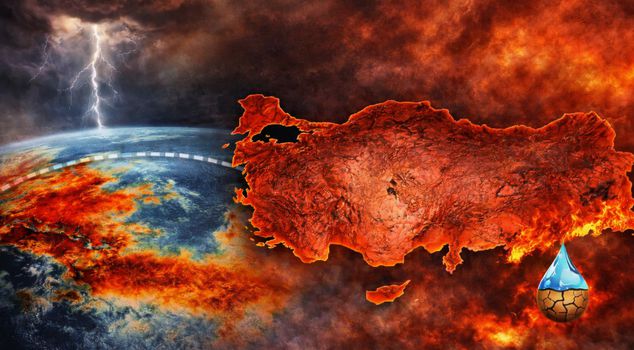
New climate data has revealed an increased likelihood of an extraordinarily strong El Niño development in the later months of the year. Scientists indicate that the rise in temperatures in the Pacific Ocean could affect global weather systems, leading to droughts, floods, and extreme heatwaves. According to experts, this process could also increase the risk of high temperatures and drought in Turkey.
The European Centre for Medium-Range Weather Forecasts (ECMWF) has indicated that climate models suggest a strong El Niño, referred to as "super," may develop in the Pacific Ocean towards the end of the year. The movement of warm water from west to east in the equatorial Pacific, combined with the weakening of trade winds, is causing the ocean surface to warm above normal. Scientists note that such strong El Niño events typically occur every 10 to 15 years and coincide with periods when global temperature records have been broken in the past.
GLOBAL WEATHER PATTERN MAY CHANGE
According to a report by The Washington Post, El Niño has the potential to significantly alter global weather patterns. This process can increase the risk of heavy rainfall and flooding in South America, while deepening drought in Australia, Indonesia, and some regions of Africa. Effects such as hotter and drier summers in the western United States and increased winter precipitation in the southeast can also be observed. Experts also emphasize that strong El Niño periods can affect tropical cyclone activity and lead to further increases in global temperatures.
HEAT AND DROUGHT RISK IN TURKEY
Experts state that the effects of El Niño are mostly felt in Turkey within the Mediterranean basin. However, it is expressed that a possible "Super El Niño" could have stronger consequences on Turkey's climate systems. In this context, it is noted that the risk of drought may increase, especially in the spring and summer months.
Authorities indicate that the amount of precipitation may remain below normal and that high temperatures may be observed more frequently during the summer months.
FOREST FIRE RISK MAY INCREASE
It is stated that the effects of climate change in Turkey may be most felt in the Mediterranean and Aegean regions. There are warnings that the risk of forest fires may rise with increasing temperatures and decreasing rainfall. Experts emphasize that citizens should be prepared for drought and extreme heat conditions.