16.03.2026 15:50
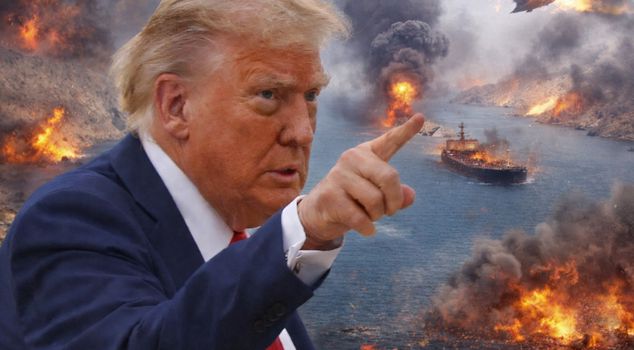
Many European countries, including France, Germany, and the United Kingdom, as well as Japan, South Korea, and Australia, responded negatively to U.S. President Donald Trump's call for them to take part in operations in the Strait of Hormuz.
After the ongoing conflicts in Iran, the US/Israel coalition requested support from European countries to keep maritime traffic in the Strait of Hormuz open. However, the call from US President Donald Trump, who had previously criticized Europe harshly, received negative responses from European capitals.
GERMANY: NO CONNECTION TO NATO
The German government spokesperson stated that the war in Iran has no connection to NATO and expressed that Germany will not participate in efforts to keep the Strait of Hormuz open through military means. The spokesperson said, "As long as this war continues, there will be no participation in any efforts to keep the Strait of Hormuz open through military means."
ENGLAND: WE WILL NOT BE DRAWN INTO A REGIONAL WAR
UK Prime Minister Keir Starmer also emphasized that his country will not be drawn into a regional war. Starmer noted that relations with the US are strong, while stating that the current process needs to be managed carefully. Starmer said, "This is a very self-serving presidential term, and our duty is to manage this process correctly. The friendship between the US and the United Kingdom is very deep, and this relationship will last longer than individuals." France also displayed a similar attitude by not responding positively to the US's call.
REJECTIONS FROM ASIA AND EUROPE
Negative responses came not only from Europe but also from some Asia-Pacific countries to Trump's call. It was reported that Japan, South Korea, and Australia are not keen on sending ships to the Strait of Hormuz. Greek government spokesperson Pavlos Marinakis also announced that the Athens administration will not participate in the mentioned military operations. Japan emphasized that it does not want to enter a war that could last a long time, recalling that a large portion of its oil is sourced from the Middle East. South Korea adopted a cautious approach due to concerns that the conflicts could extend indefinitely.
GERMAN DEFENSE MINISTER'S STRONG REACTION
German Defense Minister Boris Pistorius responded harshly to Trump's call. Pistorius said, "What does Trump expect a handful of European frigates to do that the strong US Navy cannot? This is not our war, and we did not start it."