23.10.2026 03:00
According to a report by Die Zeit, it is alleged that through human smuggling networks, prosecutors who were bribed were made to open an investigation into 'insulting the President' against some Turkish citizens seeking asylum in Germany. It was reported that a smuggler promised an investigation, a house search, and an indictment in exchange for 800 euros. Independent MP Mustafa Yeneroğlu brought the allegations to the Turkish Grand National Assembly.
The “criminal investigation scheme” identified in Turkish citizens’ asylum applications in Germany has turned attention to Turkey.
According to German media, some prosecutors in Turkey are being bribed to have investigations opened against people who will apply for asylum on charges of “insulting President Erdoğan.”
It is claimed that networks organizing human smuggling promise to help applicants obtain the right to asylum by presenting these investigations as evidence of political pressure in Turkey in their asylum applications.
ALLEGATION THAT HUMAN TRAFFICKERS ARE COOPERATING WITH PROSECUTORS
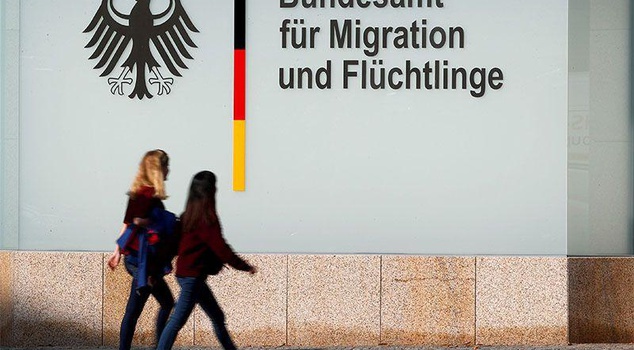
This fraud method, first reported in the German media by the Die Zeit newspaper with the words “To be able to seek asylum in Germany, they are buying criminal investigations in Turkey,” has long occupied the Federal Office for Migration and Refugees (BAMF), which reviews asylum applications.
According to claims by BAMF sources, it is suspected that some prosecutors may have been involved in the process. People who want to seek asylum in Germany contact criminal organizations through social media channels such as TikTok or Telegram. Human traffickers tell people they will smuggle abroad for money, “Insult the president, and we will handle the rest,” guiding them on the steps to take.
It is reported that an expert report prepared on this issue in 2025 also confirmed these suspicions.
INVESTIGATION AND INDICTMENT FOR 800 EUROS
A person who wants to seek asylum in Germany is told to make a post criticizing President Erdoğan on platforms such as Facebook or Instagram. The network then reports the post to prosecutors who cooperate with them in exchange for bribes. Prosecutors launch an investigation, and this investigation is recorded in the National Judiciary Informatics System (UYAP).
In this way, the asylum applicant can document to BAMF in Germany with a genuine UYAP document that they have been subjected to criminal proceedings and political pressure in Turkey.
A Die Zeit reporter reported that a smuggler providing an “asylum service” with whom the reporter communicated told him that, for 800 euros, he could arrange for an investigation to be opened, a home search to be conducted, and an indictment to be prepared in Turkey. The network member told the reporter that with these documents the person could obtain a residence permit anywhere, that they had done this before, and that they had satisfied customers for this service offered in Berlin and Hamburg.
It is stated that the price of broad “all-inclusive” packages, including illegal passage to Germany, is around 6,000 to 8,000 euros.
German authorities note that human smuggling networks have now moved the fraud to a new phase “with some judicial officials involved in corruption.” BAMF officials point out that in the past German authorities were sought to be deceived with fake UYAP documents or a cloned UYAP website, and that fake criminal investigation and conviction documents were identified as a result of examinations.
German authorities say that the UYAP page an applicant shows from their phone can be identified as a fake site only if the web address is examined. Officials say they are also surprised that the right to asylum is now being exploited “through real investigations based on intrigue,” in which some members of the Turkish judiciary are also involved.
YENEROĞLU SUBMITS PARLIAMENTARY QUESTION TO MINISTER GÜRLEK
The allegations, about which the Ministry of Justice has made no statement, also echoed in Turkey. Independent MP Mustafa Yeneroğlu brought to the Turkish Grand National Assembly agenda the allegations that some people applying for asylum in Germany have arranged for criminal investigations to be launched against them in Turkey in exchange for money.
Yeneroğlu, who grew up in Germany, completed his legal education, and later served in Turkey first in the AKP and then for a period in the DEVA Party, submitted a parliamentary question asking Minister of Justice Akın Gürlek to answer. Yeneroğlu asked: “Has an investigation been launched by your Ministry or before the HSK?” and “How many investigations have been launched on the allegation that false investigation files have been prepared for use in asylum applications abroad?”
Regarding the allegations in the Die Zeit newspaper, Yeneroğlu said, “This is far beyond isolated fraud cases; it is a direct abuse of judicial authority,” and added: “If the allegations are true, the power to investigate, which must be used solely in the public interest and in accordance with the law, has turned into a service that can be bought and sold. This is too grave a picture to be reduced to the personal crimes of a few public officials; it shakes to its foundations the ground of trust on which the rule of law rests, the legitimacy of criminal justice, and the credibility of Turkish judicial decisions at home and abroad.”
Stating that the Ministry of Justice cannot brush aside these allegations “with silence,” Yeneroğlu said, “The scope and accuracy of the allegations must be transparently established, the security of judicial records must be ensured, and if there are those responsible, the necessary action must be taken without delay.”
ACCEPTANCE RATE FALLS TO 8 PERCENT, SCHENGEN VISA BECOMES HARDER
Since the refugee crisis triggered by the civil war in Syria in 2015-2016, Germany has been providing financial aid to Turkey, both bilaterally and through the European Union (EU), to curb the flow of asylum seekers to Europe. As a result of this financial aid, Turkey prevents those coming from Syria, Afghanistan, and African countries from crossing to Europe. However, in recent years there has been a large increase in asylum applications to Germany, especially by Turkish citizens.
The exploitation of the right to asylum through fraud, in turn, leads German authorities to approach many applications with more suspicion and prolongs the processes of those who should be granted asylum status. The sharp decline in the rate of Turkish citizens whose asylum applications to Germany have been accepted recently also reveals this trend.
According to BAMF official statistics, Turkish citizens have been among those filing the most asylum applications to Germany in recent years. In 2023, Turkish citizens ranked second with about 61,000 first-time applications; in 2024, they ranked third with 29,177 first-time applications; and in 2025, they again ranked third with 11,919 first-time applications (after Afghan and Syrian citizens).
At the same time, acceptance rates fell significantly. In 2020, 43 percent of Turkish citizens’ applications were successful, while this rate fell to around 13 percent in 2023, 9.4 percent in 2024, and 8.1 percent in 2025. Thus, Turkish citizens continue to rank near the top in number of applications and are also among the groups with the highest rejection rates for their applications.
For the right to asylum to be recognized, a person must be exposed in their own country to serious human rights violations, oppression, or prosecution by state or non-state actors because of their race, religion, nationality, political opinion, or membership in a particular social group.
Experts, however, point out that in Turkish citizens' increasing asylum applications to European countries in recent years, not only the increasing political pressure in Turkey but also the worsening course of the Turkish economy have been effective, and that those who do not see a future prospect in their country are seeking a future for themselves in Germany.
Moreover, in recent years, the increase has not been limited to the number of those coming to Germany illegally through smuggling and illegal routes. The number of those who came with a green or grey passport or a Schengen visa, did not return to Turkey, and applied for asylum has also increased. This has led German authorities to approach holders of green and grey passports, who are granted the right of visa-free entry, with suspicion and sometimes to send them back without granting them entry to the country.
German officials and experts say that increasing asylum applications have an impact on visa processes. It is no secret that Turkish citizens' increasing asylum applications have an effect on the increased difficulty of granting Schengen visas to Turkish citizens. German authorities state that many issues, including the allegations of an investigation setup reflected in the press, are put on the table in talks with Turkish authorities.
.