04.11.2026 10:01
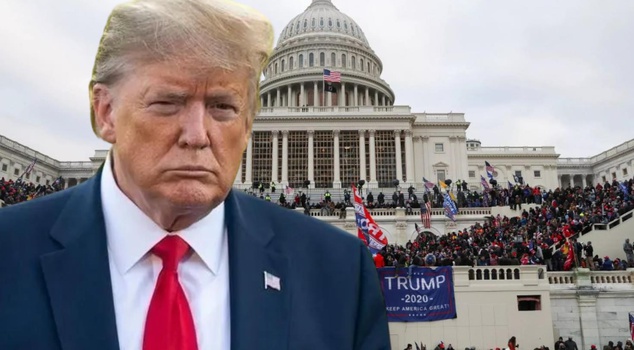
In the midterm elections held in the US on November 3, the Democrats took control of the House of Representatives and the Senate from the Republicans. US President Donald Trump evaluated the results with remarks interpreted as accepting defeat and claimed that they lost because he was not on the ballot. The new majority will be able to block many of Trump's steps in Congress, from legislative proposals to judicial appointments.
After the midterm elections in the US, both chambers of Congress went to the Democrats. According to NBC News projections, Democrats will control all of Congress starting in January.
DEMOCRATS WON BOTH CHAMBERS
Before the election, for Democrats to take Congress, they needed to win a net 4 seats in the Senate and a net 3 seats in the House of Representatives. The Democrats’ victory in the House of Representatives was announced shortly before 10:00 p.m. local time, and it was projected that the party won at least 51 seats.
In Maine, Democratic candidate Troy Jackson defeated incumbent Republican Senator Susan Collins. In Iowa, according to AP, Democrat Josh Turek defeated Republican Ashley Hinson, winning a critical seat for the Democrats. According to The Washington Post, Democrats capitalized on voter dissatisfaction over high prices and the war in Iran to win seats in traditionally Republican areas such as Texas and Kansas. According to Canadian broadcaster CBC, Trump became the first president in the last 20 years to lose both chambers of Congress in midterm elections. The results of some close races have not yet been finalized.
THE CLAIM “IF I WERE ON THE BALLOT, WE WOULD HAVE WON”
In a phone interview with CBS News on election night, Trump congratulated the Democrats. Arguing that the reason Republicans lost so many seats was that he was not on the ballot, Trump said, “If I had been on the ballot, we would have won.” Saying that some candidates were not liked by voters and that some were not his friends, Trump claimed that the base therefore did not go to the polls.
“I WILL VETO EVERYTHING”
Stating that he planned to work with the opposition, Trump reminded in the same statement that he had “full veto power.” Arguing that Democrats would want to work with him, Trump said that otherwise he would veto everything and that Democrats would not want that.
WHICH TRUMP DECISIONS COULD BE BLOCKED BY CONGRESS?
According to assessments in the US press, the new majority will give Democrats the ability to block Trump’s legislative agenda, stop judicial nominees, and increase oversight. Democrats will also determine which bills reach Trump’s desk.
DEMOCRATS CONTROL THE BUDGET PURSE STRINGS
The US Constitution gives budget authority only to Congress. Using this authority, Democrats can refuse to provide new appropriations for Trump’s priorities and block funding for controversial enforcement activities. Congress can also impose restrictions on how allocated money is spent. This could directly affect areas such as deportation enforcement targeting immigrants in particular.
JUDICIAL APPOINTMENTS AND THE SUPREME COURT
Control of Senate committees and the agenda will also pass to the Democrats. Democrats are expected to block many of Trump’s judicial nominees and try to postpone filling a possible Supreme Court vacancy until after the 2028 presidential election.
INVESTIGATION AND POSSIBILITY OF IMPEACHMENT
Officials in the Trump administration could face congressional subpoenas. However, it is assessed that officials may not comply with the subpoenas because the Department of Justice, led by people appointed by Trump, may not enforce them. In a speech to Republican lawmakers in January, Trump argued that if Democrats took Congress, he would face an impeachment process for the third time.
VETO POWER REMAINS WITH TRUMP
Congress changing hands does not limit all of Trump’s powers. Democratic bills passed by both chambers will still require Trump’s signature to take effect. Overriding a veto requires a two-thirds majority in both chambers. An analysis published in The Globalist also emphasized that, in order to significantly slow Trump’s agenda, 60 votes in the Senate are required, not a simple majority. The analysis argued that Democratic control could reduce Trump’s governing effectiveness by at most 20-30 percent.