20.08.2026 14:51
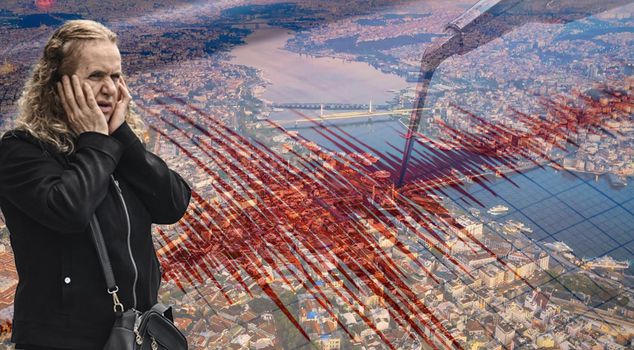
Following the successive tremors off the coast of Istanbul's Princes' Islands, a statement came from the Kandilli Observatory. The observatory announced that between 18 August at 06:00 and 20 August at 13:00, there were 117 earthquakes in an area with a radius of approximately 20 kilometers, with magnitudes ranging from 0.7 to 3.1.
Following the successive tremors off the coast of the Princes' Islands in Istanbul, which caused unease in the city, all eyes had turned to the Kandilli Observatory. In an official statement made by the institution, the details of the seismic activity in the region were shared with the public.
117 EARTHQUAKES IN 2 DAYS
In a statement made via the Kandilli Observatory's social media accounts, the activity in the Sea of Marmara was clearly revealed. The statement said, "Between 18 August 2026, 06:00, and 20 August 2026, 13:00, a total of 117 earthquakes with magnitudes ranging between 0.7 and 3.1 have been resolved within an area with a radius of approximately 20 km south of the Princes' Islands, Istanbul."
"A NORMAL SITUATION THAT CAN BE OBSERVED IN ACTIVE REGIONS"
The statement also gave extensive coverage to the scientific nature of the earthquakes. It was noted that the tremors recorded on 19 and 20 August had a "normal component oblique strike-slip focal mechanism." It was emphasized that the source mechanisms being highly consistent with each other is proof that these earthquakes occurred within a similar faulting geometry.
Underlining that the recent activity should not cause panic, the Observatory summarized the situation with these words:
"The current activity is a microearthquake sequence clustered in time and space. Such small earthquake clusters can occasionally be observed in active tectonic regions."
7/24 UNINTERRUPTED MONITORING CONTINUES
It was also announced that activities in the region are being monitored in real-time in order to alleviate possible concerns of citizens. It was reported that the Regional Earthquake-Tsunami Monitoring and Evaluation Center (BDTIM) within the Kandilli Observatory and Earthquake Research Institute (KRDAE) continues to monitor all seismic activities 24/7 in terms of location, depth, and magnitude, and to evaluate them in detail.