21.06.2026 01:20
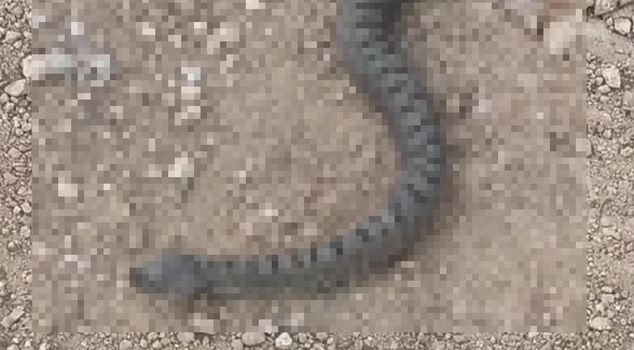
The 2,010-meter-high Geminbeli Pass in the Suşehri district of Sivas witnessed an exciting discovery for nature enthusiasts. Hikers on a nature walk came face to face with the Caucasian nose-horned viper, a species protected by the International Union for Conservation of Nature and considered one of Turkey's most venomous endemic species. The hikers recorded this dangerous yet rare creature encountered in a rocky area moment by moment with their mobile phone cameras.
Located in the Suşehri district of Sivas, the Geminbeli Pass at an altitude of 2,010 meters, which connects the Black Sea to Central Anatolia, hosted a very rare guest whose species is under threat of extinction. Mountaineers conducting a land hike in the region managed to capture images of the Caucasian nose-horned viper, one of Turkey's most venomous endemic reptiles, in its natural habitat.
MOVEMENT IN THE STONY AREA DREW ATTENTION
During a hike in the Geminbeli Pass area, members of the Suşehri Mountaineering Club (SUDAK), who engage in nature sports and climbing activities in the Suşehri district, noticed movement in a stony area. Examining closely with care, the mountaineers realized that the creature they encountered was a rare and protected snake species in the region.
"IT ATTACKS WHEN IT SENSES DANGER, IT NEVER FORGIVES"
Seeing this special species, which is classified as "near threatened" according to the criteria of the International Union for Conservation of Nature (IUCN), the mountaineers immediately grabbed their mobile phone cameras.
During the recording, the snake, which drew attention with its distinctive protruding structure above its nostrils, assumed a defensive position against the team filming it and displayed aggressive behavior. The following dialogue among the mountaineers at that moment revealed the seriousness of the situation and the danger of the snake:
"This is a viper, currently the most venomous snake in the Central Anatolia Region. It has that distinctive structure on the tip of its nose. It senses danger, it attacks, it never forgives."
The rare endemic species, examined and recorded without harm for a while in its natural environment, then moved through the stony area and disappeared from sight.