15.05.2026 17:10
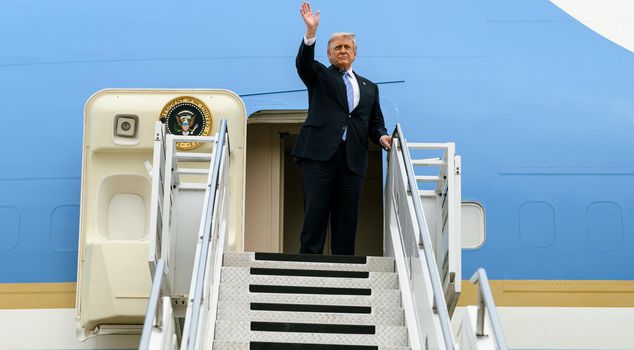
As US President Donald Trump's 2-day visit to China came to an end, the US delegation, preparing to depart from Beijing, carried out a rare "clean-up" operation in diplomatic history. Just before boarding Air Force One with President Trump, all gifts, badges, and souvenirs given by their Chinese hosts were dumped into trash cans at the plane's door. Washington did not allow a single object of Chinese origin to enter the aircraft.
US President Donald Trump's visit to China began a new era in cybersecurity and physical security protocols minutes before the plane's departure. The American delegation was unable to bring Beijing's hospitality and souvenirs onto the plane. The Secret Service, citing "national security," confiscated all technological equipment used on Chinese soil and gifts given.
"DECONTAMINATION CENTER"
According to information leaked from eyewitnesses and delegation sources, the security checkpoint set up in front of the Air Force One stairs turned into a "decontamination center." The entire delegation, including high-ranking officials and journalists, handed over badges, pins, gifts, and even cultural souvenirs given by Chinese officials for on-site destruction rather than taking them along.
DEVICES LEFT AT HOME, "CLEAN" PHONES USED
It turned out that the security operation was not limited to physical objects and was planned from the very beginning of the trip. All delegation members:
Left their personal smartphones and computers in the US.
Used only "clean" prepaid phones throughout the visit.
Before boarding the plane, no electronic equipment that had touched Chinese networks, including these temporary devices, was allowed inside the aircraft.
"NOT EVEN A SINGLE CHIP CAN INFILTRATE"
It was stated that US intelligence units were on high alert regarding microchips, listening devices, or passive transmitters that could be placed even inside a simple badge or souvenir. This "radical sterilization" decision to protect Air Force One's digital ecosystem proved that cybersecurity has turned into a physical battlefield.
By not allowing any object of Chinese origin to cross the threshold of the world's most secure plane, the Washington administration concretized the perception of "high risk" in its relations with Beijing.