27.06.2026 15:10
New York Times writers Phil Hay and Liam Tharme harshly criticized the Turkish National Team, which bid farewell to the World Cup in the group stage. Describing Turkey's performance as "the biggest waste of tickets in history," the writers highlighted the failure to score despite 62 shots and argued that the team had no excuses.
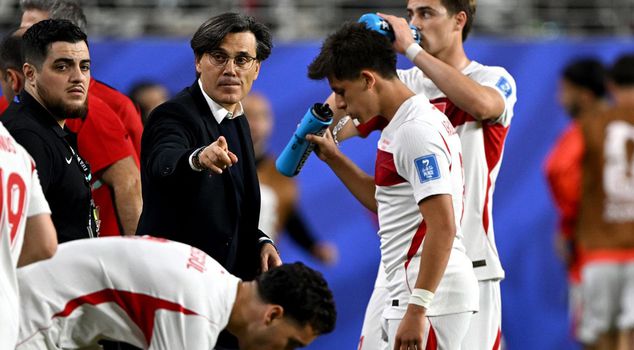
After defeats against Australia and Paraguay, the Turkish National Football Team's performance, which bid farewell to the 2026 World Cup, has also resonated widely in the international press. New York Times writers Phil Hay and Liam Tharme penned an article evaluating the performance of the Crescent-Stars in the tournament.
"WE SHOULD NOT SEE TURKEY AS A SURPRISE CANDIDATE"
The two writers harshly criticized Turkey's early exit from the tournament, stating, "It's time to face reality. We should never again see Turkey as a surprise candidate for the World Cup." The article highlighted that Turkey was eliminated before even completing the group stage.
"THEY HAVE NO EXCUSES"
Phil Hay and Liam Tharme argued that the results obtained despite the star names in the squad were unacceptable. Regarding the performance of Turkey, which has players like Arda Güler, Kenan Yıldız, and Hakan Çalhanoğlu, the writers stated, "They have no excuses for being this bad."
A FIRST SINCE 1966 CLAIM
The article also noted that Turkey took a total of 62 shots against Australia and Paraguay but failed to score. The two writers claimed that in statistics kept since 1966, there is no record of another team taking that many shots over a two-match span without scoring.
"THEY WOULD HAVE BEEN BETTER OFF PLAYING GOLF"
One of the most striking remarks in the New York Times evaluation concerned the offensive performance. The writers commented, "They would have been better off playing golf," while criticizing their preference for long-range shots and expressing that they found the team's offensive organization insufficient.
On the other hand, the article noted that Arda Güler was one of the team's most productive players, comparing the young star to "a conductor of an orchestra whose violin section was in the bar."