30.06.2026 16:10
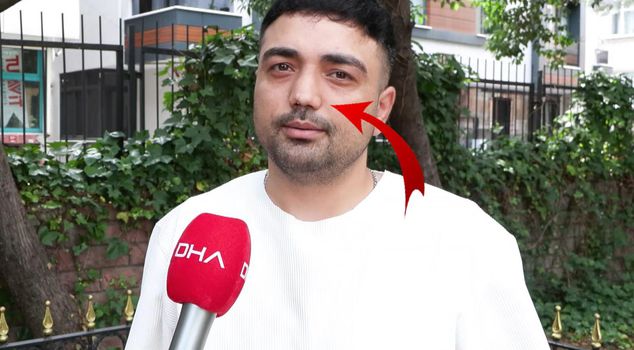
Enes Öğüt, who claimed that a deformation occurred in his nose after the surgery he underwent due to a breathing complaint, alleged that he could not recover his health despite four consecutive interventions. Öğüt, stating that the artificial cartilage placed in his nose pierced his skin, said he lost his job and could not afford the 24,000 euro fee required for another surgery. Meanwhile, the expert report expressed the opinion that there was no need for an investigation regarding the doctor.
Enes Öğüt, living in Istanbul Esenler, underwent surgery in 2019 at a hospital in Bayrampaşa due to breathing difficulties and snoring. Stating that he had issues with nasal turbinates, Öğüt began searching for a new doctor about a year after the surgery due to a drooping nasal tip. Öğüt consulted with Azerbaijani Opr. Dr. R.H., who worked at a private hospital in Bağcılar. After paying the 55 thousand lira surgery fee, Öğüt had the operation, noting that the doctor said his nose would be reshaped using cartilage taken from his rib. Öğüt stated that the cartilage taken from his rib was placed in his nose, and said, 'About 3 months after the surgery, the cartilage in my nose began to dissolve, and my nose deteriorated again.'
FIRST CALLED TO THE HOSPITAL, THEN TO A MEDICAL CENTER
Because the center where he had the surgery was one of the hospitals mentioned in the 'Yenidoğan Gang' case, Öğüt contacted his doctor and was called for a third time to a hospital in Ataköy. Öğüt explained that the artificial cartilage, which the doctor claimed was brought from abroad, was placed in his nose at this center for 14 thousand lira, and about 3 months after the procedure, deformation began to form on the tip of his nose. Öğüt applied to the same doctor again after 3 months. Stating that the doctor saw patients at different hospitals and health centers, Öğüt was called by R.H. this time to a medical center in Yenibosna.
WENT FROM HOSPITAL TO HOSPITAL, LOST HIS JOB
Öğüt went to the medical center in Yenibosna for the fourth time for a doctor's check-up; during the examination, it was decided to correct the indentations on Öğüt's nose. Öğüt, who stated that he was called back to the same medical center 3 days later and the intervention was performed in an examination setting, did not have his health problems end. This time, the inserted artificial cartilage, allegedly due to the doctor's incorrect intervention, pierced the skin of his nose. Öğüt, saying he suffered both health-wise and economically during this process, also lost his job. Öğüt, who wants to regain his health as soon as possible, stated that health institutions quoted him prices up to 24 thousand euros for a new surgery.
"MY NOSE DROPPED ONE YEAR AFTER THE DOCTOR REMOVED THE BONE"
Enes Öğüt said, 'In 2019, due to having nasal polyps and my snoring problem, I was examined at Bayrampaşa State Hospital. During the examination, the doctor said I could get rid of the problem by removing the bone, not the nasal tissue. After the bone was removed, my nose dropped within 1 year. One year after my nose dropped, I went to a private hospital.'
"CARTILAGE WAS ADDED, THAT CARTILAGE ALSO DISSOLVED AFTER 3 MONTHS"
Öğüt said, 'I met with the doctor there. The doctor said that for 55 thousand lira, he would take cartilage from my rib and add it to my nose, and that the tip of my nose had dropped due to bone thickness. Instead, he took cartilage from my rib and added it to my nose during the surgery. Later, after 3 months, that cartilage dissolved and my nose began to become crooked.
DEFORMATION OCCURRED IN HIS NOSE DURING THE THIRD SURGERY
Öğüt said, 'After my nose became crooked, I went for surgery again 3 months later to the private hospital in Ataköy. Since my cartilage had dissolved and that hospital had also closed, when we contacted the doctor again, he called me to the private hospital in Ataköy. He said he would bring the cartilage from abroad and attach it during that surgery. About 3 months after that surgery, indentations started to form again. My doctor was not affiliated with a single hospital; since he had agreements with many hospitals, he called me to a medical center for a check-up. When I went there, he checked me on an outpatient basis. He gave me another appointment for 3 days later and said another intervention was needed. When I went 3 days later, they numbed the tip of my nose with the artificial cartilage and added cartilage inside. After adding it, the cartilage pierced the skin on the tip of my nose,' he said.
"HOW MANY TIMES DO I NEED TO HAVE SURGERY TO FIX MY NOSE?"
Öğüt, explaining that the fourth intervention on his nose was again performed by the same doctor, this time on an outpatient basis, said, 'He brought artificial cartilage from abroad and pushed it in with his hand. Later, after a week, the cartilage pierced this part at the tip of my nose. Then he put stitches. The artificial cartilage he inserted pierced my skin like this. As a result, I was left like this. I have been suffering this hardship for 2 years. I cannot go outside. When I go out, people look at me strangely, and because of this surgery, I also left my job. They had to let me go due to constant back and forth, and I haven't worked for 2 years. I paid 55 thousand lira for my second surgery and 14 thousand lira for my third surgery. It was done by an Azerbaijani doctor. After 3 months, he called me to the private hospital in Gaziosmanpaşa. I went there, and he said, 'You need to wait another 6 months.' Since I knew it wouldn't be successful, I filed a lawsuit against him. I don't have the strength to have surgery again, financially. These procedures are very expensive. When I got a quote from a hospital, they quoted up to 24 thousand euros. I am in a lot of trouble, both financially and emotionally. I am sure there are many people who have been victimized like me. How many times do I need to have surgery for my nose to get better?' he said.
EXPERT REPORT PREPARED
Meanwhile, Öğüt's lawyer brought the matter to court. The expert report prepared stated that appropriate supportive treatment was applied for the complications that arose after the surgeries, the risks that could occur after surgery were stated in the consent form signed by the patient, the patient was a current smoker, and as a result, there was insufficient evidence to conclude that Dr. R.H. had any negligence or fault. The expert report also included information that there was no need for an investigation regarding Dr. R.H.