30.10.2026 15:40
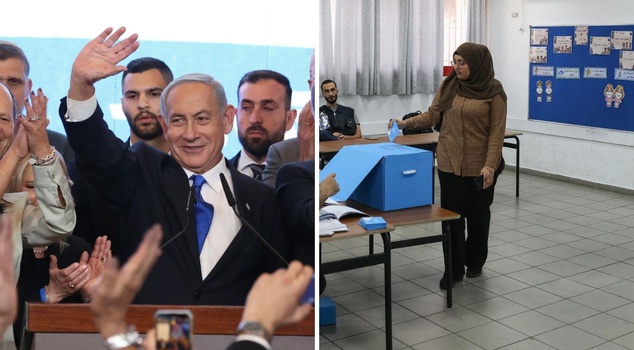
In Israel’s general elections, Arab parties achieved a historic success by winning a total of 19 parliamentary seats. The Ra’am Party, led by Mansour Abbas, expanded the field of political representation by joining the government coalition for the first time in 2021.
The most striking result of the general elections in Israel came from the Arab parties. The parties representing Palestinian citizens of Israel achieved a historic success by winning a total of 19 seats. So what is the legal status of Arab parties in Israel? What rights do they have in parliament, and can they form a government?
Arab parties reached 19 seats
In the general elections on October 27, Arab parties achieved a significant success. The Joint List won 11 seats, while the Ra'am Party led by Mansour Abbas won 8 seats.
Thus, the total number of seats held by Arab parties rose to 19. This result brought Arab political representation to its strongest level in recent years.
What is the legal status of Arab parties in Israel?
Palestinian Arabs who are citizens of Israel have the right to vote and to be elected. Arab parties, like other political parties, can participate in elections, be represented in parliament, and engage in legislative activities.
Arab members of parliament can submit bills, serve on committees, oversee the government, and participate in confidence-vote processes.
However, Israeli law also contains significant restrictions on party activities. Article 7A of the Basic Law on Knesset Elections allows candidates or lists to be barred from participating in elections on grounds such as denial of Israel's character as a Jewish and democratic state, incitement to racism, and support for armed struggle.
These regulations have long been the subject of legal and political debate, especially regarding the participation of Arab political representatives in elections.
Have Arab parties previously entered the government?
A major turning point in Israeli politics occurred in 2021.
The Ra'am Party led by Mansour Abbas joined the coalition formed by Naftali Bennett and Yair Lapid. Thus, for the first time, an independent Arab party officially became part of an Israeli government coalition.
This development showed that Arab parties could play a role not only in the opposition but also in the formation of a government.
Why do 19 seats have historic significance?
The Joint List formed by Arab political parties won 15 seats in the 2020 elections. However, in the 2026 elections, the total representation of Arab parties, which competed as different lists, reaching 19 further increased their political weight.
Behind this success lie Arab voters' political participation, demands for security and equal citizenship, and reactions to the policies of the Netanyahu government.
They could determine Netanyahu's fate
In the new parliament, Netanyahu's bloc has 53 seats, while the opposition has 48 seats.
If the 19 seats of the Arab parties are added to the opposition's 48 members of parliament, a majority of 67 can be formed.
However, for this possibility to materialize, the Arab parties and the right-wing and center parties in the opposition must reach a political compromise.
It is not the first time that Arab parties in Israel have reached a position where they can play a role in forming a government. However, the new power they gained with 19 members of parliament has become an important political card that could determine whether Netanyahu's rule continues.