08.05.2026 18:05
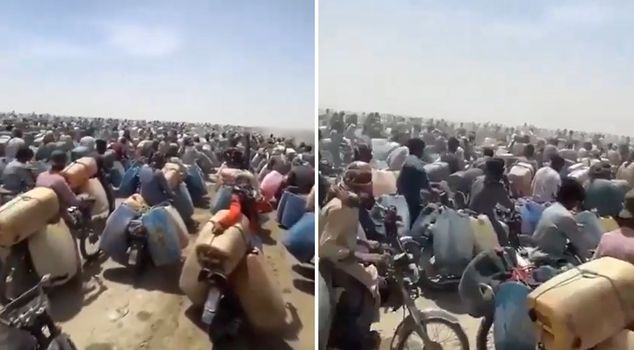
Pakistan, the world's fifth most populous country with 260 million people, is experiencing a full-blown "energy catastrophe" due to escalating Iran-Israel tensions in the Middle East and the closure of the Strait of Hormuz for about three months. Cut off from the global supply chain by the shutdown of this strategic passage, the public has resorted to flocking to the Iranian border. People carrying containers have been trampling each other for a single drop of fuel.
Disruptions in the Strait of Hormuz following the ongoing tensions between Iran, Israel, and the US directly impacted energy supply. The closure of the Strait of Hormuz, through which approximately 20% of the world's oil trade passes, for about three months halted ship passages, upending the energy market. As the fuel crisis deepened significantly in Pakistan, home to around 260 million people, the public found a solution by turning to the Iranian border.
NOTABLE CROWD AT THE BORDER
Images shared on social media show large numbers of people forming long queues at the Iranian border to buy cheap fuel, carrying plastic canisters tied to their motorcycles.
The density created by citizens seeking cheap fuel caused a notable movement in the region. Everyone brought 3-4 canisters with them, rushing to stock up on cheap fuel.
Meanwhile, it is noted that problems in official distribution channels have increased informal fuel trade along the border.
SHARP RISE IN FUEL PRICES
The contraction in energy supply also reflected on prices across the country. It is reported that, following recent regulations, gasoline prices increased by over 40% as of April, while diesel prices saw a rise approaching 50%. Rising costs directly affect many sectors, especially transportation and production.
IMPACT OF THE STRATEGIC STRAIT
Developments in the Strait of Hormuz, through which a significant portion of the world's oil transport passes, closely concern global energy markets. Countries dependent on energy imports, like Pakistan, are among the fastest affected by this process.
ECONOMIC IMPACTS MAY DEEPEN
Experts warn that if the energy crisis persists, there could be serious price increases not only in fuel but also in food and basic necessities through logistics costs. This situation could further increase the cost of living in the country.