12.03.2026 21:41
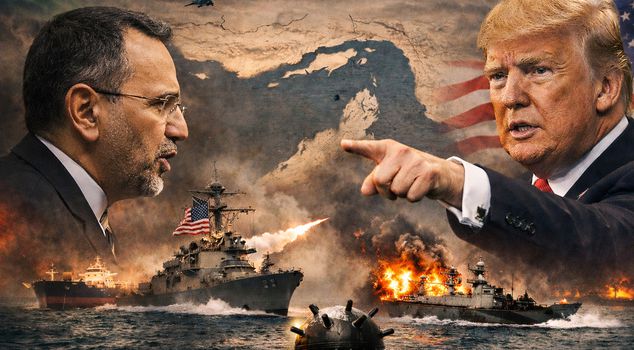
Tensions between Iran and the United States have taken on a new dimension over the Strait of Hormuz. Iranian officials have firmly denied allegations that mines have been laid in the strait. Iranian Deputy Foreign Minister Majid Takht Ravanchi stated that the allegations do not reflect the truth. U.S. President Trump reacted to these claims, stating that if Iran were to lay mines in the Strait of Hormuz, it would have "unprecedented military consequences."
The tension between Iran and the US over the Strait of Hormuz has taken on a new dimension. Iranian officials have firmly denied the recent claims that "mines have been laid in the Strait of Hormuz," while US President Donald Trump had previously issued strong warnings to Tehran.
IRAN: THE CLAIMS ARE NOT TRUE
Iran's Deputy Foreign Minister Majid Takht Ravanchi stated in an interview with AFP that the claims regarding Iran laying mines in the Strait of Hormuz do not reflect the truth. Ravanchi asserted that "Absolutely not. This is not true," defending that the Tehran administration has not taken such a step.
Recently, some US and Western sources have suggested that Iran has placed mines in the strategic waterway, raising significant concerns in global energy markets.
TRUMP'S STRONG WARNING
Following the emergence of the claims, US President Donald Trump explicitly threatened Iran in his statements. Trump stated that if Iran lays mines in the Strait of Hormuz, it would have "unprecedented military consequences."
Trump also mentioned in a post on his social media account that the US military has targeted some mine-laying vessels belonging to Iran, saying, "If Iran has laid mines for any reason, we want them to remove them immediately."
The US administration also announced that military intervention could be increased if threats to commercial vessels in Hormuz continue.
US MILITARY OPERATION
With the escalation of tensions, the US military has increased its operations in the region. The US Central Command announced that 16 mine-laying vessels, reportedly belonging to Iran, have been destroyed.
Pentagon officials also stated that the option of military escort operations in the Strait of Hormuz for the safety of oil tankers and commercial vessels is being considered.
CRITICAL TRANSITION POINT FOR GLOBAL ENERGY
The Strait of Hormuz is considered one of the most critical maritime routes for global energy trade. Approximately 20% of global oil and liquefied natural gas shipments pass through this strait.
Therefore, any military tension in the region directly affects oil prices. Indeed, following the recent attacks and mine claims, oil prices have rapidly increased, and some tanker companies have sought alternative routes.
TENSION IN THE REGION CONTINUES
Although the Iranian administration denies the mine claims, military activity in the region continues. Statements suggesting that Iran could close the Strait of Hormuz and the operations conducted by the US in the region are raising concerns that a new maritime security crisis may occur in the Middle East.
Experts warn that a potential conflict in the Strait of Hormuz could seriously affect not only the region but also global energy markets and international trade.