08.05.2026 17:55
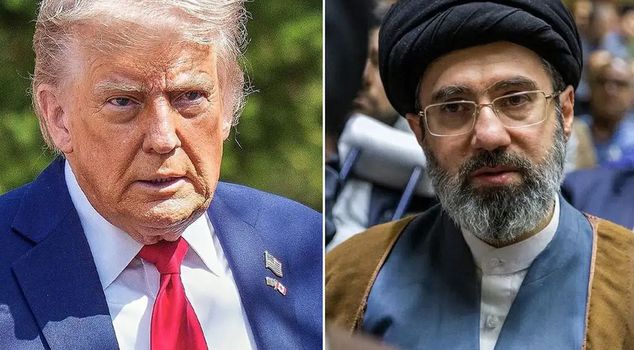
Iran has responded harshly to the "Freedom Project" announced by U.S. President Donald Trump, which is set to be launched in the Strait of Hormuz with 15,000 troops. Ibrahim Azizi, head of the Iranian Parliament's National Security and Foreign Policy Commission, stated that any potential U.S. intervention in the region would be considered a violation of the ceasefire.
Tensions are escalating in the Middle East through the Strait of Hormuz. A stern warning came from Iran regarding the "Freedom Project" that the US plans to launch in the region. The Tehran administration announced that a potential US intervention would constitute a violation of the ceasefire.
AZIZI: THE STRAIT OF HORMUZ CANNOT BE MANAGED THROUGH SHARES
Ibrahim Azizi, Chairman of the Iranian Parliament's National Security and Foreign Policy Commission, emphasized that if the US intervenes in the new maritime regulation in the Strait of Hormuz, it would mean a "violation of the ceasefire." Speaking on the US-based X platform, Azizi stated, "The Strait of Hormuz and the Persian Gulf cannot be managed through Trump's misleading shares."
Azizi noted that no one would believe the "mutual blame scenarios" being attempted to be created in the region, drawing attention to the controlled escalation of tensions. The Iranian official also argued that the security balance in the region can be achieved not through external interventions but through the cooperation of coastal states.
US'S "FREEDOM PROJECT" WITH 15,000 TROOPS
The US Central Command (CENTCOM) announced that it will implement the "Freedom Project" to ensure the safe passage of commercial ships through the Strait of Hormuz. The statement reported that 15,000 military personnel would participate in the operation, aiming to maintain uninterrupted maritime traffic in the region.
US President Donald Trump also stated in his remarks that they would support the passage of commercial ships belonging to "neutral" countries not directly related to the Middle East crisis. Trump said, "We told these countries that we will safely get their ships out of this narrow strait. Thus, they can freely continue their commercial activities."
Without naming any specific country, Trump noted that the operation covers "countries from different parts of the world not related to developments in the Middle East" and is primarily humanitarian in purpose.
MILITARY MOBILITY INCREASING IN THE REGION
With the latest developments, military mobility around the Strait of Hormuz has noticeably increased, while international energy markets are closely monitoring the developments. A potential crisis in the strait, through which a significant portion of global oil shipments pass, carries critical risks for the world economy.
It is reported that some international shipping companies in the region have begun reassessing their routes for security reasons, and insurance costs have increased. Experts warn that mutual statements by the parties could escalate tensions on the ground.
DIPLOMATIC TRAFFIC ACCELERATED
It is learned that many actors, particularly European countries, have accelerated their diplomatic initiatives following the escalation of tensions. Gulf countries have called for restraint from both sides, highlighting the critical importance of the Strait of Hormuz for international trade.
Experts assess that the US increasing its military presence in the region is perceived directly as a threat by Iran, which could create a new axis of tension in the area.