20.10.2026 17:31
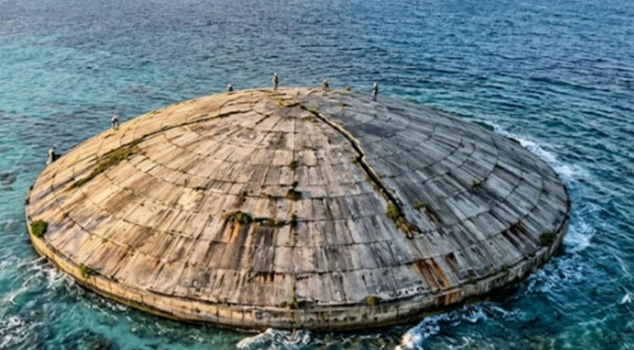
The Runit Dome, which covers radioactive waste left over from the US nuclear tests in the Marshall Islands, continues to be in contact with the ocean. Because there is no lining at the base of the structure, completed in 1980, radioactive materials can be carried into the lagoon during tidal movements. Experts draw attention to the additional risks that rising sea levels could pose.
The Runit Dome in the Marshall Islands, located in the middle of the Pacific Ocean, carries the nuclear legacy of the Cold War into the present day. The massive concrete structure, which houses radioactive waste left over from US nuclear tests, is at the center of environmental concerns because it comes into contact with seawater.
The ground beneath the dome, completed in 1980, has no sealing layer. As a result, tidal movements can cause radioactive materials to come into contact with surrounding waters.
THEY COVERED THE CRATER LEFT BY THE NUCLEAR EXPLOSION
In May 1958, the United States conducted a nuclear test called Cactus at Enewetak Atoll, creating a large crater in the coral reef. Years later, radioactive materials in the area were collected in this crater. After cleanup operations, the crater was covered with hundreds of concrete panels.
The Runit Dome, approximately 115 meters in diameter, was completed in 1980. The structure was built to limit the spread of nuclear waste from the surface into the environment.
THE BIGGEST PROBLEM IS THE UNSEALED GROUND BENEATH IT
Although the upper part of the dome was covered with concrete panels, the crater floor beneath it was not sealed. Assessments published by the US Department of Energy considered that groundwater rises and falls with tidal movements and that radioactive materials can be transported into the surrounding lagoon waters. The tidal cycle, which occurs about twice a day in the area, also affects water movement beneath the dome. However, this does not mean that radioactive materials spread into all the world's oceans in measurable amounts with every tide.
RISING SEA LEVELS RAISE CONCERNS
Rising sea levels and severe storms due to climate change are increasing debate about the future of the Runit Dome. One of the risks experts focus on is the impact of changes in coastal conditions on the concrete structure and the radioactive sediments around it. At the same time, the leakage mechanism beneath the dome and possible damage to the concrete surface are assessed as separate issues.
MOST OF THE RADIOACTIVE WASTE IS OUTSIDE THE DOME
The Runit Dome does not contain all of the nuclear contamination in the region. A significant portion of the radioactive materials resulting from past US tests is found in sediments at the bottom of Enewetak Lagoon. Therefore, environmental risks in the region are not limited to the condition of the concrete dome.