12.08.2026 21:30
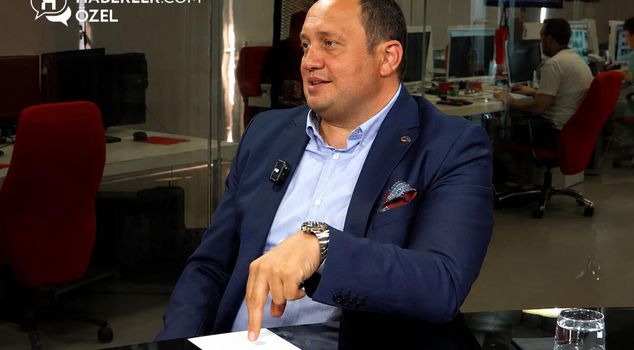
Lawyer Prof. Dr. Ali Ekin, as a guest of host Melis Yaşar on Haberler.com, evaluated important legal issues concerning employees and employers in business life. Explaining the impact of situations such as the use of private correspondence as evidence, fighting at the workplace, camera recordings, taking sick leave to go on vacation, and phone use on the termination process, Ekin conveyed the noteworthy decisions of the Court of Cassation and the criteria in practice.
Can WhatsApp correspondence of employees at the workplace be used as evidence, can playing with a phone during working hours be grounds for termination, can an employee's contract be terminated due to social media posts? Under what conditions is the employer's use of cameras lawful? Can only one of two employees who fight at work be dismissed?
Attorney Prof. Dr. Ali Ekin answered these frequently encountered questions in labor law practice by responding to the questions of host Melis Yaşar in the Haberler.com studio.
CAN WHATSAPP CORRESPONDENCE BE GROUNDS FOR TERMINATION?
Ekin, answering the question of whether correspondence in WhatsApp groups created among employees themselves can be grounds for dismissal, said that first, how the correspondence was obtained must be examined.
Stating that WhatsApp groups are private correspondence, Ekin stated that these conversations held among individuals are of a personal data nature. Ekin said that the judiciary tries not to give credence to records obtained unlawfully and by disregarding the confidentiality of personal data.
However, Ekin, noting that the content of the correspondence is also important, emphasized that insults, harassment, or behaviors contrary to morality and good faith depending on the nature of the employment relationship should be evaluated separately regarding termination.
“HOW THE CORRESPONDENCE WAS OBTAINED IS MORE IMPORTANT”
Ekin stated that if an employee takes private correspondence with another worker to the employer, the legal evaluation cannot automatically result in termination.
Ekin, stating that an employee's criticism of the employer in correspondence alone would not be sufficient, said that freedom of expression, insult, threat, and the content of the correspondence must be evaluated together.
AUDIO RECORDINGS ARE EVALUATED IN THE SAME WAY
Ekin also made evaluations regarding the recording of private conversations, stating that camera and audio recordings made openly and with the knowledge of employees are not the same as recordings obtained covertly.
Saying that there is a legal similarity between a person secretly recording a private conversation with someone else and presenting it to the employer, and sharing WhatsApp correspondence, Ekin stated that the court would decide based on the content of the recordings and the specific circumstances of the event.
PLAYING WITH THE PHONE DURING WORK HOURS IS NOT A DIRECT GROUNDS FOR DISMISSAL
An employee paying attention to their phone during working hours, using social media, playing games, or visiting websites unrelated to work was also one of the interview topics.
Ekin stated that an employee looking at their phone once during working hours cannot be made a direct ground for termination. Stating that the employer must first warn the employee and, if necessary, obtain their defense, Ekin said that if the behavior is repeated despite this, termination can come to the agenda.
IN WHICH CASE IS A SOCIAL MEDIA POST A GROUNDS FOR TERMINATION?
Ekin, stating that an employee's social media posts made outside working hours cannot be grounds for termination in every case, said that attention should be paid to the post's connection with the employer or the workplace.
According to Ekin, an employee can criticize the employer within the scope of freedom of thought. However, if the post brings the workplace into disrepute, damages the employer's commercial reputation, or is directly related to the work the employee does, the situation can be evaluated differently.
CAUTION FOR TWO EMPLOYEES WHO GET A MEDICAL REPORT AND GO ON VACATION!
One of the striking topics in the interview was employees who got a medical report and went on vacation.
Ekin explained that an employee whose annual leave request was rejected, getting a report and going on vacation, and two employees getting reports from the same doctor and going on vacation together and sharing this on social media are not evaluated in the same way.
He stated that two employees getting reports from the same doctor, going on vacation together, and revealing this through social media posts could be considered by the Court of Cassation as a justified ground for termination within the scope of behavior contrary to the rules of integrity and loyalty.
CAN ONLY ONE OF TWO EMPLOYEES WHO FIGHT AT WORK BE DISMISSED?
The path the employer should follow if two employees fight at work was also among the curious topics.
Ekin emphasized that one of the basic criteria here is the principle of equality. Stating that if two employees mutually hit each other, the situations of both employees should be evaluated together, Ekin said that dismissing only one worker could create an equality problem for the other worker.
However, Ekin, noting that the situation is different if one of the parties is only defending themselves, stated that a defensive action within the limits of self-defense cannot be grounds for termination.
MERELY RAISING ONE'S VOICE IS NOT GROUNDS FOR TERMINATION
Ekin, stating that if two employees argue and raise their voices at the workplace, direct termination cannot occur, said that a warning and defense process could be implemented depending on the nature of the event.
In contrast, he noted that conditions for termination could arise if swearing, harassment, or physical assault is involved.
WALKING TOWARD THE MANAGER CAN ALSO BE GROUNDS FOR JUSTIFIED TERMINATION
Termination can also come to the agenda if an employee walks toward the workplace manager as if to hit them, even if no physical contact occurs.
Ekin evaluated a person walking toward another employee as if to hit them and creating a serious threat of starting a fight within the scope of harassment. He stated that such behaviors could be grounds for justified termination depending on the characteristics of the specific event.
A FIGHT IN THE WORKPLACE SHUTTLE IS ALSO CONSIDERED A FIGHT AT THE WORKPLACE
Ekin, stating that fights occurring in the workplace shuttle outside working hours are also of particular importance in terms of labor law, said that the workplace shuttle can be considered a part of the workplace under certain conditions.
Stating that the fact the fight occurred outside working hours does not alone remove the employer's responsibility, Ekin said that it is necessary to examine who started the fight, whether there was a mutual attack, and whether self-defense existed.
THE CONTRACT OF AN EMPLOYEE WHO INSULTS A CUSTOMER CAN BE TERMINATED
Ekin, stating that if an employee insults a customer or fights with a customer, the employer's right to terminate can come to the agenda, said that the employee is expected to remain calm toward the customer.
However, Ekin, stating that if the customer insults the worker, the worker's reaction should also be evaluated according to the circumstances of the event, said that if the provocation from the customer is clearly demonstrated, the worker's behavior could be evaluated not as justified but within the scope of valid termination.
IS WORKER CONSENT REQUIRED FOR CAMERA RECORDING?
Providing information on the use of cameras in workplaces, Ekin stated that camera recordings can be used as evidence in common areas, provided that employees are informed and necessary disclosures are made.
However, Ekin noted that the situation of placing a camera in a private room occupied by only one or a few employees should be evaluated differently, emphasizing why the camera was placed and the importance of the principle of proportionality.
IS USING A WORK COMPUTER FOR PERSONAL PURPOSES GROUNDS FOR TERMINATION?
Stating that each case regarding the use of a computer assigned to an employee by the employer for personal purposes must be evaluated within its own circumstances, Ekin said that an employee sending a WhatsApp message once or using a personal email should not, by itself, constitute grounds for termination.
He stated that whether the use occurred during working hours, whether the computer was assigned specifically to the employee, and whether the use affected the execution of work are important factors.
WHATSAPP CORRESPONDENCE CAN BE EVIDENCE IN MOBBING CASES
Ekin stated that WhatsApp correspondence can also be used as evidence in psychological harassment and mobbing claims, emphasizing their importance, especially in situations where no other means of proof exist.
He noted that messages showing the employer constantly pressuring a specific employee could be presented to the court to support a mobbing claim.
CAN PRE-EMPLOYMENT SOCIAL MEDIA POSTS BE GROUNDS FOR TERMINATION?
Ekin stated that social media posts made by an employee before starting a job cannot be grounds for termination in every case, and that the connection of the post to the employee's job must be examined.
Ekin noted that if a post made before recruitment later becomes directly related to the workplace, the situation may be evaluated differently, but posts merely expressing an opinion cannot, by themselves, be grounds for termination.
NOTEWORTHY COURT OF CASSATION DETAIL FOR NOTIFICATIONS MADE VIA REGISTERED EMAIL
In the final part of the interview, notifications made via Registered Electronic Mail (KEP) were also brought up.
Drawing attention to the use of KEP, especially for blue-collar workers, Ekin stated that under the current Court of Cassation approach, a notification made via KEP is not accepted as replacing official service in every situation.
Ekin stated that legal issues may arise, especially in cases where it is practically impossible for the employee to monitor KEP, and expressed that new regulations could come onto the agenda in this area.
“ONE SHOULD NOT DIRECTLY TERMINATE BY ONLY LOOKING AT THE LAW”
At the end of the program, Ekin also gave a message to employers and human resources departments, emphasizing that decisions should not be made by merely looking at the legal provision.
Ekin said, “Attention must be paid to judicial decisions and legal practices,” adding that the specific circumstances of each case and the precedents of the Court of Cassation must definitely be considered in labor law.