23.02.2026 18:35
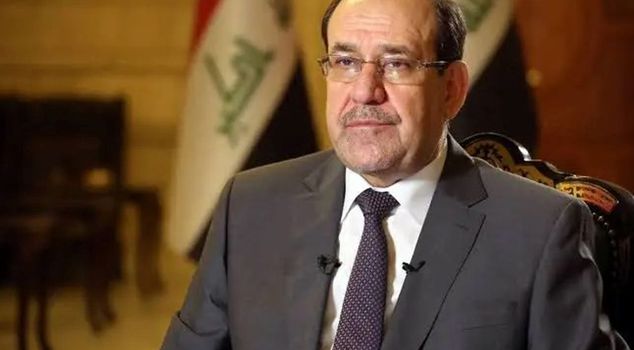
Iraq's former Prime Minister Nuri al-Maliki once again announced that he would not withdraw his candidacy for prime minister despite the open warnings and hints of sanctions from U.S. President Donald Trump. Maliki's insistence, backed by the support of Shia parties, has reactivated the balances in Iraqi domestic politics while also raising questions about the future of U.S.-Iraq relations.
Former Iraqi Prime Minister Nuri al-Maliki reiterated once again that he will not step back from his candidacy for prime minister despite the reaction of U.S. President Donald Trump. Speaking to the French news agency AFP, Maliki stated that he is determined to continue his candidacy despite Washington's warnings of sanctions and aid cuts.
"WEAPONS SHOULD BE UNDER STATE CONTROL"
Maliki, who was nominated as a prime minister candidate by the Coordination Framework, which consists mostly of Shia parties close to Iran, also sent a message regarding armed groups in the country.
Maliki emphasized that all weapons should be under the control of the Iraqi state and stated that the security of foreign embassies will be ensured. His statements were interpreted as a message of assurance to both the domestic public and the international community.
CLEAR WARNING FROM WASHINGTON
In a statement made by the U.S. Embassy in Baghdad, it was emphasized that the Trump administration's stance is clear. The statement noted that Maliki's election as prime minister could lead to a reassessment of U.S.-Iraq relations.
Trump had previously stated in his assessment that the U.S. could end its support for Iraq if Maliki becomes prime minister.
POLITICAL BALANCES ON A KNIFE EDGE
After the general elections held on November 11, 2025, the Coordination Framework emerged as the largest group in the Parliament and nominated Maliki as a prime minister candidate. Although it was claimed that alternative names were being sought among Shia political parties following the U.S. reaction, Maliki reiterated that he would not withdraw his candidacy.
Maliki served as prime minister for two consecutive terms from 2006 to 2014 and became a controversial figure in the international public eye, particularly due to security policies and sectarian tensions during his tenure.