14.08.2026 21:30
A major environmental disaster has erupted in the shadow of clashes in the Strait of Hormuz. Oil leaking from the bulk carrier 'Minoan Pioneer,' struck off the coast of Oman, has spread over an area of more than 300 square kilometers and reached the shores of Iran's Qeshm Island. As delicate ecosystems and marine life come under threat, the scale of the spill crisis has grown even larger as a second tanker ran aground in the region.
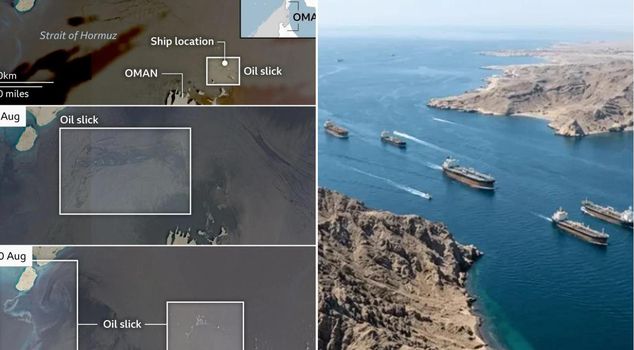
Following the conflicts affecting maritime traffic in the Strait of Hormuz, a new environmental disaster is unfolding. The oil spill, believed to have originated from the dry bulk carrier Minoan Pioneer, which was attacked off the coast of Oman on August 3, has spread over an area exceeding 300 square kilometers, according to satellite images. This area is equivalent to more than 40,000 football fields. Part of the spill has reached the shores of Iran's Qeshm Island.
OIL REACHES QESHM ISLAND
According to BBC Verify's analysis of satellite images, the leak from the Minoan Pioneer had spread across a large part of the Strait of Hormuz as of August 10. The pollution caused by the oil on the sea surface has exceeded 300 square kilometers, and it has been determined that the spill has reached the southern coasts of Qeshm Island.
According to satellite images and videos verified on the ground by Reuters, dark oil residues are visible on the shores of Suza in Qeshm, and the pollution has been reported to be spreading towards the Shib Deraz area and the Hara mangrove forests. Environmental experts warn that if the leak continues for a long time, the damage to coastal ecosystems could increase.
SOURCE OF THE LEAK IS A LIBERIAN-FLAGGED SHIP
The leak is considered to have originated from the Liberian-flagged dry bulk carrier Minoan Pioneer, which was struck near Omani territorial waters on August 3. In an analysis based on satellite images, TankerTrackers stated that the ship was the likely source of the leak.
Maritime security sources reported that the ship was attacked during its passage through the Strait of Hormuz and that one crew member went missing. While some analysts assess that Iran might be behind the attack, responsibility for the incident has not been independently confirmed. Reuters also reported that it could not independently verify the cause and content of the leak.
IRAN DOES NOT ACCEPT RESPONSIBILITY
Iran, for its part, has not accepted responsibility for the oil pollution reaching Qeshm Island. Iranian Foreign Ministry Spokesman Ismail Baqaei, stating that the pollution had reached the island, announced that initial findings indicated the source was a "foreign dry cargo ship." The Iranian side also argued that the incident was linked to foreign military attacks in the region.
MANGROVE FORESTS AND MARINE LIFE UNDER THREAT
With the arrival of the oil spill, alarm has also been raised for the sensitive ecosystems of Qeshm Island. The Hara mangrove forests provide a critical habitat for numerous bird species, as well as marine life and endangered turtles. If the oil reaches the mangroves and coastal habitats, it could cause long-term damage to the living spaces of these creatures.
Environmental experts state that the longer the oil remains in the marine environment, the more it could spread to a wider area and cause further damage to coastal ecosystems.
TWO SEPARATE OIL SPILLS IN HORMUZ
Two different oil spills are occurring in the region during the same period. While the spill reaching Qeshm Island is assessed to be linked to the Minoan Pioneer, a much larger second spill off the coast of Oman originates from a tanker named Caroline Bezengi.
The oil leaking from the Caroline Bezengi, which ran aground off Oman and is stated to be linked to Russia's "shadow fleet," is estimated to have spread over an area of about 2,000 square kilometers. It is emphasized that this incident is separate from the Minoan Pioneer spill.
Thus, as the environmental consequences of the conflicts in the Strait of Hormuz continue to grow, experts warn that the impact on marine ecosystems could last for years, depending on how quickly the oil spills are brought under control.