31.01.2026 09:22
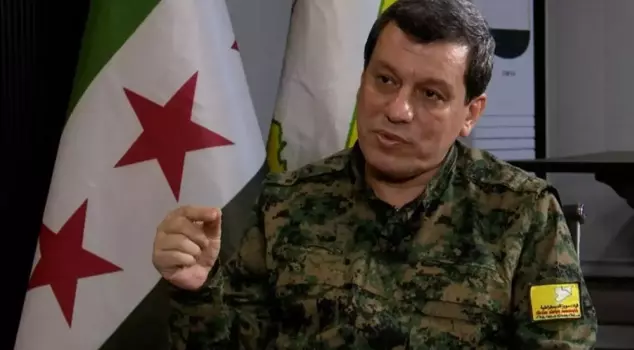
Mazlum Abdi, the leader of the SDF who signed the integration agreement with Syria, explained the details of the agreement. Abdi stated, "As part of the agreement, the Syrian army will not enter Kurdish cities. Integration will begin on February 2. A force affiliated with the Temporary Syrian Government will come to Hasakah and Qamishli to oversee this integration." Abdi mentioned that he had been offered a position within the state, saying, "Recently, there have been offers for me to take on a role within the state, but I suggested our friends instead."
A comprehensive agreement has been reached between the Syrian government and the SDF. The agreement includes the establishment of a ceasefire and the gradual integration of military and administrative forces.
Regarding this agreement, SDF leader Mazlum Abdi made a statement to the media. Abdi, who touched on the details of the agreement made between the SDF and Damascus, said, "This was a process. It started on January 18. At that time, an agreement was made; however, its framework was narrow. We went to Damascus, and there was a meeting with Shara. Today, we had a phone conversation with Shara, and we mutually signed the agreement. Our main goal with this agreement is to ensure a ceasefire. There was a significant threat of massacre against our people. We did everything we could to prevent this. We saw that international forces were not in a position to prevent this massacre, and we made such an agreement to protect the rights of our people," he stated.
INTEGRATION WILL START ON FEBRUARY 2
Abdi stated that the agreement covers all Kurdish cities and villages, saying, "Under the agreement, the Syrian army will not enter Kurdish cities - including villages. This applies to the Cizire region and Kobane. Integration will start on February 2 and will continue. A force affiliated with the Temporary Syrian Government will come to Heseke and Qamishlo and will follow this integration. Their work will continue until the integration is complete. Once the integration is finished, there will be no need for them. The Internal Security Forces will ensure security in the cities. Committees have been established. Both we and Damascus have formed committees. These committees will work together for administrative processes. There will be no situation where they spread throughout the city, taking over its security and administration. There are some state institutions, and they will only be able to operate there. Our people should support their existing administrative institutions so that this process can succeed," he expressed.
GAINS WILL BE PROTECTED
Touching on the gains achieved as a result of the agreement, Abdi said, "Our goals were bigger than what we have achieved today. We should not underestimate the effort put in. The agreement is about the political, military, and administrative protection of Kurdish cities. Our gains will be protected. We have objectives, and the struggle will continue to achieve them. The gains made in culture and education will be protected. Discussions for education will continue, and we will do our best to protect these gains. Decisions will be made by local councils everywhere. Those currently in office will continue their duties. Administrations will continue in cities where Kurds are present. The gains of the revolution will be protected. There are some deficiencies, and we will struggle for those as well. QSD will officially be part of the Syrian army in brigades and will ensure the protection of the cities they are currently in. The blockade on Kobane will be lifted. When the agreement comes into effect, soldiers affiliated with the Syrian army in both Kobane and the Cizire region will withdraw. Our forces will also leave the cities. Once this happens, the blockade will end," he stated.
"THE GOVERNOR OF HESKEKE WILL BE DETERMINED BY THE KURDISH PEOPLE"
Regarding the situation in Afrin, Abdi said:
"It is not under the control of our forces. Afrin is a Kurdish city. It is 90% Kurdish. The articles in the agreement should also apply here. The agreement was made for Kurdish cities, and Afrin is a Kurdish city. This may take some time; but sooner or later, it will happen. Those living there will return to their homes. In the future, agreements made for Kurdish cities will also apply to cities that are not under our control. Everyone will stay in their place. The forces coming to Heseke and Qamishlo have the task of managing and re-establishing existing and currently non-existent state institutions. The institutions currently under the Autonomous Administration will be integrated with the state. The governor of Heseke will be determined by the Kurdish people, by the QSD. Those currently in the existing institutions will continue their duties."
"I RECEIVED OFFERS TO TAKE ON ROLES WITHIN THE STATE"
Abdi continued:
"This agreement was made within the framework of a process. International forces are also part of this process. The USA and France are present at every stage of this agreement. They will also monitor the process. Trump himself discussed this agreement with Shara. Macron has spoken about it several times. Macron himself said he would be a political guarantor before we signed the agreement. Guarantor states must carry out their duties more carefully from now on. We had previously reached an agreement with Damascus regarding those who were captured during the conflict. After this agreement is signed, this issue will be one of our main topics. We will follow up on the situation of those who have been captured. Recently, there have been offers for me to take on roles within the state, but I suggested our friends. From now on, we will be among our people. We need to work for the unity of the Kurds. I will continue to do whatever is necessary in this regard. We will be among our people. In this process, we will work together to resolve the deficiencies that our people see.
"WE ARE PROUD OF THE SUPPORT ACTIONS TAKEN"
Touching on the support actions taken, Abdi said:
"In the recent process, it is impossible not to feel proud of the actions and events carried out by the Kurds. This gave us great morale. These actions were extremely effective in the steps taken and drew the world's attention to Rojava. I thank each and every one who participated in these marches and actions. Kurdish parties have performed well everywhere. In Başur, all parties were with us daily, doing their best. They also made a significant contribution during this process. Their contributions were both material and moral. I cannot name them all individually, but we thank them all. This gave us great morale. The people of Rojava have been with us since 2011. It doesn't matter if it's Afrin, Kobane, or Aleppo; the people have always been at the forefront everywhere. We were together during this period, and we will continue to be together. We have gone through very challenging processes.
ISIS, Turkey's attacks, and these recent assaults... We have overcome many hardships, and we will overcome them again. We will continue to struggle together to protect the gains of the Kurdish people. Some groups are not pleased with this agreement, and we are aware of that. There are also issues we are not pleased with. The expectations of our people were high. However, we realized this to end the conflict. Our promise to our people is to continue to fight until all our gains are protected. Everyone who has been forced to leave their homes should return home. Those in cities not under QSD's administration should return, and let’s struggle together there. We have lost thousands of martyrs, and we have veterans. It is impossible to forget them. This is our reason to expand the struggle. We commemorate them with respect. We promise to further expand the struggle. In this struggle, our people should stand side by side with us so that we can achieve our goals.
WHAT HAPPENED?
The Syrian state television announced, based on government sources, that the Damascus administration and the YPG have reached a comprehensive agreement that foresees a ceasefire and the gradual integration of military administrative structures.
It was stated that the agreement includes a ceasefire between the Syrian forces and YPG elements, as well as the gradual integration of the military and administrative forces of both sides.
In this context, it was expressed that an agreement was reached regarding "the entry of security forces affiliated with the Syrian Ministry of Interior into the city centers of Hasakah and Qamishli for the purpose of withdrawing military forces from the contact lines and strengthening stability."
The agreement also noted that "the process of integrating security forces in the region will be initiated, a military division will be formed that includes three brigades affiliated with the YPG, and a brigade linked to the Ayn al-Arab forces will be organized within a division affiliated with Aleppo province."
Additionally, it was reported that the agreement also covers the unification of the so-called autonomous administration institutions in the regions occupied by the YPG with Syrian state institutions and the protection of the positions of civilian employees.
It was reported that the parties also agreed on the regulation of the civil and educational rights of the Kurdish community in Syria and the guarantee of the return of displaced persons to their regions.
The agreement aims to ensure the unity of Syrian territory, strengthen the rule of law, enhance cooperation among the relevant parties, achieve full integration in the region, and consolidate efforts for the reconstruction of the country.
The operation initiated by the Syrian army on January 16 against the terrorist organization YPG in the regions west of the Euphrates River later expanded with the participation of tribes east of the river, and a large portion of the territory occupied by the organization came under the control of the Syrian administration.
The Ceasefire and Full Integration Agreement reached between the Damascus administration and the YPG on January 18 includes provisions such as the complete withdrawal of the organization from the Raqqa and Deir ez-Zor provinces east of the Euphrates River, the transfer of public institutions in Hasakah to the state, the central authority's control over all border gates and energy resources, and the individual integration of YPG elements into the security forces.
After the YPG was reluctant to comply with the agreement, clashes resumed on January 19. The Syrian administration announced on January 20 that it had given the terrorist organization YPG a 4-day deadline for integration and declared a ceasefire.
This ceasefire was extended for 15 days on January 24.