27.06.2026 11:12
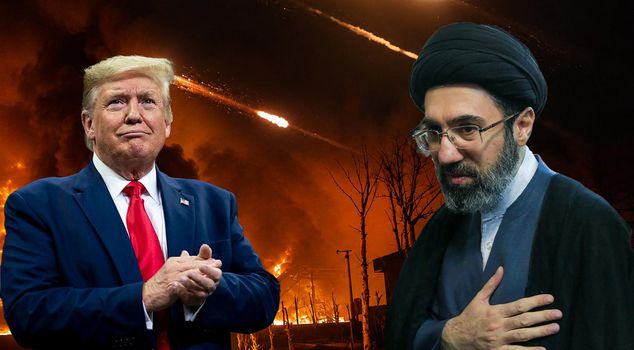
Tensions are rising again in the Middle East. Following a drone attack on a cargo ship in the Strait of Hormuz, the U.S. military struck strategic targets in Iran. U.S. President Donald Trump described the incident as a "foolish violation" of the recently signed ceasefire, while Iran's Islamic Revolutionary Guard Corps (IRGC) announced retaliation against U.S. bases in the region.
The recent ceasefire agreement between Iran and the US has been severely wounded by a new crisis erupting in the Strait of Hormuz. A drone attack on a cargo ship has brought the two countries to the brink of hot conflict once again. Following mutual accusations, airstrikes and retaliations occurred in the region.
TRUMP'S 'STUPID VIOLATION' OUTBURST AND US OPERATION
After the ship attack that ignited the crisis, US President Donald Trump made a strong statement. Claiming that Iran was behind the attack, Trump described this action as a "stupid violation" of the ceasefire agreement between the US and Iran. Stating that a total of four drones attacked the cargo ship, three of which were shot down by US forces, but one hit the ship causing damage, Trump signaled retaliation, saying "You will find out soon."
Shortly after this statement, the US military took action. The US Central Command (CENTCOM) announced that US warplanes conducted an operation around the Strait of Hormuz, hitting Iranian missile and drone storage areas and coastal radar facilities. In its statement, CENTCOM emphasized that the safe passage of commercial ships would continue to be ensured and that vigilance would be maintained in the region to ensure Iran's strict compliance with the agreement terms.
IRANIAN MEDIA: PIER HIT, WARNING SHOTS FIRED
Following the US airstrikes, initial information also began to emerge from the Iranian side. According to a report by Iranian state television, citing military sources, the Taheruyi Pier in the city of Sirik in the southern Hormozgan Province was the target of an "enemy attack," and violent explosion sounds were heard in the area.
Military sources also confirmed that during the day, the Iranian Armed Forces fired warning shots from the city of Sirik at some ships attempting to pass through the Strait of Hormuz "without permission."
RETALIATION FROM IRANIAN REVOLUTIONARY GUARDS ON US BASES
Following the US strikes on strategic points, a counter-move from the Islamic Revolutionary Guard Corps (IRGC) was not long in coming. In a statement by the IRGC read on Iranian state television, it was announced that US bases in the Gulf region were targeted in retaliatory strikes. In the statement, which argued that the Washington administration had violated the terms of the agreement, a harsh warning was issued to the US, stating, "If aggression is repeated, our response will be more comprehensive than this."
Ibrahim Azizi, Chairman of the Iranian Parliament's National Security and Foreign Policy Commission, also reacted to the events, stating that the US had recklessly violated the ceasefire and that this situation would result in regret.
THE INITIAL INCIDENT TRIGGERING THE PROCESS: ATTACK ON CARGO SHIP
The starting point of the escalating tension was an incident reported by the United Kingdom Maritime Trade Operations (UKMTO) with an emergency code. UKMTO had announced that a commercial cargo ship sailing off the coast of Oman was hit by an unidentified projectile/drone. It was reported that the bridge was damaged, but the crew on board were unharmed and no environmental pollution occurred.
JUNE 14 ISLAMABAD AGREEMENT IN DANGER
This hot conflict has overshadowed the hopes for peace that the parties had only recently signed. As will be recalled, Iranian President Masoud Pezeshkian and US President Donald Trump digitally signed a 14-point memorandum called the "Islamabad Agreement" on June 14, mediated by Pakistan.
The said agreement included the following important headings:
- Ending the state of war in the region, including Lebanon.
- Opening the Strait of Hormuz to international maritime traffic.
- Lifting the US naval blockade on Iran.
- Initiating a 60-day negotiation process regarding Iran's nuclear program and the lifting of sanctions.
With the parties exchanging fire, it has become a matter of curiosity how this critical 60-day negotiation process, which has only just been signed, will continue.