07.03.2026 12:30
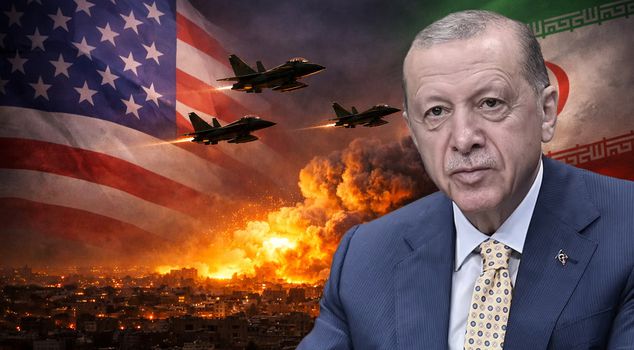
The escalation of the war between the USA, Israel, and Iran has led to a major crisis in global energy markets with the closure of the Strait of Hormuz. While there are discussions that oil prices could rise to $150, energy reserves in Europe have fallen to critical levels. In a statement made during the first days of the outbreak of the war, President Erdoğan said, "No country can bear the economic and geopolitical uncertainties that will arise from the conflict process."
Tensions in the Middle East have rapidly escalated following the attacks launched by Israel and the U.S. against Iran last Saturday. As Iran retaliates with missile strikes against Israel and Gulf countries, the closure of the Strait of Hormuz to shipping has raised the possibility of a serious crisis in global energy markets.
According to an analysis by the International Monetary Fund (IMF), a 10% increase in energy prices lasting for a year could raise global inflation by 40 basis points. The same scenario indicates that global growth could slow by 0.2%.
STRait OF HORMUZ CLOSED, ENERGY SUPPLY TIGHTENED
The halt of shipments through the Strait of Hormuz and attacks on production facilities in Qatar, one of the world's largest liquefied natural gas (LNG) exporters, have increased risks in energy markets. Gas prices at the Netherlands-based TTF, Europe's largest natural gas trading hub, have risen sharply in recent times.
On February 27, natural gas prices were trading at around 32 euros per megawatt-hour, but by March 3, they had increased by 68% to over 52 euros. With the closure of the Strait of Hormuz, the global market has been deprived of approximately 110 billion cubic meters of gas supply.
About 20% of global oil consumption and LNG supply is transported through the Strait. The closure of the strait means a daily withdrawal of approximately 20 million barrels of oil from the market, while only 5 million barrels of shipments can be compensated through alternative routes.
OIL PRICE SCENARIO OF 150 DOLLARS
Since the start of the war, the price of Brent crude oil has increased by more than 13%, surpassing the 85 dollar mark. Decisions by some countries to reduce production have also pushed prices higher. Reports indicate that Iraq has decided to halt its oil production. Experts assess that if the Strait of Hormuz remains closed, oil prices could rise to between 100 and 150 dollars per barrel. The movement of ships in the strait has also significantly decreased. Following the suspension of ship passage, traffic has dropped by 90%, and more than 150 oil tankers have anchored in the Persian Gulf. It has been reported that at least five tankers have been damaged in the conflicts, and two sailors have lost their lives. Approximately 20,000 sailors and 15,000 cruise ship passengers are said to be stranded in the region.
ENERGY RESERVES IN EUROPE AT CRITICAL LEVEL
According to Gas Infrastructure Europe data, the filling rate of natural gas storage facilities across Europe has fallen below 30%. Reports indicate that reserves in the Netherlands, Sweden, Croatia, and Latvia have dropped below critical levels.
In Germany, Europe's largest economy, energy prices have also risen rapidly. The price of Super E10 gasoline has exceeded 2 euros per liter, while diesel prices have reached similar levels. The German Economic Institute predicts that if oil prices rise to 150 dollars, the German economy could experience significant growth losses.
On the other hand, due to the sanctions imposed on Russia, it is stated that there may be restrictions on gas and electricity usage in Europe, which has limited alternative energy sources.
HOW WILL THE WAR AFFECT COUNTRIES?
The fluctuations in energy markets are expected to have serious economic consequences in different countries.
- In Turkey, due to energy dependence, the current account deficit could increase by 7 to 18%, inflation could rise by 5 to 10 percentage points, and growth could slow by 1 to 2%. Additionally, there may be additional costs related to refugee influx and border security.
- In the U.S., inflation could rise by 0.8%, and stock markets could experience a decline of 10 to 15%. Experts suggest that the only sector that could gain in the short term may be the defense industry.
- Major energy-importing countries like China and India are also expected to be significantly affected. It is assessed that approximately 17% of China's energy supply is at risk.
- In Europe, an increase in gas and gasoline prices and an economic growth slowdown of about 1% are expected. Saudi Arabia may experience a short-term increase in revenue due to rising oil prices, but in the long term, it could face infrastructure and security risks.
ERDOGAN: THE CONSEQUENCES OF THE CONFLICT WILL BE VERY SERIOUS
President Recep Tayyip Erdoğan emphasized in a statement made in the early days of the war that the escalation of conflicts could have serious consequences for global security. Erdoğan stated, "If necessary intervention is not made, the conflict process will have very serious consequences for regional and global security. No country can bear the economic and geopolitical uncertainties that such a scenario would create. Therefore, it is essential to extinguish the fire before it grows further."