28.04.2026 06:30
US President Donald Trump found Iran's proposal to reopen the Strait of Hormuz and end the war insufficient. Evaluating the proposal in a White House meeting, Trump specifically opposed the exclusion of the nuclear program from the scope. As the fundamental disagreement between the parties persists, the crisis continues to increase pressure on global energy markets.
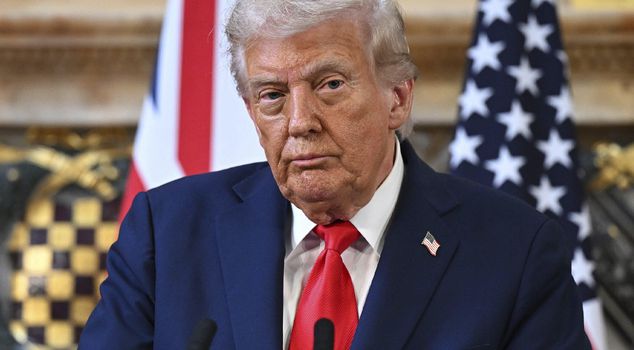
It has emerged that US President Donald Trump is not satisfied with Iran's offer to reopen the Strait of Hormuz. Following a critical meeting at the White House, it was reported that Washington is keeping its distance from the offer.
IRAN'S "CEASEFIRE FIRST" FORMULA
According to international news agencies, Iran has set conditions for reopening the Strait of Hormuz, requiring the US to lift its naval blockade and end the war. The proposal suggested postponing the issue of the nuclear program to a later date.
However, this approach found no traction in Washington. The US administration emphasizes that Iran's nuclear activities must be at the center of any agreement.
TRUMP: THE OFFER DOES NOT SATISFY ME
According to sources speaking to the US press, Trump openly expressed to his advisors during a Situation Room meeting at the White House that he was "not satisfied" with Iran's proposal.
A US official speaking to Reuters also said that Trump "disliked" the offer and found it unacceptable that the issue of the nuclear program was excluded.
Analyses in the foreign press highlight that Trump views the possibility of Iran developing nuclear weapons as a "red line."
CRITICAL HEADLINE: NUCLEAR PROGRAM
US Secretary of State Marco Rubio also kept his distance from Iran's offer, stating that the core issue is the risk of nuclear weapons.
Iran, however, aims to achieve a ceasefire and normalize maritime traffic first, by postponing this issue in its current proposal.
GLOBAL CRISIS DEEPENS
The crisis in the Strait of Hormuz continues to impact global energy markets. Disruptions in this critical chokepoint, through which approximately 20% of global oil passes, have driven prices up and placed significant pressure on supply chains.
Although diplomatic contacts continue, the failure to resolve fundamental disagreements between the parties weakens the likelihood of a short-term compromise.