27.04.2026 23:20
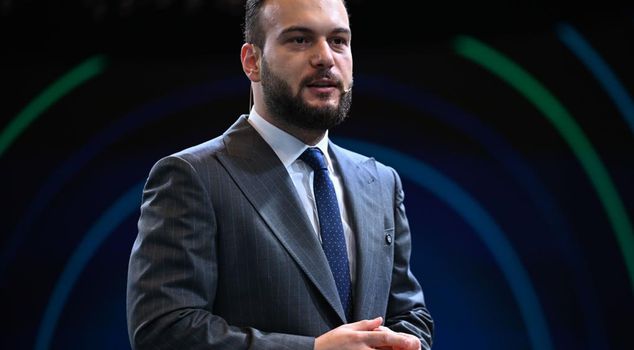
Samed Ağırbaş, President of the Zero Waste Foundation, highlighted the role of Asia in the global energy transition and emphasized the importance of multi-stakeholder collaborations in an article he wrote as part of Climate Week in South Korea.
Zero Waste Foundation President and COP31 High-Level Climate Champion Samed Ağırbaş, in an article written for the South Korean press as part of the United Nations Framework Convention on Climate Change (UNFCCC) Climate Week held in South Korea, outlined strategic approaches to accelerating the global energy transition.
Zero Waste Foundation President and COP31 High-Level Climate Champion Samed Ağırbaş held numerous meetings and participated in important programs as part of the United Nations Framework Convention on Climate Change (UNFCCC) Climate Week, held in Yeosu, South Korea, between April 21–25, 2026.
During the high-level contacts in South Korea, it was emphasized that the Zero Waste vision, shaped as a pioneering approach in Turkey's environmental and climate policies, has transformed into an international model under the strong leadership of Emine Erdoğan, founder of the Zero Waste Movement, President of the United Nations Zero Waste High-Level Advisory Board, and Honorary President of the Zero Waste Foundation.
CLIMATE WEEK PROGRAM BECAME A CRITICAL THRESHOLD IN THE COP PROCESS
In an article co-authored with COP30 High-Level Climate Champion Dan Ioschpe for Korea Times, one of South Korea's established media outlets, Ağırbaş highlighted Asia's role in the transformation process evaluated within the framework of the deepening global energy crisis and rising cost pressures, using the following statements:
"The action plan can help Asia accelerate its energy transition. Electrification, energy efficiency, and integrated grid systems reinforce the region's leadership in this area. Scaling this leadership globally is no longer a choice but a necessity."
Pointing out that the UNFCCC Climate Week held in Yeosu marked a critical threshold on the path to the COP31 process, Ağırbaş emphasized that the energy transition should not be limited solely to supply-side policies.
Within this framework, Ağırbaş drew attention to the importance of the demand side, stating:
"While developments on the supply side are important, the demand side is the area that directly determines the cost of living for citizens. When energy costs rise, this is directly reflected on households."
IMPORTANCE OF MULTI-STAKEHOLDER COOPERATIONS EMPHASIZED
Stating that Asia has risen to a leading position globally, particularly in electrification, energy efficiency, and grid integration, Ağırbaş noted that this progress will be further strengthened through international collaborations. Referring to the role of the Global Climate Action Agenda in this context, Ağırbaş expressed the importance of multi-stakeholder cooperation with the following words:
"The Global Climate Action Agenda encompasses a wide range of actors, from national governments to the private sector, and from cities to civil society, ensuring that political commitments translate into concrete results on the ground."
Also addressing the critical role of electrification in the energy transition, Ağırbaş stated that transitioning to sustainable energy systems offers multi-dimensional benefits:
"Electrification contributes to reducing emissions by increasing energy efficiency, while also enabling more effective use of renewable energy sources. Homes, industrial facilities, and transportation systems are at the center of this transformation."
TRANSFORMATIVE IMPACT OF SMART INFRASTRUCTURES AND STANDARDS
Pointing to the importance of sustainable fuels in sectors where electrification is limited, Ağırbaş stated that global collaborations will accelerate the transformation in this area:
"In areas such as heavy industry, maritime, and aviation, sustainable biofuels and hydrogen solutions are coming to the forefront. International commitments aim to rapidly increase the use of these fuels."
Drawing attention to the social and economic impacts of energy efficiency policies, Ağırbaş emphasized the transformative effect of smarter infrastructures and standards:
"Energy efficiency not only reduces emissions but also lowers household bills, increases economic productivity, and creates new employment opportunities. It is of great importance that this transformation is managed fairly and inclusively."
REGIONAL COOPERATIONS IMPORTANT FOR ENERGY TRANSITION
Stressing that strengthening grid infrastructure is one of the most critical topics for the energy transition, Ağırbaş noted that the current investment gap poses a significant obstacle to grid infrastructures and the energy transition on a global scale. Emphasizing the importance of regional collaborations in this context, Ağırbaş made the following assessment:
"The increase in renewable energy production lags behind grid infrastructure. Therefore, expanding grids and developing energy storage systems are critical for the success of the transition. The Action Agenda continues this work on a global scale. The plan to expand electricity grids supports providing 1,500 gigawatts of storage capacity and doubling annual grid investment by 2035."