03.11.2026 11:12
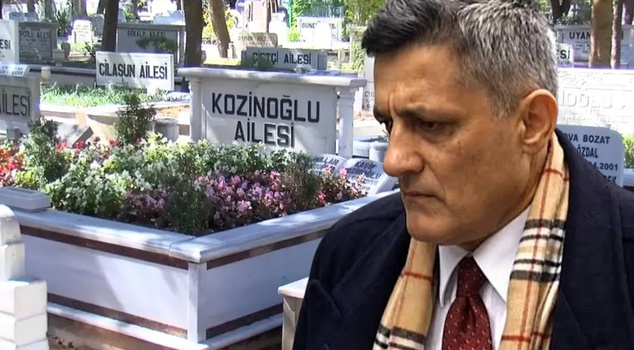
In the investigation into the death of former MİT member Kaşif Kozinoğlu at Silivri Prison in 2011, the forensic medicine report on samples taken from his grave has emerged. Antimony, which was not found in the grave soil, was detected in Kozinoğlu’s hair, nail, tissue, and bone samples. Antimony, used in industry in batteries and flame retardants, can cause poisoning and heart rhythm disorders when exposed to high amounts. The final assessment will be made by the Forensic Medicine Institution.
The examination of samples taken from Kozinoğlu's grave has been completed. The discovery of antimony in biological samples from Kozinoğlu, whose cause of death was announced 15 years ago as a heart attack, has brought the suspicion of poisoning back onto the agenda. The final assessment regarding the cause of death will be made by the First Specialization Board of the Forensic Medicine Institute.
HIS GRAVE WAS OPENED ON SEPTEMBER 12
On the instructions of the Silivri Chief Public Prosecutor's Office, Kozinoğlu's grave was opened on September 12. Tissue, bone, and soil samples taken as part of the exhumation procedure were sent to the Forensic Medicine Institute for examination. The samples, whose examination was completed, were placed back in his grave on October 5.
AMBULANCE CREW WAS EATING
Kozinoğlu had been arrested on March 10, 2011, within the scope of the Odatv case. He died after falling ill on November 12, 2011, in Silivri Prison, where he was being held. According to records, 29 minutes and 36 seconds passed from the first aid call until the medical team reached him. It was determined that the ambulance crew, which should have been on the campus, had gone to Silivri town center at that time for a meal.
It was learned that there was no doctor in the first ambulance to reach the prison gate and that the team consisted of emergency medical technicians. When Kozinoğlu was taken to Silivri State Hospital around 19:10-19:15, he showed no signs of life.
IDENTITY CONFIRMED BY DNA
According to a report by the Sabah newspaper, the Forensic Medicine Institute report on the samples taken is dated October 19. In the report, the DNA profile obtained from the bone samples was compared with samples taken from family members. It was determined that the body was 99.99 percent likely to belong to Kozinoğlu.
NONE IN THE SOIL, 7,002 NANOGRAMS IN THE NAIL
The Toxicology Department of the Chemistry Specialization Division of the Forensic Medicine Institute examined a total of 36 samples, including tissue, bone, hair, nail, shroud, and grave soil. According to the report, antimony was not found in any of the 7 separate grave soil samples. In the gram of Kozinoğlu's nail, however, 7,002 nanograms of antimony were detected. This value was measured as 548 nanograms in hair, 720 in saponified tissues, and 175 in bones.
Heavy metals such as lead, nickel, arsenic, and cadmium were also detected in the analyses. No findings were reached in cyanide and drug screenings. The detection of antimony alone does not prove death as a result of poisoning. The connection of the findings to the death will become clear with the final assessment of the Forensic Medicine Institute.
COFFEE CLAIM BACK ON THE AGENDA
According to allegations reflected in the investigation file, Kozinoğlu drank coffee in the prison shortly before he fell ill. The accounts in this regard are expected to be evaluated together with the antimony and arsenic findings in the report.
WHAT IS ANTIMONY?
Antimony is an element generally found in nature in sulfide minerals and showing properties between those of metals and nonmetals. It is used in industry in flame retardants, batteries, plastic production, and some alloys. When exposed to high amounts, it can cause poisoning. Antimony poisoning can cause serious cardiovascular problems such as heart rhythm disorders, in addition to nausea, vomiting, and diarrhea.
THE FIRST INVESTIGATION WAS CLOSED WITH A DECISION OF NON-PROSECUTION
In the Forensic Medicine Institute report prepared after the death, the cause of death had been determined as chronic ischemic heart disease. The report stated that no signs of poisoning or beating were found. In line with this report, the investigation was closed in 2012 with a decision of non-prosecution. The file was sent to the Unsolved Cases Unit of the Silivri Chief Public Prosecutor's Office in August 2026 to be re-evaluated.
THE THEFT AT THE FORENSIC MEDICINE INSTITUTE IS ALSO IN THE FILE
Within the scope of the investigation, a statement was also taken from G.E., who is alleged to have committed theft at the Forensic Medicine Institute shortly after Kozinoğlu's death. It was learned that during the statement of G.E., who was being held in custody for another crime, the possibility that Kozinoğlu's tissue and blood samples might have been changed was being considered.
NINE ARRESTS IN THE INVESTIGATION
It was stated that judicial proceedings have been carried out against 30 people so far in the investigation, and that 9 suspects have been arrested. Among those arrested is Enver Altaylı, a former MİT member convicted in the FETÖ case. Altaylı was arrested on September 22 on the charge of 'incitement to intentional homicide.'
Letters allegedly written by Altaylı saying that Kozinoğlu needed to be neutralized are included in the investigation file. Altaylı, however, denied the accusations in his interrogation before the judge. Altaylı, saying that he had been in prison for 9 years, claimed that he was being portrayed to the public as if he were Kozinoğlu's killer.